There is a moment, just before the first glass is poured, when the vineyard reveals itself: the alignment of vines, the cadence of the cellar team, the way the light settles on the barrels. For travelers who seek more than a checklist of wineries, a vineyard visit becomes a deliberate act—an immersion in craftsmanship, landscape, and time. At Wine Tour Adventures, we believe the most rewarding experiences are not loud or hurried, but meticulously curated, quietly unforgettable, and anchored in genuine connection to place.
Designing a Visit Around the Vineyard, Not the Winery
Most itineraries begin with a list of wineries; the more discerning approach begins with the vineyard itself. A winery can be replicated—architecture, décor, even cellar design—but a vineyard is singular, defined by geology, climate, and the choices of those who farm it.
Look for estates where the vineyard is the protagonist rather than a backdrop: where tasting flights are presented as a journey across parcels or blocks, where staff can explain why the eastern slope is harvested a week before the western, and where you can walk the rows rather than simply observe them from a terrace. When possible, align your visit with a specific phenological stage—budbreak, flowering, veraison, or harvest—to witness the vineyard’s living rhythm.
This vineyard-first mindset yields an invaluable insight: great wines are not “made” in the cellar so much as they are translated there. Your visit becomes a study in interpretation, from soil pit to stemware, rather than a simple showcase of finished bottles.
Reading the Landscape: The Art of Vineyard Literacy
Sophisticated wine travelers do not merely arrive; they read. A vineyard can be “read” much like a text, and learning its visual language transforms even a short visit into a nuanced experience. Notice the row orientation in relation to the sun; vertical shoot positioning or sprawling canopies; the spacing between vines; and whether the ground is carpeted with cover crops or meticulously bare.
Slopes and exposures tell another story. South- and southwest-facing parcels in the northern hemisphere often yield riper, fuller wines, while cooler, wind-exposed pockets can preserve acidity and aromatic delicacy. Terraces, stone walls, and drainage channels are not just photogenic; they are clues to how the estate manages erosion, water stress, and temperature.
As you walk, quietly compare what you see to what you taste. A taut, mineral-driven white often corresponds to lean, rocky soils and breezier, higher-elevation sites. A broad, velvety red may be rooted in deeper, warmer soils with more afternoon sun. Over time, vineyard literacy turns each visit into an elegant exercise in pattern recognition—an intellectual pleasure that lingers long after the last glass.
The Cellar as a Conversation, Not a Showroom
A truly elevated vineyard visit continues below ground. The cellar, when thoughtfully engaged, is less a stage set and more a living workshop. Instead of focusing only on aesthetics—the perfectly aligned barrels, the temperature-controlled ambiance—attend to the underlying choices.
Observe the diversity of vessels: stainless steel, oak barrels of different sizes, concrete eggs, amphorae. Each reflects a philosophy about texture, purity of fruit, and micro-oxygenation. Ask whether the estate practices whole-cluster fermentation, how often they rack or stir lees, and what proportion of new oak is used for flagship cuvées versus more approachable wines.
The tone of the cellar team is equally revealing. Are they eager to discuss decisions around native versus cultured yeasts, or how they adapt to warmer growing seasons? Do they connect specific plots you saw outside to specific tanks or barrels you see inside? This level of transparency signals confidence and integrity—and offers a privileged glimpse into how a vintage transforms from fruit into narrative.
Five Exclusive Insights for the Discerning Visitor
Experienced wine enthusiasts often sense that certain details elevate a visit from pleasant to exceptional, yet these refinements are rarely discussed openly. The following five insights help you access a deeper layer of experience available only to those who know what to look for.
1. Book Time With the Vineyard, Not Just the Tasting Room
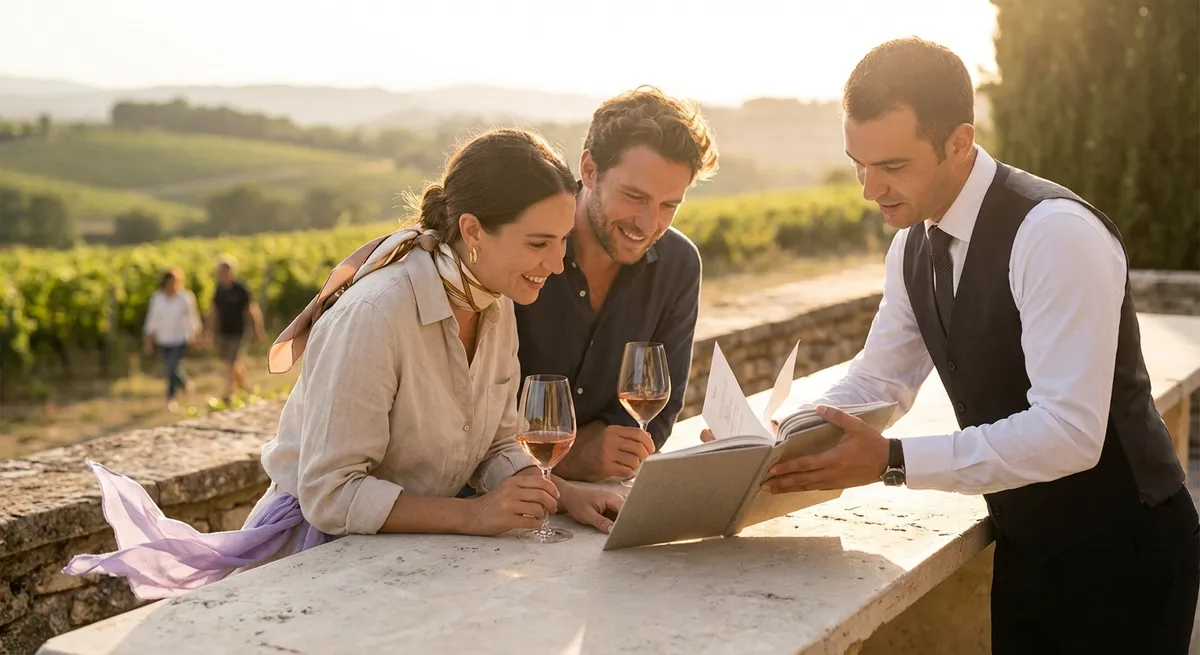
Instead of upgrading solely to “reserve” tastings, seek experiences that explicitly include time in the vines with a winemaker, viticulturist, or vineyard manager. Walking a single plot while tasting the wine it produces offers a rare alignment of place and glass. Advanced visitors often arrange these for the cool hours of early morning or late afternoon, when the light and the conversation are both at their most nuanced.
2. Ask to Taste a Base Wine or Component, Not Only Final Blends
When available, request a small taste of a single-parcel or single-barrel component that ultimately forms part of a blend. Tasting these “building blocks” reveals how structure, aroma, and texture are layered. It also exposes the estate’s standards: if even the most modest component is clean, expressive, and balanced, you are in careful hands.
3. Pay Attention to Glassware and Serving Rituals
Premium estates tend to be meticulous about their stemware and service temperatures. Discreetly note whether different glasses are used for delicate whites versus structured reds, whether sparklings are poured into tulips rather than narrow flutes, and whether decanting is reserved only for age or also for youthful, structured wines. These details signal an understanding that service can refine or blunt even the most exquisite wine.
4. Inquire About Library Bottles and Vertical Context
If you sense a genuine rapport with your host, ask whether the estate maintains a library of older vintages and if any are available for tasting or purchase. Even a single older bottle, tasted alongside the current release, offers a privileged window into how the wine ages, how vintages differ, and how the estate’s style has evolved. Vertical tastings, even in miniature, are one of the quiet luxuries of serious wine travel.
5. Observe How the Estate Speaks About Its Neighbors
The most confident producers acknowledge that they are part of a broader landscape. Listen for how they reference nearby estates, appellation rules, and regional challenges. A house that speaks respectfully of its neighbors and candidly about the region’s evolution—warmer vintages, new disease pressures, changing regulations—is one that likely approaches both farming and hospitality with maturity and nuance.
Attuning Your Senses Beyond the Glass
An elevated vineyard visit is not limited to aroma and flavor; it is a full sensory environment. Begin by noticing the soundscape: the rustle of leaves in the wind, the distant hum of tractors, the almost monastic quiet of the barrel hall. These audio cues hint at the estate’s scale and working rhythm—whether it is a small, family-run domain or a larger operation with industrial undertones.
The air carries its own signatures: the green snap of freshly pruned canes, the earthy cool of a limestone cave, the faint sweetness of fermenting must during harvest. Even underfoot, gravel, clay, or compacted earth subtly preface what you will later find in the glass as minerality, breadth, or tension.
This broader sensory awareness tempers the impulse to rush from one tasting to the next. By allowing yourself a moment to stand still—to feel the temperature shift as you step from vineyard to cellar, to note the quality of light on the vines—you begin to perceive each estate not merely as a stop on an itinerary, but as a carefully composed environment in which wine is only one, albeit central, expression.
Conclusion
For the refined traveler, vineyard visits are no longer casual diversions but deliberate journeys into the heart of craftsmanship and place. When you learn to read the rows, to converse with the cellar rather than simply admire it, and to seek experiences that connect plot, practice, and glass, your time among the vines acquires a rare depth. The greatest luxury is not excess, but intention: a quiet itinerary shaped by thoughtful choices, meaningful conversations, and wines that carry the memory of where you stood when you tasted them.
At Wine Tour Adventures, we design vineyard experiences that honor this quieter standard—where each visit unfolds not as a spectacle, but as a polished, deeply personal encounter with the landscapes and people who define the world’s most compelling wines.
Sources
- [Napa Valley Vintners – Viticulture & Terroir](https://napavintners.com/napa_valley/viticulture.asp) - Overview of how site, climate, and farming shape wine character
- [Bordeaux Wine Council (CIVB) – Understanding Terroir](https://www.bordeaux.com/us/Our-terrroirs/What-is-terroir) - Explains the role of soil, climate, and human influence in great vineyards
- [University of California, Davis – Terroir and Wine Quality](https://wineserver.ucdavis.edu/industry-info/enology/terroir-and-wine-quality) - Educational insight into vineyard factors that impact wine style and quality
- [Wine Institute – Sustainable Winegrowing Practices](https://wineinstitute.org/our-work/sustainability) - Details modern vineyard and winery practices that serious visitors may wish to explore
- [Decanter – Wine Cellar and Barrel Aging Guide](https://www.decanter.com/learn/wine-cellar-barrel-maturation-guide-329361/) - Explores cellar choices, vessel types, and aging decisions relevant to discerning cellar visits
Key Takeaway
The most important thing to remember from this article is that this information can change how you think about Vineyard Visits.