Wine tasting at its most refined is not a performance; it is a quiet, disciplined luxury. Beyond swirling and sniffing lies a deeper practice—an elegant choreography of attention, memory, and sensory precision. For the enthusiast who has long moved past basic descriptors, the true pleasure now lives in subtler territories: temperature half-degrees, the architecture of glassware, the cadence of each sip, and the small decisions that transform a flight into an experience.
This is an exploration of those finer calibrations—five exclusive insights that discreetly separate the merely informed taster from the genuinely cultivated one.
1. The Art of the First Pour: Setting a Sensory Baseline
The first pour is not just the beginning of a tasting; it is the calibration point for everything that follows. Serious tasters often treat this glass as a sensory “baseline,” a reference against which all subsequent wines will be silently compared. Its role is less about being the star and more about becoming the quiet yardstick of the session.
When the opening wine is thoughtfully chosen—often something texturally moderate, with balanced acidity and alcohol—it allows your palate to settle, your nose to warm up, and your brain to shift from the distractions of the day into a more attentive state. Many professionals will revisit that first wine later in the lineup, using it as a control to re-assess how their perception has evolved over time, temperature, and exposure to air.
For your next tasting, resist the temptation to “start big.” Instead, begin with a wine of poise rather than power, noting its weight, structure, and aromatic intensity. These impressions will quietly anchor the rest of the experience, helping you discern nuance with greater clarity and confidence.
2. Temperature as Texture: Fine-Tuning Beyond the Standard Rules
Broad guidelines—chilled whites, room-temperature reds—are a useful entry point, but refined tasting lives several degrees more precise. Small shifts in temperature dramatically alter how tannins feel, how oak presents itself, and how acidity expresses on the palate.
Slightly cooler temperatures (around 14–16°C / 57–61°F) can lend great reds an almost architectural clarity, tightening the structure and restraining alcohol perception. Full-bodied whites often blossom around 10–13°C (50–55°F), where their aromatic range unfolds while the palate remains taut and defined. Sparkling wines, meanwhile, reward a narrow window: too cold and the nose is muted; too warm and the mousse becomes coarse, and the elegance dissipates.
One discreet technique used by professionals is micro-adjustment at the table: warming the bowl gently in the hand for aromatically shy wines, or briefly resting a glass in an ice bucket for a wine that is showing a little too open and soft. Over the course of a tasting, notice how a wine reveals new dimensions as it subtly warms—texture becomes silkier, oak more pronounced, fruit more generous. Treat temperature as an active variable, not a fixed rule, and your tasting becomes both more precise and more rewarding.
3. Glassware Geometry: Sculpting Aroma, Volume, and Focus
To the seasoned enthusiast, glassware is not a luxury accessory but a precision instrument. The geometry of the glass—bowl width, chimney shape, rim diameter—guides how aromas concentrate, how the wine moves across the tongue, and even how tannins interact with your palate.
Large bowls with gently tapering rims favor aromatic reds and complex whites, allowing oxygen to awaken the wine while funneling volatile compounds efficiently to the nose. More upright, tulip-shaped glasses can refine high-acid wines, preserving focus and preventing the bouquet from dispersing too quickly. Even the thickness of the glass rim matters: a thin, finely cut lip can enhance the sensation of elegance and linearity.
For those curating their own tasting at home, consider introducing one additional glass shape and comparing the same wine side by side. Notice how a structured red may feel broader and more generous in one glass, yet sleeker and more vertical in another. Over time, you will learn not only which wines suit which shapes, but also how glassware can be used intentionally to emphasize freshness, roundness, or aromatic detail depending on the mood and occasion.
4. The Rhythm of Tasting: Pacing, Silence, and Memory
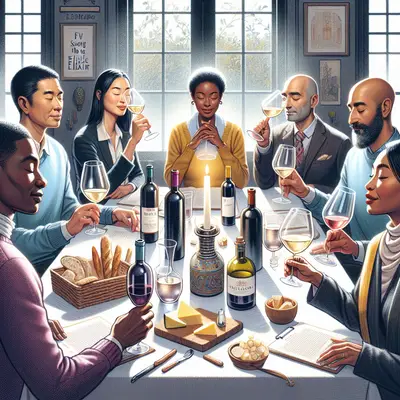
Refined tasting has a rhythm: it alternates between analysis and repose, conversation and silence. Many enthusiasts focus on what they taste, but the pace at which they taste is just as important. When wines come too quickly, impressions blur; when intervals are thoughtfully spaced, the memory of each wine sharpens.
Discerning tasters often adopt a deliberate cadence—one or two measured sips, a brief pause to note texture and finish, then a moment of silence before speaking. This quiet interval allows the finish to fully unfold, especially in age-worthy wines whose length is one of their defining traits. The question is not simply, “What does this taste like?” but “How long does this wine stay with me, and how gracefully does it fade?”
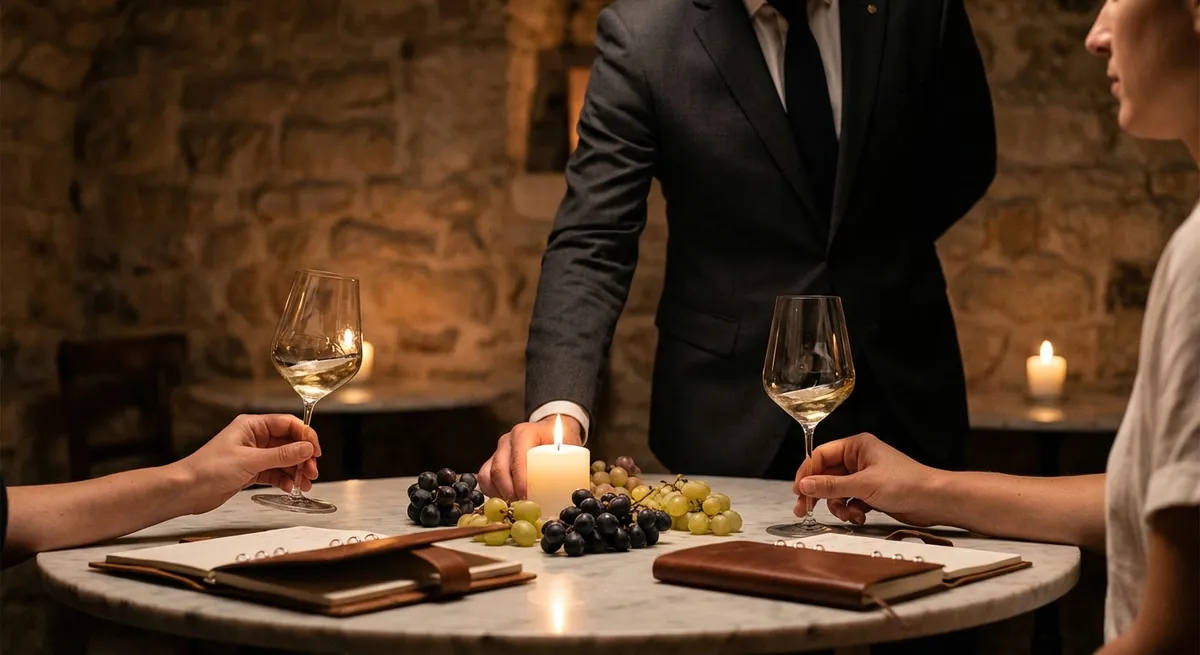
Maintaining a personal notebook or digital record during such moments elevates the experience further. Instead of listing only flavor descriptors, note the wine’s balance, its energy, its emotional impression. Over time, these subtle, almost musical observations become a deeply personal atlas of taste, helping you recall not only labels and vintages, but atmospheres, conversations, and the specific character of each bottle.
5. Context as a Hidden Ingredient: Pairing Wine with Place, Time, and Intention
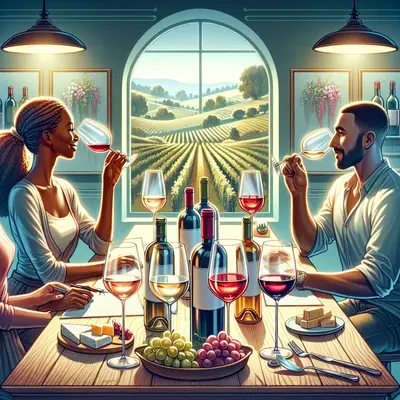
Beyond technicalities, the most exclusive insight among seasoned wine lovers is that context is an invisible but decisive ingredient. The same wine can feel utterly transformed by its surroundings: the architecture of the tasting room, the view from a terrace, the company at the table, even the hour of the day.
Morning tastings can reveal a more precise, analytical side of a wine, when the palate is freshest and distractions minimal. Late-afternoon or early evening sessions, by contrast, often favor contemplation—wines seem softer, more enveloping, their textures resonating with the fading light. Tasted at the estate, a wine carries the imprint of its landscape; enjoyed in a quiet city apartment, it might feel more introspective, more about memory than place.
Sophisticated wine travelers curate context as intentionally as they choose vintages. They might plan a vertical tasting of a single producer just before sunset, or taste a series of whites near the sea, where salinity in the air mirrors the wine’s own mineral edge. In doing so, they discover that truly great wines do more than please the senses—they tune themselves to their surroundings, lending each moment an elevated, almost cinematic quality.
Conclusion
As your relationship with wine deepens, the pursuit shifts from the obvious to the almost imperceptible. The pleasure is no longer just in finding a “great bottle,” but in refining the conditions that allow each wine to express the full measure of its character: the calibrating first pour, the precise degree of chill, the chosen glass, the measured pace, and the deliberately crafted context.
These finer details are not about ritual for ritual’s sake; they are about honoring the quiet labor inside every bottle and transforming tasting from a habit into an art. For the devoted enthusiast, this is where the real luxury lies—not in extravagance, but in the heightened awareness that turns each sip into a singular, unforgettable moment.
Sources
- [University of California, Davis – Wine Aroma and Sensory Evaluation](https://wineserver.ucdavis.edu/industry-info/enology/sensory-evaluation-wine) - Overview of professional wine sensory evaluation techniques and factors influencing perception
- [Wine & Spirit Education Trust (WSET) – Systematic Approach to Tasting Wine](https://www.wsetglobal.com/knowledge-centre/wset-systematic-approach-to-tasting-sat/) - Details on structured tasting methodology used by advanced students and professionals
- [Decanter Magazine – Why Wine Temperature Matters](https://www.decanter.com/learn/serve-wine-temperature-329546/) - In-depth discussion of optimal serving temperatures and their impact on aroma and texture
- [Riedel – The Science Behind the Glass Shape](https://www.riedel.com/en-us/blog/science-behind-glass-shape) - Explanation of how glass design influences aroma, flavor and overall tasting experience
- [Harvard T.H. Chan School of Public Health – Alcohol: Balancing Risks and Benefits](https://www.hsph.harvard.edu/nutritionsource/alcohol-full-story/) - Evidence-based context on alcohol consumption and health considerations
Key Takeaway
The most important thing to remember from this article is that this information can change how you think about Wine Tasting.