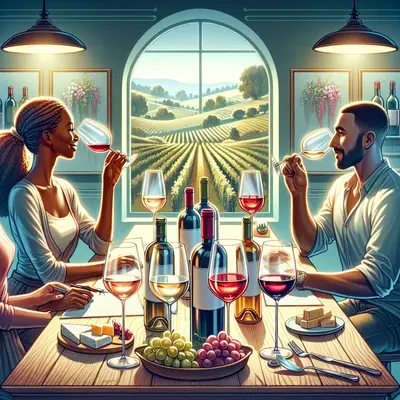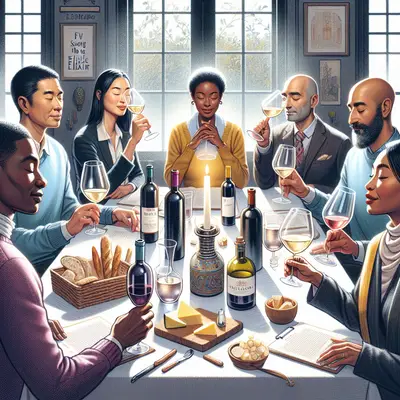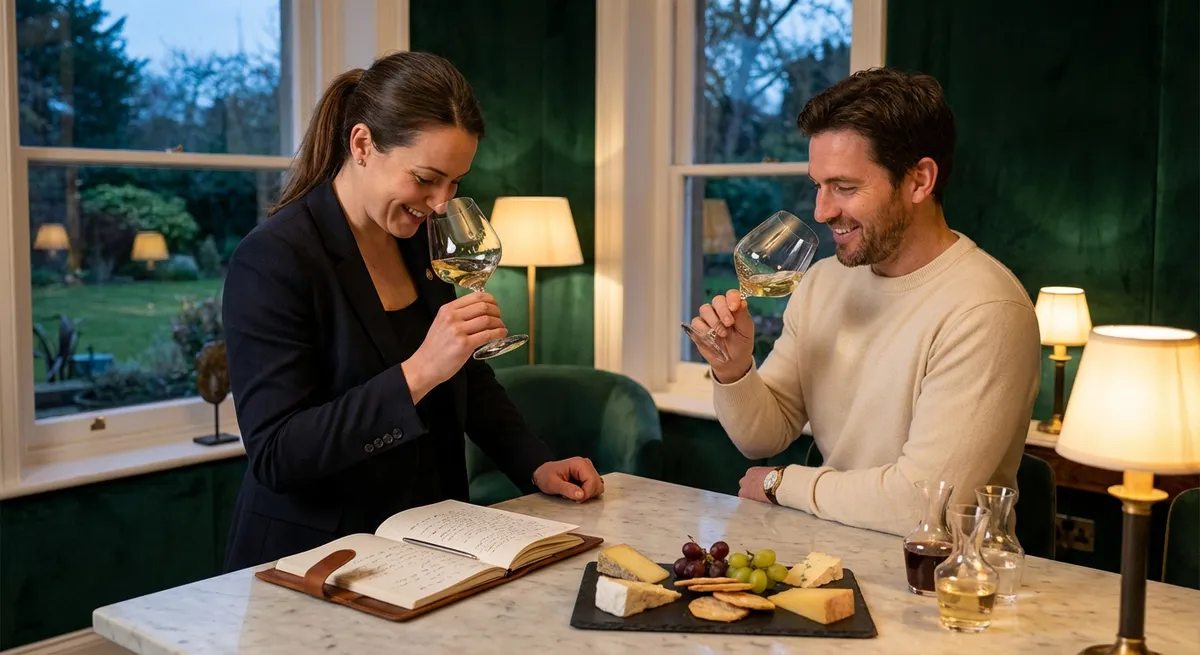
Wine tasting, at its most rewarding, is less a performance and more a private dialogue between taster and glass. It is an exercise in precision, restraint, and attention—to how a wine moves, speaks, and lingers. For the devoted enthusiast, refinement lies not in knowing more adjectives, but in noticing more nuances. This is where tasting becomes an art: the ability to register delicate signals and translate them into a vocabulary that is both disciplined and evocative.
Below are five exclusive, finely tuned insights that transform wine tasting from a pleasant pastime into a cultivated ritual of perception—subtle calibrations that distinguish the merely informed from the genuinely attuned.
The Prelude in the Glass: Observing Texture Before Tasting
Before the first sip, the wine has already begun to speak. Color is the obvious cue, but for the enthusiastic connoisseur, it is the wine’s texture in motion that quietly reveals its character. Gently rotating the glass, note not only the “legs,” but the speed and shape of their descent. Slow, viscous rivulets can hint at higher alcohol or extract, yet the real insight lies in observing how uniformly they form, how persistently they cling, and whether the surface of the wine appears glassy, satin-like, or delicately rippled.
This prelude allows you to anticipate structure: a glossy surface may suggest polish and precision, while a faintly grainy appearance can presage tactile grip on the palate. In whites, a crystalline, almost steely look often corresponds with linear acidity, whereas a faintly opalescent sheen can suggest richness or lees contact. In reds, a subtly opaque core with luminous edges may indicate concentration without heaviness. By the time the wine reaches your lips, you have already formed a quiet expectation—not a bias, but an informed hypothesis you will soon confirm or challenge.
The Architecture of the Palate: Tasting in Structural Layers
Most tasters begin by cataloging flavors. Advanced enthusiasts move beyond “what” a wine tastes like to how it is built. Think of each sip as a brief study in architecture: fruit, acidity, tannin, alcohol, and texture arranged in a precise spatial relationship. Rather than tasting for descriptors, taste for sequence.
Start by catching the attack—the instant impression in the first second. Does the wine arrive pointed, broad, vertical, or spherical? Next, note the mid-palate, often where serious wines reveal their depth or, conversely, their hollowness. Does the center of the palate feel filled with layered flavor, or does the wine seem to leap from front to back with little in between? Finally, observe the finish not only by length, but by shape: does it taper slowly, unfurling new nuances, or does it snap closed once the fruit recedes?
With practice, you begin to perceive structure as clearly as flavors: a slender, tensile frame in a Riesling; a refined, filigreed tannin network in a well-aged Barolo; a seamless, almost invisible integration of oak and fruit in a great white Burgundy. This structural literacy enables more precise judgments about age-worthiness, food pairings, and the true quality concealed beneath seductive aromatics.
The Temperature Window: Finding a Wine’s Precise Point of Clarity
Temperature is often treated as a broad guideline—“serve whites chilled, reds slightly cool”—but sophisticated tasting benefits from recognizing that each wine has a narrow window of clarity where its character is most articulate. Too cold, and texture contracts, aromatics mute, and structure feels sharper than intended. Too warm, and alcohol emerges, balance sags, and definition blurs.
Serious enthusiasts take a more nuanced approach. Rather than serving a wine at a fixed temperature, they taste through a temperature ascent. A high-quality white may start at a cool cellar temperature, revealing precision and acidity; as it warms slightly in the glass, layers of texture, spice, and minerality surface. Likewise, a young, structured red may initially feel tight and angular when cool; with a brief rise in temperature, tannins soften and the fruit core gains clarity without tipping into heat.
This practice turns temperature into an active tasting tool. When assessing a wine, ask: At which precise moment in its warming curve does the wine feel most coherent and expressive? That brief interval is often when the balance between aromatics, structure, and texture is at its most truthful. Remembering a wine not just by vintage and producer, but also by its ideal temperature window, is a quiet mark of advanced discernment.
The Silence Between Sips: Reading the Residual Impression
The most revealing part of wine tasting often happens when the glass is no longer at your lips. What the wine leaves behind—its residual impression—is where depth, precision, and craftsmanship quietly declare themselves. Instead of immediately returning for another taste, pause. Notice how the echoes of the wine evolve in the absence of new stimuli.
Consider three elements in this silence. First, the persistence of flavor: Do subtle notes—like saline minerality, delicate herbal tones, or refined spice—continue to unfold after the primary fruit has passed? Second, the persistence of sensation: How long do you feel the acidity along the sides of the tongue, the tannin gently drying the gums, or the faint warmth in the chest? Finally, the persistence of balance: Does the wine remain harmonious as it fades, or does one component—bitterness, heat, or sweetness—suddenly dominate at the very end?
Exceptional wines are not only long; they are clean in their exit. The finish feels resolved, never muddled or fatigued. Cultivating attentiveness to the silence between sips elevates your judgment: you are no longer seduced solely by aromatic charm, but attuned to the wine’s integrity over time, even within a single mouthful.
The Personal Rosetta Stone: Creating Your Own Sensory Reference Library
Refined tasting depends on memory as much as perception. The most accomplished enthusiasts are not those who have memorized tasting notes, but those who have built an internal reference library of real, lived aromas and textures. Instead of accepting “blackcurrant” or “violets” as abstract concepts, they have pressed fresh blackcurrants between their fingers, inhaled wild violets in spring, or tasted the mineral tension of a cool oyster.
Curating your own Rosetta Stone begins away from the tasting room. Smell spices individually, slowly and deliberately. Pay attention to the particular texture of different stone fruits, from taut apricot skin to melting ripe peach. Compare the chalky snap of one mineral water to the saline roundness of another. Notice how fresh-cut herbs differ in their greenness, from basil’s sweet lift to thyme’s more resinous depth. Each of these moments becomes a reference point that later allows you to describe wine with greater precision and authority.
Over time, this library extends beyond aromas to structure and mood: the way a certain Burgundy feels like silk brushed in one direction, or how a coastal white evokes the cool, iodine-laced air of a harbor at dawn. With such a lexicon, your tasting notes become less performative and more exacting, reflecting a deeply personal, well-calibrated understanding of what you encounter in the glass.
Conclusion
At a certain level, refinement in wine tasting ceases to be about collecting superlatives and begins to revolve around subtlety. The most rewarding experiences are polished, unhurried, and intensely attentive—more about listening than declaring. By observing texture before tasting, reading structure instead of chasing flavors, exploring a wine’s temperature window, honoring the silence between sips, and building your own sensory reference library, you transform each encounter with a glass into a nuanced, highly personal dialogue.
For the devoted enthusiast, this is where the true luxury lies: not only in the rarity of the bottle, but in the precision of the attention you bring to it. The wine may be finite; the refinement of perception is not.
Sources
- Harvard T.H. Chan School of Public Health – Alcohol: Balancing Risks and Benefits - Offers evidence-based context on alcohol consumption, useful for responsible enjoyment of wine.
- UC Davis Department of Viticulture and Enology - A leading academic resource on wine science, including research on sensory evaluation, structure, and aroma.
- Wine Institute – Wine Education Materials - Provides foundational information on wine styles, serving temperatures, and tasting considerations.
- Decanter – How to Taste Wine Like a Professional - Explores formal tasting techniques and structural analysis from a respected industry publication.
- GuildSomm – The Anatomy of Tasting - Professional-level discussion of wine tasting, structure, and sensory calibration.
Key Takeaway
The most important thing to remember from this article is that this information can change how you think about Wine Tasting.