Wine lovers often speak of “visiting wineries,” but the most memorable experiences unfold when you truly visit the vineyard—the living landscape where each bottle begins. To the discerning traveler, the difference is everything: a move from polished counters and scripted flights to soil, light, and human craft in quiet conversation. This is where nuance lives, and where each estate reveals its genuine character.
Below, we explore how to shape vineyard visits that feel less like tourism and more like private audience—with five exclusive insights that seasoned enthusiasts will recognize and quietly treasure.
Reframing the Vineyard Visit as a Conversation, Not a Tour
For the sophisticated wine traveler, a vineyard visit is not a checklist of stops; it is an unfolding dialogue with a place. Rather than racing through multiple estates, consider dedicating half a day—or even a full day—to a single, thoughtfully chosen property. This allows you to witness different facets of the estate’s rhythm: the hush of morning in the vines, the focused intensity in the cellar, the reflective calm of late afternoon.
Approach each visit with a sense of inquiry rather than expectation. Ask how the current vintage compares to the last decade, not simply which wine is “best.” Notice the textures underfoot—the crunch of limestone, the darker give of clay—as you move through the rows. Pay attention to the light: how it falls differently on east- versus west-facing slopes, how the vines respond at higher altitude, how a gentle breeze can change the aromatic expression in the glass. When you treat the visit as a layered conversation—between you, the land, and the people who steward it—the experience quietly transcends the usual tasting room narrative.
Exclusive Insight #1: Walk the Boundaries, Not Just the “Postcard Rows”
Many visitors never see beyond the most photogenic parcel of vines nearest the cellar door, yet the true soul of an estate often lives at its margins. If the estate is open to it, request a short walk along the vineyard boundaries rather than remaining in the central block. The edges of a property frequently reveal shifts in soil, exposure, and planting density that translate directly into the wine’s complexity.
Along a boundary line, you may notice one row on a subtle incline, another sheltered by trees, a third edging into stonier ground. These minute differences can produce markedly distinct fruit—sometimes blended into a flagship cuvée, sometimes bottled separately as a single-parcel wine. Observing these transitions under your own feet gives context to what you later taste in the glass. Ask your host where their most challenging parcel is located and why; then, if possible, taste a wine that includes or highlights that very plot. It is an elegant way to bridge the sensory experience from earth to aroma, from landscape to palate.
Exclusive Insight #2: Read the Cellar Like a Library
While barrel rooms and cellars are often presented as atmospheric showpieces, the informed visitor can “read” them the way one would a carefully curated library. Take a moment to observe the composition and arrangement of vessels: oak barrels of differing sizes, concrete eggs, stainless steel tanks, perhaps amphorae tucked discreetly against a wall. Each choice telegraphs a stylistic philosophy.
Ask how long wines typically rest on their lees, how often barrels are renewed, and whether the estate favors indigenous yeasts or selected strains. Notice whether the cellar feels clinically controlled or intentionally more traditional and ambient. These distinctions whisper volumes about the producer’s approach to texture, precision, and longevity. When you later taste, consider how the structural frame in the wine—its tension, creaminess, or verticality—corresponds to what you observed in the cellar. For enthusiasts who care about age-worthiness and provenance, understanding this invisible architecture is as rewarding as any tasting note.
Exclusive Insight #3: Taste the “Non-Iconic” Wines With Equal Attention
Prestige estates often steer visitors toward a signature cuvée or flagship bottling, but the most revealing wines are frequently those sitting just outside the limelight. Speak with your host about the estate’s “quiet” bottlings: a varietal not typically associated with the region, a parcel wine made in tiny quantities, or the wine the winemaker personally drinks at home. These selections often embody experimentation, personal preference, or historical continuity free from market expectations.
When you taste, compare the flagship and the under-the-radar cuvée side by side. Note how the same house style—its preference for restraint versus opulence, its handling of oak, its articulation of acidity—expresses itself at different levels. Serious collectors know that such “secondary” wines can offer remarkable value and insight, especially in excellent vintages. They also make for compelling stories when you later pour them for guests, sharing not only the wine but the narrative of discovery behind it.
Exclusive Insight #4: Time Your Visit to the Vineyard’s Working Rhythm
The difference between a pleasant visit and a remarkable one often lies in timing. Vineyard work follows a precise, seasonally driven cadence, and aligning your visit with a critical phase can transform your understanding of what you taste. In late winter and early spring, pruning reveals the geometry and discipline that shape yields and quality; in late summer, veraison shows the transition from growth to ripening; harvest, of course, is a theatre of decisions in real time.
Before booking, inquire discreetly which weeks the estate finds particularly interesting for visitors who wish to see the vineyard in action, while still respecting that harvest is an intense period. If you do arrive during a busy moment, observe not only the machinery and picking crews but also the micro-decisions: which parcels are harvested first, how quickly fruit moves from vineyard to press, how sorting is handled. These seemingly small choices are where style, philosophy, and quality converge. For a refined traveler, seeing even a fragment of this rhythm can deepen appreciation far beyond a simple vintage chart.
Exclusive Insight #5: Study the Glassware and Serving Rituals
At elevated estates, glassware and serving choreography are deliberate, not incidental. The choice of stems, the sequence of pours, and the temperatures at which wines appear are all part of the estate’s expression. Pay close attention to which wines are poured into which shapes—perhaps a broader bowl for an older vintage white Burgundy; a taller, narrower glass for a leaner, high-acid red. These subtleties hint at how the producer envisions their wines being enjoyed at table.
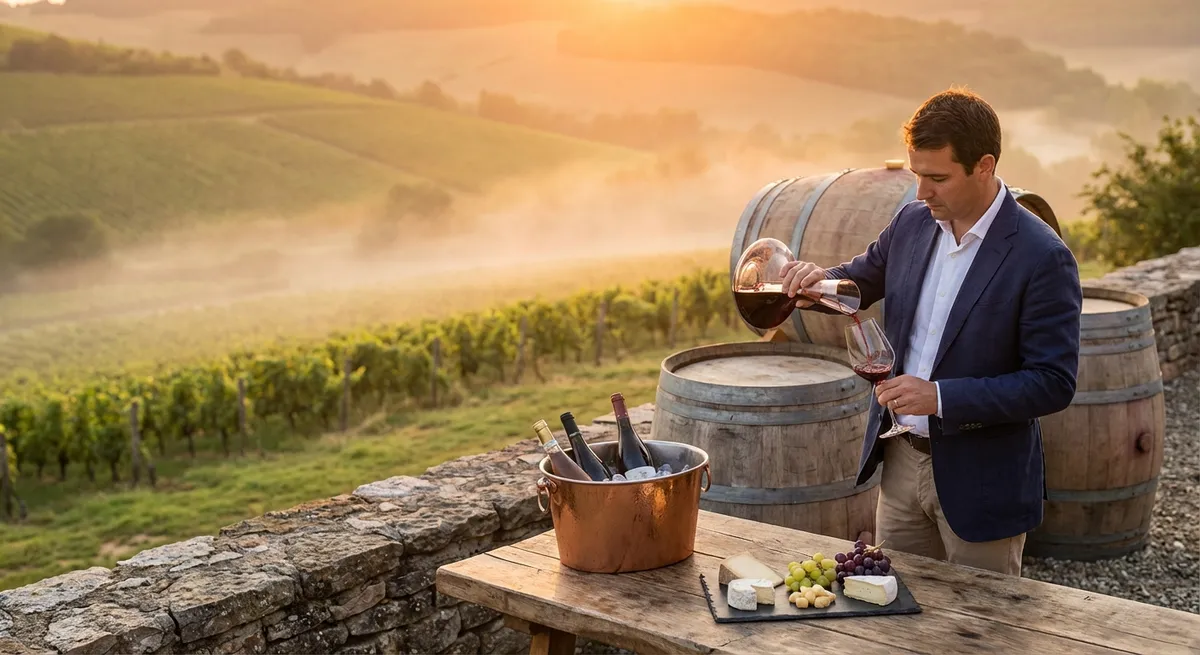
Notice, too, whether decanting is used sparingly or frequently, and for which styles. Do younger, structured wines receive air, or is decanting reserved for mature bottles? Are older vintages poured with particular stillness and care? Inquire—gently—how the team prefers to serve their top wines at home, including ideal temperature and glass shape. Recreating these details later, in your own dining room, is an understated luxury: it allows you to honor the wine in precisely the way its makers intend, echoing the refinement of the visit long after you’ve left the estate.
Conclusion
A vineyard visit worthy of a true enthusiast is not defined by how many estates you can fit into a day, but by how completely you can inhabit the story of a single place. Walking the boundaries rather than just the postcard rows, reading the cellar’s quiet cues, seeking out the non-iconic wines, aligning with the vineyard’s working rhythm, and observing the nuances of service—these are gestures of attention that transform a tasting into an experience of depth and continuity.
In such moments, the glass becomes more than a vehicle for flavor; it becomes a distillation of time, terrain, and human intention. For travelers who value refinement over spectacle, these understated insights are the difference between a visit that fades and one that lingers—like a great finish—long after the last drop.
Sources
- Wine Institute – Winegrowing Regions of California – Overview of how geography and climate shape vineyard expression across California
- UC Davis Department of Viticulture and Enology (via Washington State University) – Technical insights into cellar practices, vessels, and their impact on wine style
- Institute of Masters of Wine – Terroir and Site Selection – Discussion of terroir, vineyard site nuances, and their influence on finished wines
- Decanter – Wine Serving Temperatures and Glassware – Guidance on optimal serving conditions and how glassware shapes the tasting experience
- OIV (International Organisation of Vine and Wine) – International standards and recommendations on viticulture and oenology practices
Key Takeaway
The most important thing to remember from this article is that this information can change how you think about Vineyard Visits.