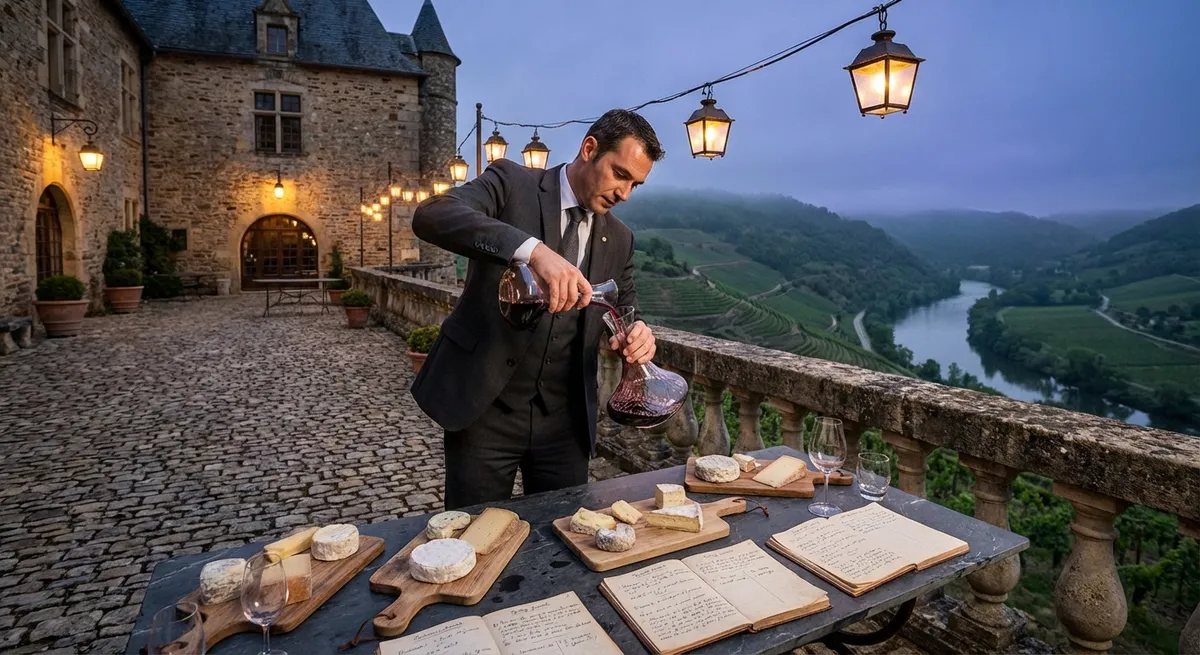
Wine touring, at its most elevated, is less about checking wineries off a list and more about entering a quiet dialogue with place, craft, and time. The world’s most rewarding vineyard journeys unfold not as hurried escapes, but as carefully composed experiences where each glass, vista, and conversation is purposeful. For travelers seeking more than standard tastings and postcard views, a new frontier of wine tourism awaits—one defined by nuance, intention, and a genuine connection to the people behind the bottles.
Below are five exclusive, deeply considered insights to help you craft wine tours that feel intimate, intelligent, and memorably refined.
1. Curating Wine Regions by Texture, Not Just Grape or Map
Most itineraries begin with geography—Bordeaux vs. Napa, Tuscany vs. Willamette. Discerning travelers, however, start with texture: the way wines feel on the palate and how that tactile sensation shapes emotion and memory.
Think first in terms of the structural profile you are seeking—silken and pliant, mineral and tensile, whisper-light or unapologetically dense. For example, if you are drawn to lithe, finely etched whites, your journey might center on regions where cool climates and stony soils dominate: the Mosel in Germany, Chablis in France, the coastal stretches of Chile’s Casablanca Valley. If you prefer enveloping reds with satin tannins, you might look toward older-vine Barossa Shiraz, certain right-bank Bordeaux, or Rioja’s gran reservas.
By designing a tour around texture, you begin to notice the subtle interplay between soil composition, elevation, canopy management, and picking decisions. A visit with a winemaker becomes less about “We grow Chardonnay” and more about “We pick a week earlier to preserve that graphite line you’re feeling along the edges of your tongue.” The result is an itinerary that feels tailored to your palate—elegantly precise, rather than geographically generic.
2. Seeking Out the “Second Conversation” with Winemakers
Almost every winery offers a polished story about heritage, varietals, and awards. The true connoisseur, however, looks for the “second conversation”: the quieter, more revealing layer that emerges after trust is established and curiosity is evident.
Unlocking this level of dialogue begins with the kinds of questions you ask. Instead of “What’s your most popular wine?” consider:
- “What was the most difficult vintage you’ve ever worked, and how did it change the way you make wine?”
- “Is there a wine in your lineup that you make mostly for yourself, even if it’s not the most commercially successful?”
- “Can you pour something that shows the edge of your style—where you push the boundaries a little?”
These questions invite candor and, often, access. You may be led to taste experimental lots, library vintages, or vineyard-designate wines normally reserved for club members. You might be taken into the barrel room to compare different coopers or toast levels, or invited to taste from an amphora that never appears on the public list.
The “second conversation” transforms a visit into a collaborative exploration. You are no longer a visitor passing through; you are a thoughtful participant in the estate’s ongoing narrative.
3. Timing Tastings to the Rhythm of the Vineyard, Not the Clock
Most itineraries are governed by distance and opening hours. The more sophisticated approach respects the vineyard’s own rhythm—its light, temperature, and daily pulse.
Early morning visits, for example, can be revelatory in warm regions. The air is cooler, the vines still beaded with moisture, and the wines themselves often present with greater clarity as your palate is fresh. In barrel cellars, morning tastings can accentuate fine aromatic details that may blur later in the day.
Late-afternoon or early-evening appointments, particularly in coastal or mountain regions, reveal a different personality: wind patterns shift, shadows lengthen, and the temperature drop can sharpen acidity and bring an almost architectural precision to reds that seemed plusher at midday.
If possible, anchor your day with one “long-form” visit—90 minutes to two hours—designed around these natural inflection points. Allow time to stand in the vines and taste on-site, even if only with a single barrel sample. Sensing how the light hits the slope, how the wind funnels through a valley, or how the soil crumbles in your hand lends each subsequent sip a heightened dimensionality.
In this way, timing is no longer a logistical constraint; it is a quiet tool for unlocking new layers of expression in the glass.
4. Exploring the Invisible Craft: Cooperage, Elevage, and the Shape of Time
Many wine travelers are familiar with oak aging in the broadest sense, but few seek out tours that foreground the subtleties of élevage—the entire process by which wine is raised from fermentation to bottle. For those who do, the experience can be extraordinary.
When booking, ask whether the estate can focus part of your visit on their approach to aging and vessel choice. A premium-level tasting that includes side-by-side comparisons—new vs. neutral oak, different cooperages, barrel vs. concrete egg, amphora vs. stainless steel—can permanently change how you perceive wine.
You may find, for instance, that the same Chardonnay fermented in stainless steel and then aged in older oak presents as crystalline and saline, while its counterpart fermented directly in new oak glides across the palate with creamier breadth and subtle spice. A Syrah aged partially in large-format foudres might retain more savory, violet-tinged aromatics than a version raised in small barriques.
These differences are not academic; they are tactile and immediate. Asking a winemaker to walk you through their élevage decisions by pouring “fraternal twin” wines highlights the invisible architecture of the finished bottle—the shape of time, as guided by the hand of the cellar.
For devotees of nuance, this type of visit can be more enlightening than any panoramic terrace or grand tasting room.
5. Designing Food Pairing Moments as a Narrative, Not a Checklist
Food pairings on wine tours can easily devolve into clichés: cheese boards, charcuterie, perhaps a local olive oil. Elevating the experience requires reframing pairings as narrative: each bite and sip telling a deliberate chapter of a story.
Instead of a generic assortment, seek out estates or partner restaurants that will personalize a progression around specific wines, vintages, or vineyard blocks. This might look like:
- A vertical tasting of a single cuvée across several years, paired with variations on one ingredient—say, lamb or mushrooms—prepared with different techniques to mirror the evolution of the wine.
- A “terroir reflection” where wines from limestone soils are paired with dishes highlighting saline or mineral-driven components (shellfish, sea vegetables, or subtly briny cheeses), while clay-based vineyard wines are matched with earthy roots or slow-braised meats.
- A contrast course where a delicate, aromatically complex wine is first served alone, then re-tasted alongside an apparently simple dish—such as perfectly ripe local tomatoes or a minimalist crudo—to reveal how thoughtful seasoning can coax out hidden notes in the glass.
Once you’ve experienced food pairings as a coherent narrative, rather than as a series of snacks, you begin to understand how truly great wine is designed to be part of a larger sensory composition. It is no longer merely “paired”; it is contextualized, illuminated, and, at its best, transcended.
Conclusion
The finest wine tours are not defined by how many wineries you visit, nor by how expensive the bottles may be. They are defined by the depth of your engagement—the textures you chase, the questions you ask, the patience you bring to observing light, craft, and time.
By curating regions through the lens of texture, seeking the winemaker’s “second conversation,” aligning your schedule with the vineyard’s own rhythm, exploring the subtleties of élevage, and treating food pairings as a deliberate narrative, you transform a pleasant getaway into a sophisticated, deeply personal journey.
In the end, the true luxury of a wine tour lies not in opulence, but in attentiveness: the quiet, refined joy of discovering that each great bottle is not an object to be consumed, but a place, a season, and a set of decisions—waiting to be understood.
Sources
- Wine Institute – Winegrowing Regions – Overview of key wine regions and how climate and geography influence style and structure
- University of California, Davis – Articles on Winemaking and Viticulture – Technical insights into viticulture, fermentation, and aging practices
- Decanter – How Oak Influences Wine – Detailed exploration of barrel choice, élevage, and their impact on wine character
- GuildSomm – Food and Wine Pairing: Beyond the Basics – In-depth discussion of advanced pairing concepts and structure-driven matches
- OIV (International Organisation of Vine and Wine) – Research-based publications on viticulture, oenology, and global wine practices
Key Takeaway
The most important thing to remember from this article is that this information can change how you think about Wine Tours.