There is a moment, just after the glass is poured and before the first sip, when time feels exquisitely suspended. That is the moment Wine Tour Adventures exists to extend—through journeys that move beyond sightseeing into a quietly luxurious immersion in place, craft, and culture. This is not about ticking wineries off a list; it is about discovering how the world’s most compelling wine regions reveal themselves when approached with intention, discernment, and a taste for the quietly exceptional.
The Architecture of a Truly Refined Wine Tour
A refined wine tour begins long before you step into a vineyard. It starts with the architecture of the experience itself: which appellations are chosen, how the days are paced, and what kind of access is quietly unlocked along the way. Thoughtful curation means understanding that a morning among limestone-rich vineyards calls for different wines—and different conversation—than an afternoon in volcanic soils. It means allowing enough time at each estate so that tastings become dialogues, not transactions.
Rather than stacking high-profile names one after another, a sophisticated itinerary balances iconic producers with under-the-radar estates whose wines rarely leave the region. Distances between visits are carefully measured to avoid fatigue; lunch is not an afterthought, but a deliberate pairing of local gastronomy and regional styles. The result is an itinerary that feels both seamless and surprising, like a well-written score—each stop a movement, each glass a note in a larger composition.
Exclusive Insight #1: The Vineyard Walk That Changes How You Taste
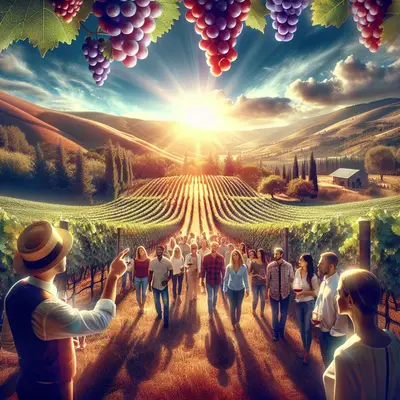
The finest wine travelers know that the most important part of a visit often happens before you reach the tasting room. A slow, guided walk through the vines—ideally with the winemaker or vineyard manager—quietly transforms your relationship with the wines that follow.
Among the rows, you see the subtle shifts in exposure from one parcel to the next, feel the crunch of limestone or slate beneath your feet, and notice how wind patterns change across a single slope. These are not abstract terroir concepts, but tangible, sensory experiences. When you later taste two cuvées from adjacent plots, the differences in texture and length become far more vivid because you have already stood in those places.
For seasoned enthusiasts, requesting time in the vineyard is a discreet but powerful way to elevate a visit from pleasant to profound. It is here that you begin tasting with context—connecting the wine in the glass to light, soil, and slope, rather than relying solely on the tasting notes on the page.
Exclusive Insight #2: The Art of the Library Tasting
A library tasting—sampling older vintages from a producer’s cellar—is where a winery’s true voice is revealed. While current releases offer energy and immediacy, it is in the evolution of a wine over 10, 15, or 20 years that you learn whether it is merely fashionable or genuinely built to endure.
For the discerning traveler, arranging a focused library tasting around a single cuvée, across multiple vintages, is one of the most enlightening experiences available. Subtle shifts in climate from year to year, quiet evolutions in cellar technique, and the winemaker’s growing confidence all become visible in the glass.
This is also where conversation deepens. Winemakers tend to relax in the company of their own older wines; memories surface, and stories emerge that rarely appear in official tours. A 2005 vintage might prompt recollections of a late harvest or an unusually cool September; a 2010 may recall a decisive choice around picking dates. For collectors and serious enthusiasts, this is where a producer moves from admired to understood.
Exclusive Insight #3: Tasting the Invisible—Barrel and Amphora Sessions
Behind every polished bottle lies a series of quiet decisions made in the cellar. A barrel or amphora tasting—sampling wines mid-maturation—offers an intimate look at these decisions while they are still in motion. Instead of finished blends, you encounter individual components: a parcel of old-vine fruit here, a press wine there, perhaps a new experiment in concrete or clay.
These sessions are rarely part of standard tours, but they are among the most revealing moments for those who care deeply about how wine is shaped. You begin to notice how oak regimen affects texture rather than flavor alone, how amphorae can emphasize purity and line, and how micro-blending trials can determine the final wine’s balance.
For enthusiasts, the insight lies not only in tasting unfinished wines, but in observing how a winemaker thinks. Which barrels are destined for the grand cuvée? Which lots will elevate structure, and which will bring aromatic lift? To be invited into this space is to witness the craft at its most candid, before labels and scores enter the conversation.
Exclusive Insight #4: Reading a Region Through Its Table
Wine is never just what is in the glass; it is a conversation with the table it is meant to accompany. A refined wine tour therefore treats meals not as intervals between tastings, but as essential chapters in understanding a region. Long lunches at family-run inns, meticulously curated wine-pairing dinners, and market visits with local chefs all become part of the narrative.
When regional specialties meet local wines in their natural setting, pairings that might seem unusual on paper suddenly feel inevitable. A saline white next to freshly caught seafood, a mountain red alongside slow-braised game, or a late-harvest wine with a subtly bitter regional cheese—all reveal a cultural logic that transcends theory.
For experienced wine travelers, paying close attention to these moments yields a powerful insight: the most profound pairings are often the most unassuming. A simple dish, perfected over generations, can unlock dimensions in a wine that formal tastings never quite reveal. To read a region through its table is to understand that wine is not an isolated luxury, but the liquid expression of local life.
Exclusive Insight #5: The Quiet Power of Off-Hours Access
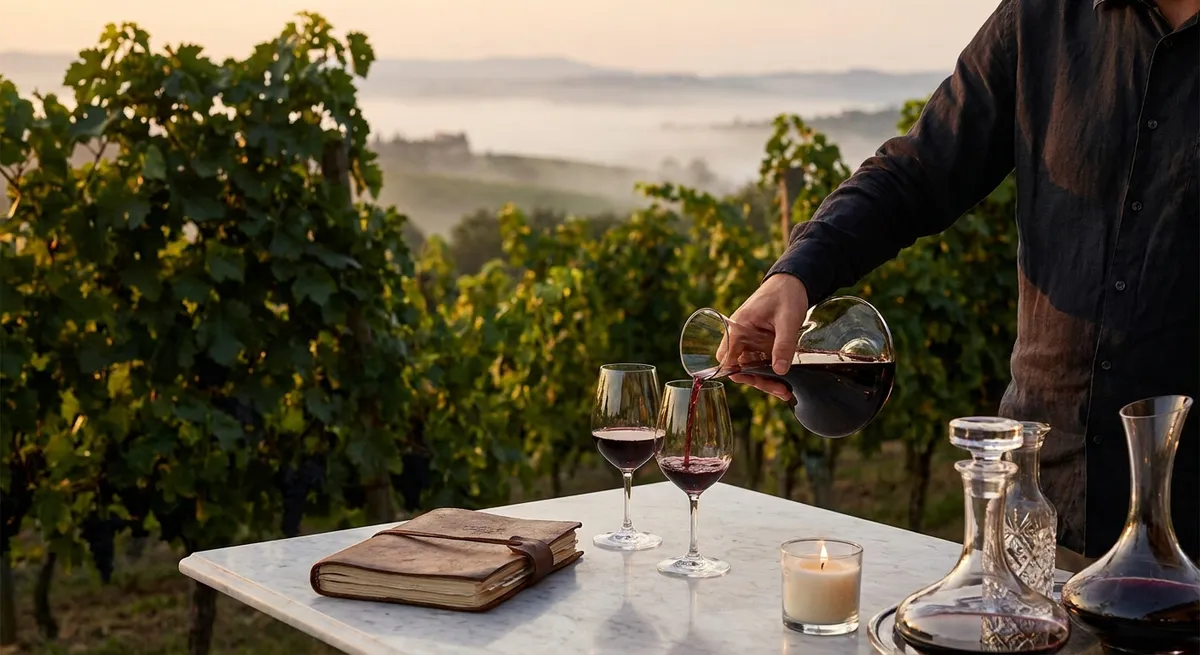
Time of day can be as decisive as choice of estate. While many visitors arrive at wineries in the late morning or early afternoon, the most atmospheric experiences often unfold at the edges of the day—shortly after sunrise, or as the light begins to fall. The vineyard at dawn carries a different energy: cooler air, softer sounds, the sense of a day just beginning. At dusk, the landscape seems to exhale; the urgency of work subsides, and conversation becomes more reflective.
Securing off-hours access—whether a sunrise vineyard walk, a twilight tasting on a terrace, or a private visit during harvest when the cellar is alive with fermentations—can make the difference between a memorable visit and an indelible one. These are the moments when the usual choreography of tourism falls away, replaced by a more authentic rhythm.
For the aficionado, such access also allows for deeper engagement. With fewer distractions, there is time to ask more nuanced questions, to revisit a wine in the glass after ten or twenty minutes, to observe how temperature and fading light subtly shift perception. Off-hours access is less about exclusivity for its own sake, and more about creating space for genuine connection.
Crafting Your Next Journey with Intention
A sophisticated wine tour is not defined by how many wineries you visit, nor by the price of the bottles you taste. It is defined by the quality of the attention you bring, and the quality of access you are afforded. Vineyard walks that anchor wines in place, library tastings that reveal time’s quiet work, cellar sessions that expose the making of a wine, meals that illuminate local culture, and off-hours visits that invite contemplation—these are the pillars of a truly elevated journey.
At Wine Tour Adventures, we believe that the most rewarding wine travel feels both finely orchestrated and deeply personal. Each itinerary is an invitation to slow down, to listen closely to what a region has to say, and to return home with more than just bottles in your luggage. You return with a sharpened palate, a richer sense of context, and the satisfying feeling that you have not merely visited a wine region—you have, however briefly, belonged to it.
Sources
- [Wine Institute – Wine Growing Regions](https://wineinstitute.org/our-industry/winegrowing-regions/) – Overview of major wine regions and their distinctive growing conditions
- [UC Davis Department of Viticulture and Enology](https://wineserver.ucdavis.edu/) – Research-based insights into grape growing and winemaking practices
- [GuildSomm – The Concept of Terroir](https://www.guildsomm.com/public_content/features/articles/b/gregory_jones/posts/terroir) – In-depth discussion of terroir and how landscape, climate, and soil shape wine character
- [Decanter – Understanding Wine Vintages](https://www.decanter.com/learn/understanding-wine-vintages-329979/) – Exploration of how vintage variation influences wine style and aging potential
- [UNESCO – Cultural Landscapes of Wine Regions](https://whc.unesco.org/en/list/?search=vineyard) – Documentation of notable wine landscapes recognized for their cultural and historical significance
Key Takeaway
The most important thing to remember from this article is that this information can change how you think about Wine Tours.