The most memorable encounters with wine rarely happen at the tasting bar. They unfold in the quiet choreography behind the scenes: in the restraint of a winemaker choosing not to release a promising vintage, in the precise timing of a pick call at dawn, in the hushed focus of a blending session that will never appear on Instagram. Premium wineries are not defined only by price or reputation, but by a culture of decisions that place integrity above convenience. For travelers seeking more than a pleasant afternoon among the vines, understanding this culture transforms a visit from sightseeing into genuine immersion.
In this guide, we explore how to recognize and appreciate the subtleties that distinguish truly premium estates—through five exclusive insights that refined wine enthusiasts quietly share with one another.
The Signature of Restraint: When a Winery Chooses Not to Pour
At the world’s most serious wineries, what you do not taste can be as revealing as what is in your glass. Premium estates are often defined by their willingness to forgo short‑term sales in favor of long‑term reputation. That might mean holding back a young vintage from the tasting lineup because the wine is not yet harmonious, or quietly declassifying entire lots that don’t meet the estate’s internal standard.
Enthusiasts who pay attention notice the subtle language: a winemaker explaining that a particular cuvée will be released “when it’s ready,” or that certain barrels will never see a label bearing the estate’s name. This discipline is especially evident in challenging years; in regions like Bordeaux or Napa, top producers sometimes bottle less wine, or shift more fruit into second labels to protect the character of their flagship. When visiting, listen closely to how the team speaks about what they chose not to do—the blocks they skipped, the experiments they abandoned, the vintages they poured only for library tastings years later. Restraint, at this level, is not a marketing line; it is house philosophy made visible.
Precision in the Vineyard: The Quiet Art of Micro-Decisions
Premium wineries treat each parcel of vines as a distinct personality rather than a unit of acreage. Instead of broad, mechanical passes, they often practice what can best be described as micro‑farming: adjusting canopy management, irrigation, and picking times not just by vineyard, but by block, row, or even soil variation within the same slope. This approach is as much about observation as technology—vineyard managers walking the rows at multiple times of day, tasting berries, noting how wind patterns or afternoon shadows affect ripening.
For the visitor, the markers of this precision are subtle but unmistakable. You might see colored flags or coded stakes dividing sections, or hear staff referring to parcels by their specific soil series rather than general names. Some top estates harvest the same block multiple times, returning for separate picks to capture different expressions of ripeness. Others defer to long‑term, low‑input farming—often organic, biodynamic, or regenerative—where vineyard health over decades outweighs the immediate convenience of synthetic interventions. When you tour, ask how harvest decisions are made, who walks the vineyard before a pick call, and what changes from block to block. The depth and specificity of these answers are often clearer indicators of quality than any cellar selfie.
The Invisible Architecture of Time: Barrel Programs and Aging Choices
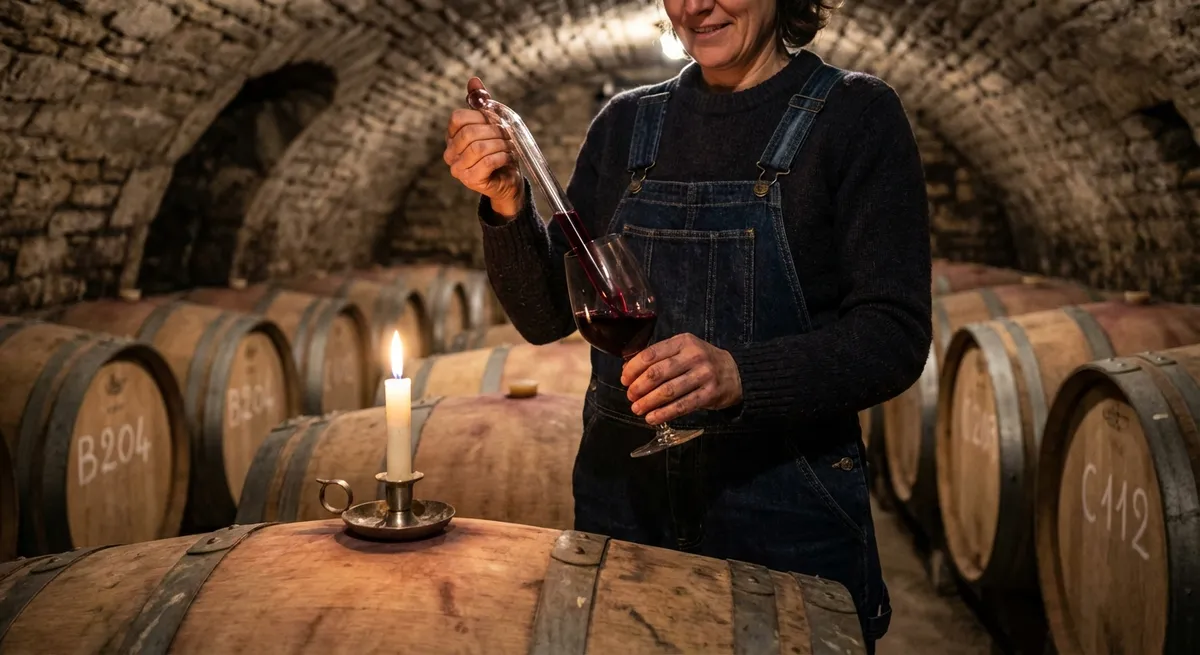
In the cellars of premium wineries, time is treated as an architectural element, not a fixed schedule. Rather than aging wines according to a predetermined calendar—12 months in oak, 6 in bottle—serious estates adapt the duration, vessel, and regimen to the personality of each wine. Barrels of different forests, coopers, toast levels, and ages are used like a palette, allowing the winemaking team to fine‑tune structure and aromatic expression without overwhelming the voice of the vineyard.
Visitors with a trained eye will notice diversity as they walk the barrel hall: not simply rows of identical barriques, but a considered mix of formats—barriques, demi‑muids, foudres, concrete eggs, or amphorae—each serving a specific purpose. Premium estates frequently track the behavior of each lot separately, tasting every barrel multiple times during élevage and sometimes re‑racking delicate wines to more neutral vessels as they evolve. Choosing to delay release, extend bottle aging, or even hold back entire vintages for library offerings is part of this long horizon. When you taste from barrel or older vintages on site, you are glimpsing the winery’s theory of time: whether it favors tension or opulence, energy or softness, youthful brightness or tertiary nuance.
Hospitality as Interpretation, Not Performance
At truly premium wineries, hospitality is not about spectacle; it is about translation. The most memorable hosts do not overwhelm you with memorized talking points or a barrage of adjectives. Instead, they act as interpreters between you and the estate’s deeper story—connecting the wine in your glass to its origin, without overshadowing your own experience. The atmosphere tends to be polished but unhurried; service is attentive yet discreet, with an emphasis on comfort rather than theatrics.
Small gestures reveal the seriousness of the approach: glassware selected to complement the specific varietals being poured, tasting sequences curated to tell a coherent narrative, and hosts who are as comfortable discussing rootstock and pruning as they are arranging shipment logistics. The language used is another subtle cue. At premium estates, staff tend to speak with clarity and humility about what they know, and with openness about ongoing experiments or unanswered questions. They are happy to pour again blind, to let you form your own impressions before revealing the label. When evaluating a visit, consider whether you felt guided rather than instructed, and whether your curiosity was met with thoughtful dialogue instead of rehearsed lines. That distinction separates luxury performance from genuine, knowledge‑driven hospitality.
The Intangible Signature: Recognizing a House Style Across Vintages
Perhaps the most profound measure of a premium winery is the continuity of its character over time. In serious estates, you can taste a recognizable personality that runs through different vintages, varietals, and cuvées—a consistent thread of texture, structure, or energy that marks the wines as belonging to a particular place and philosophy. This house style is not sameness; it is the disciplined expression of intention across changing conditions.
For enthusiasts, the greatest pleasure lies in tracing this signature through comparative tastings. Side‑by‑side flights of older and younger vintages, or different bottlings from the same year, reveal how the estate negotiates ripeness, oak, tannin, and acidity. In cool years, does the house embrace freshness and tension, or push for more extraction? In warmer years, does it reign in opulence to preserve finesse? Premium producers rarely chase stylistic fashions; instead, they refine their identity gradually, often over generations, balancing tradition with measured innovation. When visiting, ask to taste at least one library or back‑vintage wine if available, even if it’s a single bottle poured by the staff for context. Recognizing that quiet signature—how the wines feel more than how they taste—is where connoisseurship begins to deepen into something more enduring.
Conclusion
The true luxury of a premium winery is not found in marble floors or panoramic tasting rooms. It resides in intent: in the vineyard manager walking the rows at twilight, the winemaker declining an easy release, the host listening more than speaking, and the patient architecture of time that shapes every bottle. For travelers who seek more than a pleasant diversion, paying attention to these quieter signals turns a winery visit into an encounter with craft at its most serious and nuanced.
When you next plan a wine tour, look beyond the labels and the views. Ask about the choices you cannot see, the vintages you cannot taste, and the stories that never make it into the brochure. It is there, in the interplay between discipline and generosity, that the world of truly premium wineries quietly reveals itself.
Sources
- Napa Valley Vintners – What Makes a Winery “Premium”? – Trade organization overview of quality practices, vineyard focus, and cellar standards in high‑end Napa wineries
- Institute of Masters of Wine – The Role of Terroir and Viticulture – Detailed explanation of site expression, vineyard decisions, and how they shape premium wine
- Wine Spectator – Understanding Oak in Winemaking – In‑depth look at barrel choices, aging, and their impact on style and structure
- Decanter – How to Taste Wine Like a Pro – Expert guidance on recognizing house style, structure, and nuance when evaluating wines
- UC Davis Department of Viticulture & Enology – Research‑based resources on viticulture, enology, and quality‑driven wine production practices
Key Takeaway
The most important thing to remember from this article is that this information can change how you think about Premium Wineries.