The finest vineyard visits are no longer casual strolls among vines followed by a quick pour at the bar. For the discerning traveler, they are meticulously choreographed experiences—quietly luxurious encounters where terroir, time, and craftsmanship reveal themselves in measured, elegant layers. When approached with intention, a vineyard visit becomes less a tour and more a private dialogue with place, guided by those who understand its language best.
In this guide, we explore how to elevate a vineyard visit from pleasant to extraordinary, and we share five exclusive, insider-level insights that true wine enthusiasts will recognize as the mark of a genuinely premium experience.
Reframing the Vineyard Visit as a Conversation with Place
Treating a vineyard visit as a conversation rather than an event changes everything. Instead of simply “seeing the winery,” the refined traveler arrives with the ambition to understand how each decision—rootstock, canopy management, harvest timing, élevage—finds its way into the glass.
This begins by choosing properties that limit group sizes, offer appointment-only tastings, and prioritize depth over volume. In these spaces, there is room for slower pacing: walking a specific block rather than the entire property, comparing micro-parcels side by side, or tasting the same wine across multiple vintages to trace the evolution of style and climate.
An elevated visit often favors early or late appointments when light, temperature, and atmosphere are at their most flattering—when you can stand in the vineyard without harsh glare, linger in the cellar without a crowd, and allow nuance to register. The most memorable visits leave you with an understanding of “why this tastes like here,” not just “why this tastes good.”
The Architecture of a Premium Tasting Experience
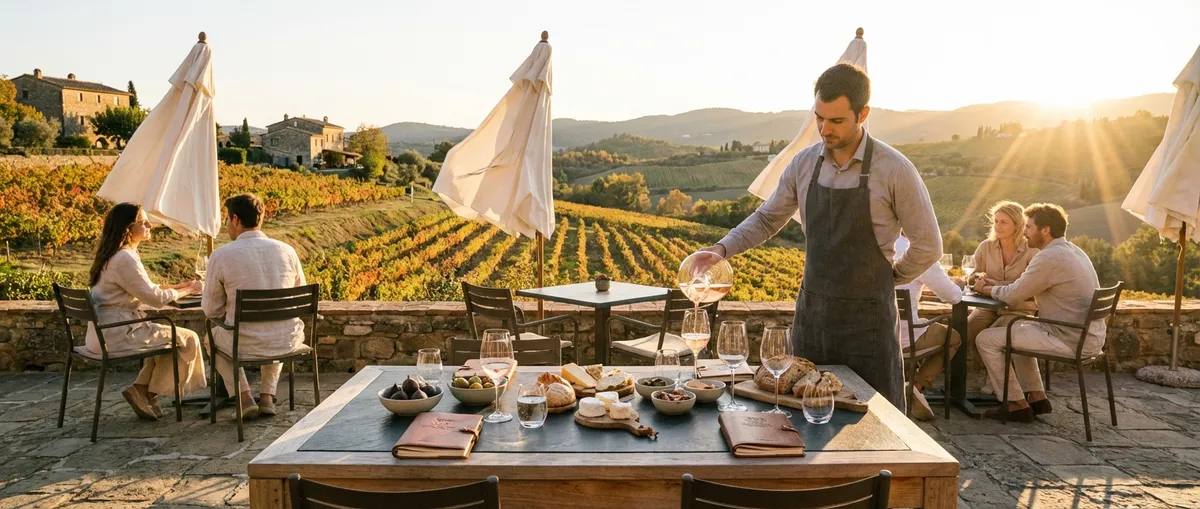
Premium tastings are carefully structured, almost architectural in their progression. The order of wines, their temperature, the choice of stemware, and the setting are all deliberate, designed to reveal the estate’s identity in measured gradations rather than in a rush of unrelated impressions.
A thoughtful sequence might begin with a wine that defines the estate’s stylistic baseline, followed by a comparative pair—same grape, different parcel; or same wine, different vintage—to anchor your perception. From there, the tasting can climb in complexity and intensity, culminating in the flagship cuvée only after the groundwork has been laid.
Glassware in such settings is not an afterthought. Distinct bowls for aromatic whites versus structured reds, or even a separate stem for a single prestige cuvée, signal an attention to detail that mirrors the precision of the winemaking itself. The room’s acoustics, lighting, and even the pace at which your host pours are curated to promote attentiveness rather than distraction.
Five Exclusive Insights for the Devoted Vineyard Visitor
Sophisticated wine enthusiasts tend to look for a particular set of cues—subtle markers that an estate is genuinely serious about quality and not merely trading on scenery. These five insights will help you read a vineyard visit like an insider.
1. Watch What Happens at the Edges of the Vineyard
The most revealing details are often at the margins: the rows near the forest line, the drainage channels, the way vine rows contour around a rocky outcrop. Walk, if possible, to the periphery of a key parcel and observe:
- How closely the vine vigor matches from row to row
- Whether cover crops are tailored to slope and soil, not merely decorative
- How water management is handled—drainage, erosion control, and canopy density
Enthusiasts know that edge rows frequently show the vineyard’s true complexity: cooler pockets, wind exposure, or subtle changes in soil that are often reflected in the character of the fruit. Ask your host how these variations influence picking decisions or blending choices; the depth of the response is often a proxy for the thoughtfulness of the viticulture.
2. Trace the Journey of a Single Parcel from Vine to Bottle
Rather than asking general questions about “the winemaking,” select one specific parcel or cuvée and follow its path in detail. Inquire about:
- Rootstock and clone selections for that specific block
- Pruning strategy and yield targets
- Harvest criteria beyond simple sugar levels (physiological ripeness, seed maturity, acidity)
- Vessel choices in the cellar (concrete, neutral oak, new oak, amphora, stainless steel)
- Length and style of élevage—on lees, with or without stirring, racking choices
A genuine high-end estate will be able to describe this journey with precision, often with vintage-to-vintage nuance. When you later taste that specific wine, the experience becomes layered: each aroma and texture is linked to a choice you have now traced.
3. Pay Attention to How They Speak About “Off” Vintages
How a winery discusses challenging years is one of the clearest indicators of its integrity. Instead of asking only about “great” vintages, invite conversation around seasons marked by rain, frost, heat spikes, or drought.
Look for:
- Specific adaptations in the vineyard: green harvesting, canopy adjustment, or stricter fruit selection
- Changes in picking dates or sorting intensity at the winery
- Decisions to declassify certain lots or reduce production of top-tier cuvées
Discreet yet candid stories about difficult vintages—paired with a willingness to open a bottle from such a year—often reveal that you are dealing with an estate that privileges authenticity over marketing gloss.
4. Examine the Quiet Infrastructure: Sorting, Fermentation, and Movement
In refined wineries, craftsmanship is often expressed through the quiet, functional corners: sorting tables, fermentation vessels, and the pathways wine travels from crush to barrel to bottle.
Notable cues include:
- Gentle fruit handling (gravity-flow cellars, minimal pumping where possible)
- Multi-stage sorting (in the vineyard and at the winery) to maintain purity of fruit
- A diversity of fermentation vessels adapted to grape and style, not chosen for aesthetics alone
Ask to see the sorting area if possible. The presence of well-organized, clean, and clearly used equipment—combined with thoughtful explanations of why each tool exists—signals a rigorous approach that typically translates into finer texture and greater precision in the glass.
5. Observe How the Estate Ages Its Own Wines
Serious properties do not view wine as finished at bottling; they consider how it will evolve and how that evolution is presented to guests. Look for:
- A library or reserve cellar containing older vintages of their key wines
- Occasional inclusion of mature bottles in tastings, even in small comparative pours
- A nuanced perspective on drinking windows and peak maturity
If the estate offers you a side-by-side of a current release and a carefully cellared older vintage, you are being invited into the long arc of their work. Enthusiasts know that such opportunities are rare and invaluable: tasting evolution in situ, in the place where the wine was born, offers a dimension that even the greatest bottle in a private cellar cannot fully replicate.
Designing Your Own Elevated Vineyard Itinerary
With these insights in mind, the most rewarding itineraries are intentionally restrained. Rather than stacking four or five wineries into a single day, consider focusing on one or two properties that allow for immersive, unhurried experiences—a vineyard walk, a cellar tour with technical detail, and a seated tasting with space for conversation.
Communicate your interests in advance: that you value comparative tastings, wish to delve into a particular grape or parcel, or are curious about older vintages. Estates that truly operate at a premium level will often tailor your visit with subtle yet meaningful touches—specific bottles opened for you, time with a vineyard manager or winemaker, or access to lesser-known cuvées rarely poured for the general public.
Allow time for reflection between visits. The most refined wine travelers keep a minimal but focused record of impressions: not just tasting notes, but context—light in the vineyard, the texture of the soil underfoot, the calm precision of the cellar. Over time, these observations form a personal atlas of experiences, where each vineyard is remembered not only by the wines it produced, but by the quiet excellence of the encounter itself.
Conclusion
A vineyard visit at its highest level is not defined by spectacle, but by nuance: the quiet confidence of a well-tended parcel, the candid discussion of vintage challenges, the unhurried tasting that reveals a wine’s journey rather than rushing its destination. For the discerning enthusiast, these are the signatures of true quality—subtle, disciplined, and enduring.
When you learn to read these details—the edges of the vineyard, the infrastructure behind the scenes, the evolution of wines over time—each visit becomes more than a pleasant diversion. It becomes a refined exploration of craft, a privileged glimpse into how place, patience, and precision converge in the glass.
Sources
- UC Davis Department of Viticulture and Enology – Technical overviews of vineyard management and winemaking practices that underpin many of the concepts discussed.
- Washington State University Viticulture & Enology Extension – Detailed resources on canopy management, site variation, and viticultural decision-making.
- Wine Institute – Sustainable Winegrowing – Insight into sustainable vineyard practices and how they shape both vineyard infrastructure and wine style.
- Decanter: Wine Regions and Fine Wine Guides – In-depth articles on terroir, vintages, and estate practices in major wine regions worldwide.
- Institute of Masters of Wine – Selected Articles & Resources – Advanced perspectives on viticulture, winemaking, and tasting structure that align with a premium, expert-level approach to vineyard visits.
Key Takeaway
The most important thing to remember from this article is that this information can change how you think about Vineyard Visits.