In the world of fine wine, the most memorable experiences unfold not in grand gestures, but in quiet, deliberate choices—of site, of time, of restraint. Premium wineries understand that luxury is not an aesthetic overlay; it is embedded in the way vines are farmed, grapes are handled, guests are hosted, and stories are told. For travelers who pursue nuance rather than spectacle, these estates offer something singular: a seamless fusion of place, precision, and hospitality that lingers long after the final pour.
Where Vines and Vision Converge
At the highest level, a premium winery is less an address and more a point of view. Of course, there is the expected architecture—stone, glass, and understated elegance—but what truly defines these properties is a philosophy that runs through every decision, from the vineyard block layout to the posture of the tasting room staff.
These wineries often occupy sites where geology, elevation, and microclimate converge in a way that simply cannot be replicated elsewhere. Slopes are chosen not for views, but for drainage and solar exposure; old vines are preserved not as relics, but as living archives of local character. In the cellar, technology is present yet discreet, employed only where it serves transparency rather than manipulation. The result is an environment where nothing feels accidental: the lighting, the acoustics, even the tempo of each tasting flight is calibrated to keep your attention on the glass and the landscape that created it.
Insight 1: Decoding Vineyard Architecture
Savvy wine enthusiasts know that vineyards can be “read” much like a city skyline. The arrangement of rows, the spacing of vines, and even the orientation of trellises are subtle indicators of a winery’s priorities. Premium estates often design their vineyard “architecture” with a degree of granularity that borders on obsession.
Row orientation may shift between parcels to manage sun exposure, protecting delicate aromatics in white varieties or preserving acidity in warmer climates. Density of planting can signal a commitment to lower yields and greater concentration; tighter spacing encourages vines to compete, driving roots deeper into complex subsoils. Terracing on steep slopes is not simply scenic—it mitigates erosion and allows roots to access distinct geological layers. As you walk the property, patterns emerge: small, carefully delineated blocks, subtle changes in canopy height, even different ground covers between rows. Enthusiasts who notice these details begin to see the final wines as a sum of countless micro-decisions made long before harvest.
Insight 2: The Texture of Time in the Cellar
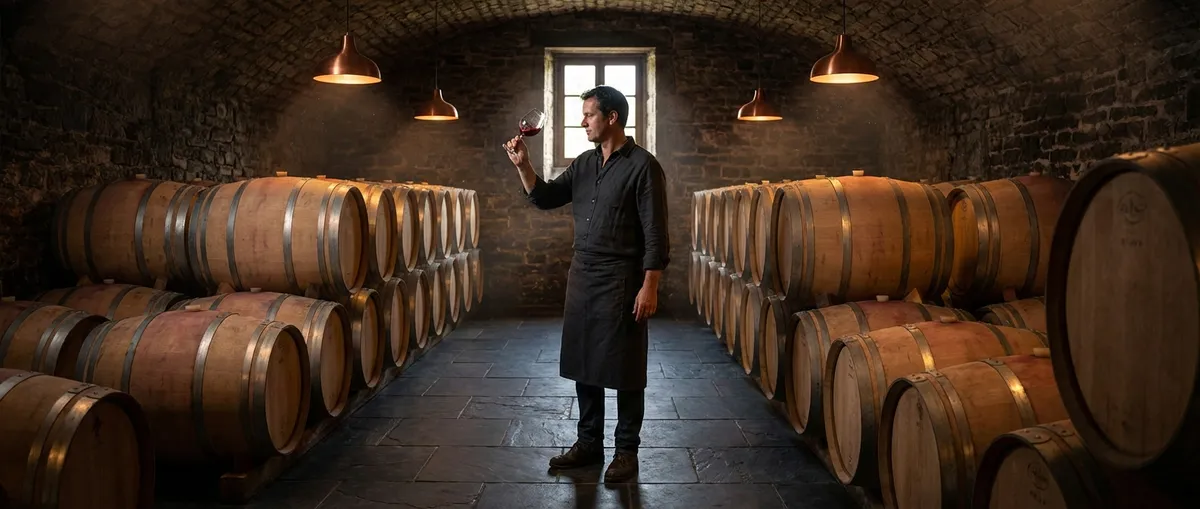
In premium wineries, time is treated as a structural element, not merely a duration on a label. Barrels, tanks, and amphorae are less about aesthetic choice and more about managing the texture of time—how slowly, and in what manner, a wine evolves.
You may notice that top estates often use a modest proportion of new oak, even for flagship wines. This restraint is purposeful: new barrels can add structure and spice, but too much can obscure terroir. Many premium producers prefer larger-format barrels or older oak that “breathes” without imposing excessive flavor, allowing tannins to soften gradually while preserving aromatic clarity. Extended lees contact for whites and sparkling wines adds a subtle, creamy depth without sacrificing precision.
Attentive visitors might also observe the rhythm of the cellar: quiet, consistent temperatures, dim light, minimal disturbance. Some wineries track barometric pressure and lunar cycles, timing racking or bottling to coincide with more stable conditions. The result is a cellar where time feels almost tactile—slow, deliberate, and ultimately responsible for the wine’s poise in your glass.
Insight 3: Precision Hospitality as a Fine Art
True luxury hospitality in wine country is rarely theatrical. The most memorable visits are those in which the choreography is invisible, yet everything feels precisely attuned to your preferences and pace.
Premium wineries often begin their preparation long before you arrive. Detailed reservation notes might include your prior visits, wine interests, and even preferred pacing—whether you linger over one bottling or prefer a broader exploration. Glassware choices are deliberate: bowl shape and rim diameter selected for specific varieties, with separate stems for still, sparkling, and fortified wines. Pour sizes are calibrated to allow proper aeration in the glass without overwhelming your senses.
Staff at these estates tend to speak softly but with remarkable depth: vintage comparisons, soil series, canopy trials, and fermentation experiments are shared not as lectures, but as threads you are invited to pick up. Silence is used thoughtfully; you are given moments to form your own impressions before the host layers in context. For enthusiasts, this kind of hospitality feels less like a sales encounter, and more like being temporarily folded into the intellectual and sensory life of the estate.
Insight 4: Vertical Tastings as a Portrait of Character
Many wineries offer samplings across varieties or tiers; premium estates, however, often reveal their soul through vertical tastings—the same wine, across multiple vintages. For the serious enthusiast, this is where the deeper narrative emerges.
A vertical tasting lets you observe how a single site weathers the arc of different seasons. Cool years may yield wines with taut acidity and lifted aromatics; warmer years show more generosity and breadth. When crafted by a consistent winemaking team, the through-line becomes clear: signature tannin shape, hallmark aromatics, and a recognizable structural “handwriting” that persists despite annual variation.
In this context, the conversation changes. Instead of simply asking which bottle you prefer, you begin to ask how this place behaves over time, how its wines age, and where the winemaker chooses to intervene or step back. Premium wineries frequently design these vertical experiences in quiet, contemplative spaces, sometimes with access to vineyard maps, vintage condition notes, or soil monoliths. It is a masterclass not in a single bottle, but in continuity and memory.
Insight 5: The Quiet Significance of Non-Commercial Bottlings
Among the most telling indicators of a premium winery’s depth is what they choose not to sell broadly. Look for micro-cuvées, experimental lots, or estate-only bottlings—wines that exist not to fill a market niche, but to answer an internal question.
These limited wines may come from a single, particularly expressive row, an unusual clone, or a trial of alternative elevage (such as aging in clay, concrete, or large neutral oak). They often appear only in the winery’s library room, private tasting salons, or members’ allocations. While quantities are small, their significance is disproportionate: they reveal the estate’s curiosity, its tolerance for risk, and its willingness to explore beyond established success.
When a host offers you one of these wines, they are sharing more than scarcity; they are opening a window into ongoing conversations within the cellar. For the perceptive visitor, this is an invitation to ask different questions: How did this project begin? What surprised the team? Did any techniques migrate back into the main cuvées? These quiet experimental threads often foreshadow the stylistic evolution of the estate itself.
Curating Your Own Premium Winery Narrative
Premium winery visits reward intention. Beyond booking prestigious names, consider how you want your journey to unfold: do you seek an in-depth single-estate immersion, or a sequence of contrasting philosophies across a region? Are you drawn to traditional, multi-generational domaines, or to avant-garde properties reimagining what luxury hospitality can look like?
As you design your itinerary, treat each visit as a chapter in a larger narrative rather than a standalone event. Choose one experience centered on vineyard immersion, another focused on vertical or library tastings, and perhaps a third that showcases experimental or small-lot wines. Keep notes not only on flavor, but on texture, structure, and how each estate uses space, silence, and time to shape your perception.
In the end, the true hallmark of a premium winery is the resonance it leaves behind. The finest visits do not simply add bottles to your cellar; they reframe how you think about origin, craftsmanship, and the quiet, meticulous work that turns landscape into liquid memory.
Conclusion
The world of premium wineries is not defined by opulence alone, but by an almost forensic attention to what cannot be easily seen: root depth and row spacing, barrel grain and cellar cadence, conversational nuance and the decision to hold certain wines back from the market. For the devoted enthusiast, these details are not decoration; they are the very substance of the experience.
As you explore the upper tier of global wine regions, look past the obvious markers of luxury and attune yourself to these subtler signals. In doing so, you will find that the most refined estates share a common ethos: a deep respect for place, a rigorous pursuit of precision, and an unwavering commitment to offering guests not just a tasting, but a carefully composed encounter with their world.
Sources
- Napa Valley Vintners – Understanding Terroir - Overview of how soil, climate, and topography shape wine character in a benchmark premium region
- Institute of Masters of Wine – The Role of Oak in Winemaking - Detailed discussion of barrel choices, aging, and their impact on wine style
- Wine Institute – Sustainable Winegrowing Practices - Insight into vineyard and winery decisions that underpin quality at serious estates
- UC Davis Department of Viticulture and Enology - Educational resources on viticulture, fermentation, and cellar practices at a leading wine research institution
- Decanter – Guide to Vertical Tastings - Explanation of vertical tastings and what they reveal about winery style and vintage variation
Key Takeaway
The most important thing to remember from this article is that this information can change how you think about Premium Wineries.