Vineyard visits have evolved far beyond the standard tasting bar and souvenir glass. For the traveler who values nuance over novelty, the modern wine journey is an immersion: into landscape, philosophy, craftsmanship, and time itself. This is where terroir is not just tasted, but observed, walked, and quietly understood. Below, we explore how to approach vineyard experiences with intention—and reveal five exclusive insights that reward the truly attentive wine enthusiast.
Reframing the Vineyard Visit as a Conversation with Place
The most memorable vineyard experiences feel less like tours and more like dialogues with the land and the people who interpret it. Rather than viewing a visit as a checklist of wines to sample, consider it a slow unfolding of context: geology beneath your feet, microclimates brushing across your skin, and histories embedded in each row of vines.
Arrive with curiosity about why this particular place produces this particular wine. Ask how the orientation of the slopes influences ripening, how altitude affects acidity, and how the estate navigates a changing climate. Notice the details: the distance between vine rows, the presence (or absence) of cover crops, the shade patterns at different times of day. Each element whispers clues about the style in your glass.
This kind of intentional presence transforms the visit into a layered experience. You are not just tasting a vintage—you are tracing its origin story across soil, sunlight, and human decision-making.
From Barrel to Bottle: Observing the Invisible Decisions
Behind every polished tasting room lies a dimension of choices rarely seen by casual visitors. For the traveler seeking depth, observing the “invisible decisions” in the cellar can be as compelling as the finished wine.
Pay attention to the vessels: gleaming stainless steel, seasoned oak barrels, concrete eggs, or terracotta amphorae. Each speaks to a philosophy—precision and purity, oxygen-managed texture, minimalist intervention. Ask how long wines rest on lees, how often bâtonnage is performed, and whether indigenous or selected yeasts guide fermentation. These technical details may seem esoteric, yet they reveal a producer’s aesthetic: linear and taut, or textural and expansive.
Notice how the cellar smells: a hint of fermentation, the sweetness of seasoned oak, the cool stone of aging rooms. These sensory impressions, when paired with questions about aging length, racking, and blending, offer a more complete understanding of why the same grape can express itself so differently from estate to estate.
Five Exclusive Insights for the Attentive Wine Enthusiast
Within the quiet choreography of a working vineyard, there are layers of insight that most visitors never see. For the traveler willing to look beyond the surface, these five considerations can transform a pleasant outing into a truly elevated encounter.
1. Vintage is a Story, Not a Score
Many enthusiasts know that “vintage matters,” but few explore how intimately it shapes a visit. When you stand among vines from which earlier vintages were harvested, each year becomes more than a number on a label—it becomes a weather pattern, a set of human decisions, and a living archive.
Ask the estate to describe three consecutive vintages of the same wine: a cool year, a warm year, and an “ideal” year. Listen for how harvest dates shifted, how canopy management adapted, and how acidity, tannin, and alcohol evolved. If possible, taste these vintages side by side. What emerges is not simply “better” or “worse,” but character: restrained or opulent, taut or generous.
This perspective allows you to appreciate wines that may never garner the highest critical scores but offer singular, emotionally resonant expressions of their growing season—a privilege that only becomes truly vivid when experienced on-site.
2. The Quiet Power of the Edges of the Estate
Most visitors focus on the most photogenic parcels: sweeping slopes, iconic vistas, the “grand” blocks. Yet some of the most revealing terroir stories live at the edges of a property—where the soil changes, the wind shifts, or a slope subtly turns.
If offered a vineyard walk, ask to see transition zones: where clay gives way to limestone, where a cool pocket meets a warmer exposure, where younger vines border older plantings. Often, these boundary areas are where experimentation happens: new rootstocks, alternative pruning methods, or evolving varietal choices.
When you later taste a wine labeled as a single vineyard or cuvée, you will understand that it is not uniform land but a mosaic—carefully blended or, in some avant-garde estates, intentionally bottled as micro-parcels. This awareness deepens your appreciation of the precision behind even the most seamless wine.
3. Pruning and Canopy: The Architecture of Flavor
Grapes are not merely harvested; they are sculpted over the course of the year. The way vines are pruned and canopies managed has a profound impact on ripeness, aromatic profile, and textural balance.
During your visit, look closely at the vines themselves. Are they trained low to the ground or elevated? Is the canopy open and airy or denser and more protective? Ask how the estate manages leaf removal, crop thinning, and shoot positioning. A producer aiming for fresher, more aromatic wines may protect clusters from excessive sun, while another seeking richer, riper profiles might strategically expose fruit.
Understanding this “architecture of flavor” is an insider’s key. It links the tactile experience of walking through a vineyard—brushing leaves, feeling sunlight on your arms—with the eventual sensation of acidity, fruit character, and tannin in your glass.
4. The Subtle Art of Time of Day
Most visitors choose tasting slots based on convenience, not on how light, temperature, and their own senses shift over the day. Yet timing can dramatically alter both your perception of the wines and the atmosphere of the estate.
Morning visits often offer the clearest sensory experience: cooler temperatures, a rested palate, and more focused aromas. The vineyard may still hold traces of overnight moisture; the light is softer, the mood quieter. In the late afternoon, the estate often feels warmer, more languid—reds can seem more expansive, whites plusher. Shadows stretch across the rows, and the vineyards feel more theatrical.
For your next trip, coordinate a visit that includes a vineyard walk in morning light and a cellar tasting later in the day. Comparing the same wines across these temporal contexts is an understated but deeply rewarding insight into how environment—and your own physiology—shape perception.
5. Hospitality as a Window into the Estate’s Soul
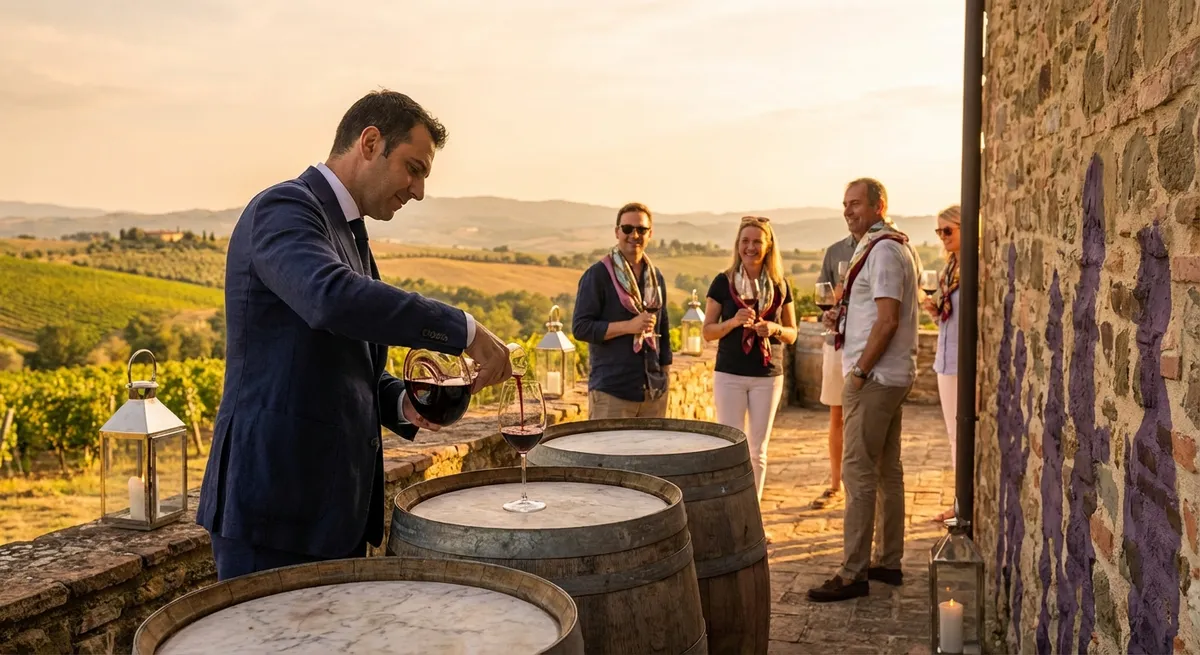
In refined wine travel, the quality of hospitality is not measured in extravagance but in alignment with the estate’s identity. For the discerning guest, how a winery receives you can be as revealing as what they pour.
Observe the pacing of the experience. Is there time to linger with each wine, revisit a favorite, or inquire deeply, or is the visit structured around efficiency? Are you offered small, thoughtful touches—local cheeses, estate olive oil, garden herbs—that echo the region’s character without overshadowing the wine itself? Does the conversation feel scripted or genuinely responsive to your interests?
The most sophisticated estates treat hospitality as an extension of their winemaking philosophy: precise yet unhurried, attentive but never ostentatious. When these elements are in harmony, you leave not simply with tasting notes, but with a coherent, embodied sense of what the estate stands for.
Pairing Place, Culture, and Memory
While the glass commands most of the attention, it is the choreography around it—architecture, landscape design, local cuisine, and cultural context—that turns a vineyard visit into a lasting memory.
Notice how the tasting spaces are designed: Are windows framing specific parcels? Do materials echo the surrounding environment—local stone, reclaimed wood, contemporary concrete? Many thoughtful estates curate sightlines and textures to evoke the same qualities found in their wines: purity, structure, warmth, or restraint.
If the opportunity arises, explore the local table. Regional dishes—perhaps a simple, perfectly roasted poultry with a structured white, or a humble, slow-braised cut of meat with an age-worthy red—reveal how wines were originally conceived: as partners to a way of life, not just objects of collection. This pairing of place, culture, and glass anchors the wine in memory, long after the last bottle from that trip has been enjoyed.
Crafting Your Own Lexicon of Vineyard Experiences
As you visit more estates across regions and countries, patterns begin to emerge: similarities in slope orientation, shared approaches to sustainability, recurring architectural motifs in cellars and tasting rooms. Over time, you build your own quiet lexicon of vineyard experiences.
Document not only the wines but also the subtler elements: the soundscapes (wind in the canopy, distant tractors, cellar hush), the textures (cool stone steps, gravel paths, warm terrace tiles), and the human interactions that shaped your understanding. These details can be as influential as tasting notes when recalling why a particular visit felt extraordinary.
For the sophisticated enthusiast, the goal is not to chase the most famous labels, but to curate a series of deeply personal encounters with place and craft. Vineyard visits, approached with this level of attention, become less about acquisition and more about cultivation: of knowledge, of discernment, and of a more profound connection to the world of wine.
Conclusion
A vineyard visit, at its most refined, is an invitation to slow down and attune yourself to subtleties rarely visible from afar. By looking beyond the tasting counter—to the edges of the property, the shape of the canopy, the rhythm of hospitality, the character of each vintage—you participate in the narrative of the estate rather than merely observing it.
For the discerning traveler, these experiences accumulate into a personal atlas of terroir, memory, and meaning. Each journey adds nuance to your understanding of wine, transforming every future glass—not just those enjoyed at the source—into a richer, more resonant pleasure.
Sources
- UC Davis Viticulture and Enology – Terroir and Vineyard Management - Technical background on how site, climate, and viticultural choices influence wine style
- OIV – International Organisation of Vine and Wine - Global reference on viticulture, enology practices, and official reports on climate and production trends
- Wine Institute – Sustainable Winegrowing - Insights into sustainability practices and how they shape modern vineyard and winery operations
- Harvard T.H. Chan School of Public Health – Wine and Health - Evidence-based discussion on wine consumption within a broader lifestyle context
- Decanter Magazine – Vineyard and Cellar Features - In-depth wine travel pieces and profiles of estates, offering real-world examples of elevated vineyard experiences
Key Takeaway
The most important thing to remember from this article is that this information can change how you think about Vineyard Visits.