Wine tours, at their most rewarding, are less about ticking off famous labels and more about orchestrating a sequence of moments—textures of landscape, fragments of conversation, and quiet revelations in the glass. For the serious enthusiast, a well‑composed itinerary becomes a kind of vinous cartography, mapping not only regions and appellations, but also philosophies, craftsmanship, and time itself. This is where wine travel transcends tourism and becomes a refined pursuit: a curated study in place, patience, and taste.
In this guide, we explore how to design and experience wine tours with genuine intent, unveiling five exclusive insights that seasoned enthusiasts quietly rely on to extract the deepest pleasure and understanding from each visit.
Designing the Arc of a Day: Beyond the “Three Wineries” Template
Most itineraries default to a predictable pattern: breakfast, three wineries, lunch, sunset photos. For the devoted wine traveler, this structure is not only limiting—it can blunt the senses precisely when they should be most alert.
Consider instead the “arc” of sensory attention. The first serious tasting of the day should be allocated to the producer whose wines demand the most focus—often a benchmark estate or a property whose style you are actively studying. Schedule them early, while your palate is fresh and your curiosity is fully awake, and allow enough time for an unhurried progression from vineyard walk to cellar to tasting.
Late morning or early afternoon can be devoted to a contrast: perhaps a smaller, less heralded estate, or a domaine working in a different idiom (organic vs conventional, amphora vs barrique, single‑parcel vs blended cuvées). The goal is not volume, but calibration. Reducing the number of visits and building in generous travel buffers allows each stop to breathe, and it gives you space to process what you’ve tasted—ideally with a notebook open and your schedule forgiving.
The most refined itineraries are constructed as narratives rather than collections: a movement from altitude to river valley, from limestone to basalt, from restrained to opulent. When thoughtfully designed, the day itself becomes a comparative tasting, with the landscape as your masterclass.
Exclusive Insight #1: The “Library Lens” – Reading a Winery Through Its Older Vintages
One of the quiet privileges of serious wine touring is access to library bottles—older vintages drawn from a winery’s own cellar. For enthusiasts, these are more than rare treats; they are diagnostic tools.
Requesting (and paying for) a focused library tasting where possible allows you to examine three crucial dimensions: the wine’s capacity to age, the consistency of the house style across years, and how the estate responds to difficult vintages. A producer whose wines retain grace and definition even in challenging seasons reveals a mastery of both vineyard and cellar that no polished tasting room can replicate.
Approach these tastings as you would a vertical in a serious wine bar: line up the glasses, taste in silence first, then discuss. Pay attention to the architecture of the wines—the way acidity, tannin, and fruit interact over time. Do the older bottles maintain tension, or have they collapsed into softness? Are the tertiary notes (truffle, leather, dried flowers, forest floor) integrated or disjointed?
The “library lens” allows you to see past the charming host and the immaculate architecture, into the core question: does this estate make wines built for a meaningful life in bottle, or for fleeting impressions in a crowded tasting room?
Exclusive Insight #2: Soil Underfoot – Walking the Vineyard with Precision
The most illuminating moments of a wine tour often occur not in the cellar but in the rows of vines, under a particular light, with the crunch of soil beneath your shoes. Enthusiasts who understand this treat the vineyard walk as the main event rather than a prelude.
Instead of generic questions about “terroir,” inquire specifically about rootstocks, vine density, canopy management, and harvesting strategy. Ask to see the differences between parcels: perhaps one block faces north with cooler exposure and retains higher acidity, while another ripens earlier due to stony, heat‑reflective soils. If possible, touch the soil—friable limestone, crumbly schist, compact clay—and listen carefully as the vintner explains drainage, vigor, and stress.
The goal is not to turn your tour into an agronomy lecture, but to link tangible physical realities to flavors in the glass. When you later taste a wine labeled with a parcel or vineyard name you’ve walked, you are no longer reading a description; you’re revisiting a place.
For the refined traveler, the question is always: how much of this landscape can I carry with me—and will I recognize it when I encounter it again in another vintage, another glass, another city?
Exclusive Insight #3: Timing the Visit – Choreographing the Season
Choosing when to visit a wine region is as critical as choosing where. For enthusiasts, high season is not necessarily ideal season. While harvest has an undeniable romance, it often brings a frenetic pace and limited access to winemakers whose attention is justifiably on fermentations rather than visitors.
A more discerning approach is to align your trip with key seasonal moments that reveal different aspects of the craft. Late winter or early spring can offer a rare intimacy: cellars are quieter, winemakers are blending and making decisions on recent vintages, and there is time for deeper conversation. You may taste barrel samples or pre‑bottling assemblages that afford insight into how the wines are shaped before release.
Late spring and early summer showcase the vineyard in active growth—perfect for understanding canopy management and disease pressure—while autumn after the main harvest can provide a reflective mood, with newly filled barrels and the lingering scent of fermentations. Each window has its own clarity, and the enthusiast chooses not the Instagram peak, but the season that best aligns with their curiosity.
This temporal choreography is what transforms a visit into a study: the same estate can feel like a different universe in March versus October, and discerning travelers learn to leverage this variability.
Exclusive Insight #4: The Precision Notebook – Recording with Intent
While many travelers snap photos and rely on memory, serious enthusiasts understand that sensory impressions, no matter how vivid in the moment, are fleeting. A refined tasting notebook—whether beautifully bound or purely digital—becomes an indispensable tool, but only when used with precision.
Rather than documenting every wine exhaustively, focus on wines that represent inflection points: the first from a new grape variety, the bottle that defines an appellation for you, or a library vintage that shifts your understanding of aging potential. Note not only aromas and flavors, but context: weather that day, conversation with the winemaker, the vineyard you walked just before tasting.
Over time, patterns emerge. You may discover a recurring preference for wines grown on certain soils, or a consistent affinity for estates that harvest slightly earlier. These insights are not theoretical; they guide future travel, purchases, and cellaring decisions.
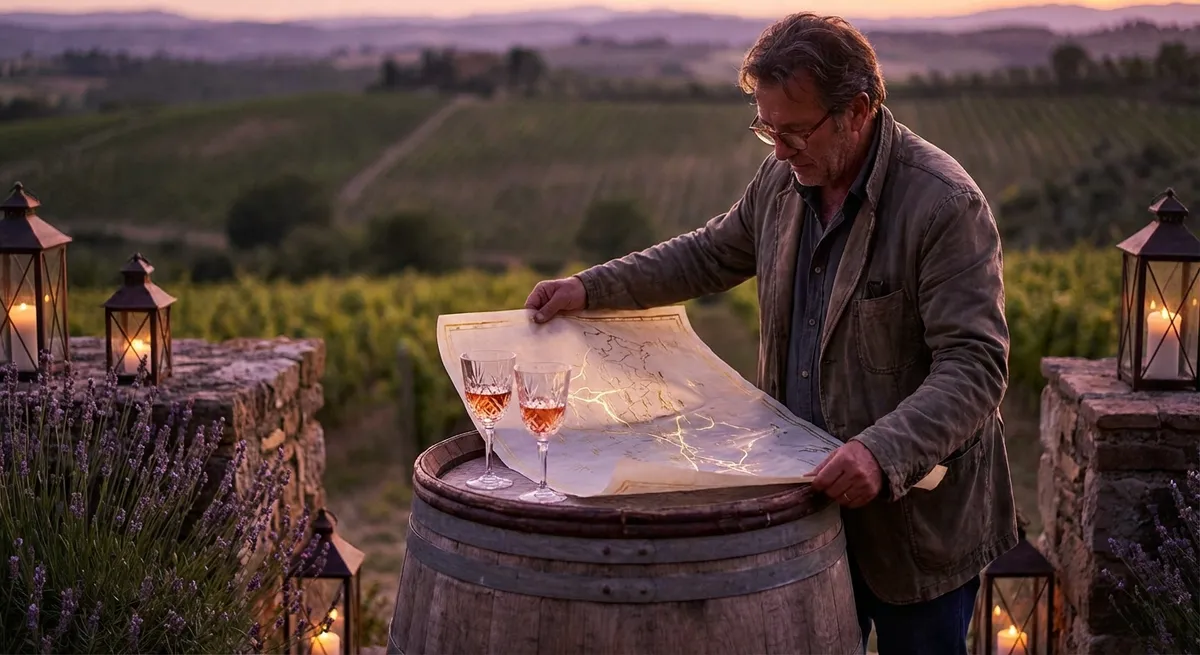
The notebook, then, is not a diary of what you did, but a map of what you’ve learned. It becomes a private archive of sensory and intellectual progress—far more valuable than a collection of labels or posed photographs.
Exclusive Insight #5: Elevated Pairings – Dining as a Continuation of the Cellar
For a truly elevated wine tour, the day does not end with the last pour in the tasting room; it continues seamlessly into the plate and glass at dinner. Enthusiasts treat evening dining not as a reward after a long day, but as an extension of their research.
Seek restaurants that collaborate closely with local producers—places where the sommelier can secure back‑vintage bottles from estates you visited, or suggest producers you missed that align with your emerging preferences. A wine you tasted briefly at the winery takes on new dimensions when paired thoughtfully with regional cuisine: aged Barolo with braised veal cheek, old‑vine Riesling with river fish and herbs, mature Blanc de Blancs with a barely sweetened citrus tart.
When possible, reserve in advance and share your day’s itinerary with the sommelier. This allows them to design pairings that either reinforce your experiences (deepening your understanding of a region) or offer deliberate contrast (introducing you to neighboring appellations or lesser‑known grapes). The most memorable wine travel days end not with exhaustion, but with that quiet, lingering satisfaction of having completed a coherent story from soil to cellar to table.
Conclusion
A sophisticated wine tour is not defined by luxury vehicles or grand façades, but by curation, intention, and the pursuit of nuance. By prioritizing library tastings over crowded bars, vineyard walks over souvenir shops, and carefully timed visits over generic high-season itineraries, the enthusiast turns travel into a private education.
In the end, the true measure of a refined wine journey is not how many estates you visited, but how clearly you can recall the personality of each place: the way the light fell on a particular slope, the cadence of a winemaker’s explanation, the elegance of an older vintage that confirmed your trust in an estate. These are the details that linger, long after the last bottle from your trip has been shared.
Sources
- [Wine Institute – World Wine Regions Overview](https://www.wineinstitute.org/resources/worldwinedata) – Provides data and context on major wine-producing regions and their characteristics.
- [University of California, Davis – Viticulture and Enology Extension](https://wineserver.ucdavis.edu/industry-info/viticulture-enology) – Technical background on vineyard management, winemaking practices, and how they influence wine style.
- [JancisRobinson.com – Vertical Tastings and Aging Potential](https://www.jancisrobinson.com/learn/tastings) – Expert reports on vertical tastings that illustrate how wines evolve and what to look for in older vintages.
- [Decanter – Guide to Wine Travel and Regional Highlights](https://www.decanter.com/wine-travel) – Curated wine travel insights, regional recommendations, and seasonal considerations.
- [GuildSomm – Articles on Terroir, Soils, and Viticulture](https://www.guildsomm.com/public_content/features) – In-depth articles on soil types, vineyard practices, and their sensory impact in the glass.
Key Takeaway
The most important thing to remember from this article is that this information can change how you think about Wine Tours.