The most memorable wine tours are not defined by how many wineries you visit, but by how precisely each moment is composed. For the discerning enthusiast, a wine journey becomes a kind of quiet choreography—where time of day, terroir, stemware, and even silence itself are part of the experience. At Wine Tour Adventures, we believe a truly elevated tour is less about accumulation and more about curation: fewer stops, deeper conversations, and textures of experience that linger long after the final pour.
Below are five exclusive, under‑the‑radar insights that transform a pleasant day of tasting into a genuinely distinguished wine voyage.
Designing a Tour Around Light, Not Logistics
Most travelers begin with maps and mileage. The refined enthusiast begins with sunlight.
The character of a wine in the glass shifts subtly with changing light. Morning light tends to be cool and analytical, ideal for crisp whites and sparkling wines whose acidity and precision are best appreciated in fresher conditions. Late afternoon’s warmer glow flatters textured reds and oak-aged whites, revealing silk, spice, and depth that can feel one‑dimensional under harsher mid‑day glare.
Plan your route around this natural progression. Begin with méthode traditionnelle sparkling or high‑acidity whites before noon, when your palate is fresh and your senses unhurried. Reserve structured red flights for later in the day, when both light and mood are softer and more contemplative. A carefully chosen golden‑hour appointment—perhaps in a west‑facing vineyard block—will inevitably feel more intimate and luxurious than another hurried mid‑day tasting, even if the pours are identical.
Subtle as it seems, orchestrating tastings according to light rather than convenience is one of the quiet signatures of a genuinely premium wine tour.
The Vineyard Walk as a Private Masterclass
Many visitors gravitate straight to the tasting bar. The expert detours into the vines.
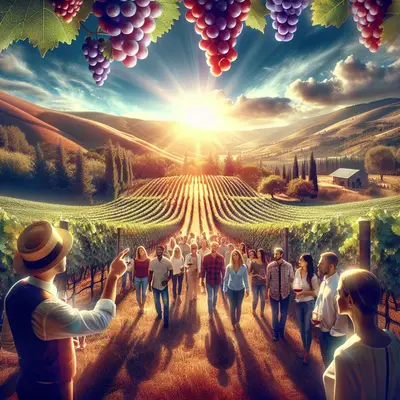
A vineyard walk with a knowledgeable host is one of the most revealing experiences a serious enthusiast can seek. This is where abstract concepts—diurnal shift, drainage, canopy management, clonal selection—become tangible realities underfoot. Clay versus limestone is no longer a line on a tech sheet; it’s the way your shoes feel on the slope and the way the breeze moves through the leaves.
Request a focused walk that compares at least two distinct parcels: perhaps a steep, rocky hillside and a gentler, richer valley floor plot. Ask to see how row orientation affects ripening, or how cover crops are used to manage vigor and biodiversity. When you later taste the wines from those exact blocks, you are not merely sampling; you are recognizing. The wine becomes a three‑dimensional memory of a specific place you have seen, touched, and walked.
This kind of vineyard immersion turns a tour into a private masterclass in terroir—one of the most prized experiences for enthusiasts who seek depth over spectacle.
Beyond the Tasting Flight: Exploring Textures, Not Just Flavors
Traditional tasting notes lean heavily on fruit descriptors—cherry, stone fruit, citrus. Serious enthusiasts know that texture is often more revealing than flavor.
On your next tour, recalibrate your focus. When presented with a flight, taste with an eye (and palate) for tactile qualities: grain of the tannins, shape of the acidity, weight and glide of the wine across your tongue. Is the acidity linear or more like a slow, spherical bloom? Are the tannins chalky, velvety, or powder-fine? Does the finish contract, or does it slowly widen?
To sharpen this awareness, request comparative pours within the same visit:
- The same variety aged in different vessels (neutral oak vs. new oak vs. amphora)
- Two vintages from a single parcel, especially a cooler and a warmer year
- A barrel sample beside its finished, bottled counterpart
These comparisons reveal the artisan’s hand with uncommon clarity. You begin to taste decisions—harvest dates, extraction choices, élevage—rather than just outcomes. For the refined traveler, this is where the conversation evolves beyond “what you like” into “what you understand.”
Private Time in the Cellar: Reading the Architecture of Aging
Many tours include a brief walk through the cellar; few linger long enough to read it.
A carefully constructed cellar is a map of a winery’s philosophy. The shape and arrangement of barrels, the coexistence of concrete eggs with foudres, even the size of the stacks—each suggests how the estate thinks about time, oxygen, and evolution. An elevated tour carves out deliberate, unhurried time in this space, ideally in a semi‑private or fully private setting.
During your visit, focus on three subtleties:
- Diversity of vessels – A mix of barrique, demi‑muids, foudres, amphora, and stainless steel implies a nuanced approach to tannin management and aromatics. Ask which grapes or parcels go into which vessels and why.
- Barrel sourcing and toast levels – Premium producers know their coopers intimately. Inquiring about grain tightness, forest origin, and toast profiles often opens an unusually candid conversation about style and intent.
- Sound and temperature – A truly serious cellar has a certain hush: steady humidity, stable coolness, and a sense of restrained energy. The more controlled the environment, the more controlled the evolution in bottle.
Occasionally, you may be offered a barrel or cask tasting. Approach it not as a novelty, but as a glimpse into the wine’s trajectory. Note what is primary and exuberant now, then taste the estate’s older vintages later in the visit to understand the arc from cellar to maturity.
The Art of the Final Bottle: Closing with Intention, Not Impulse
Many tours end at the shop, where the energy shifts from contemplation to commerce. The experienced enthusiast treats this moment as the coda to the entire composition, not a casual afterthought.
Rather than assembling a random assortment, identify a single “anchor bottle” at each estate—one that encapsulates the producer’s essence. It may not be the rarest or most expensive. It may, instead, be:
- The wine that first made the estate’s reputation
- A flagship cuvée from the parcel you walked earlier that day
- A quietly age‑worthy bottle the winemaker personally favors for their own cellar
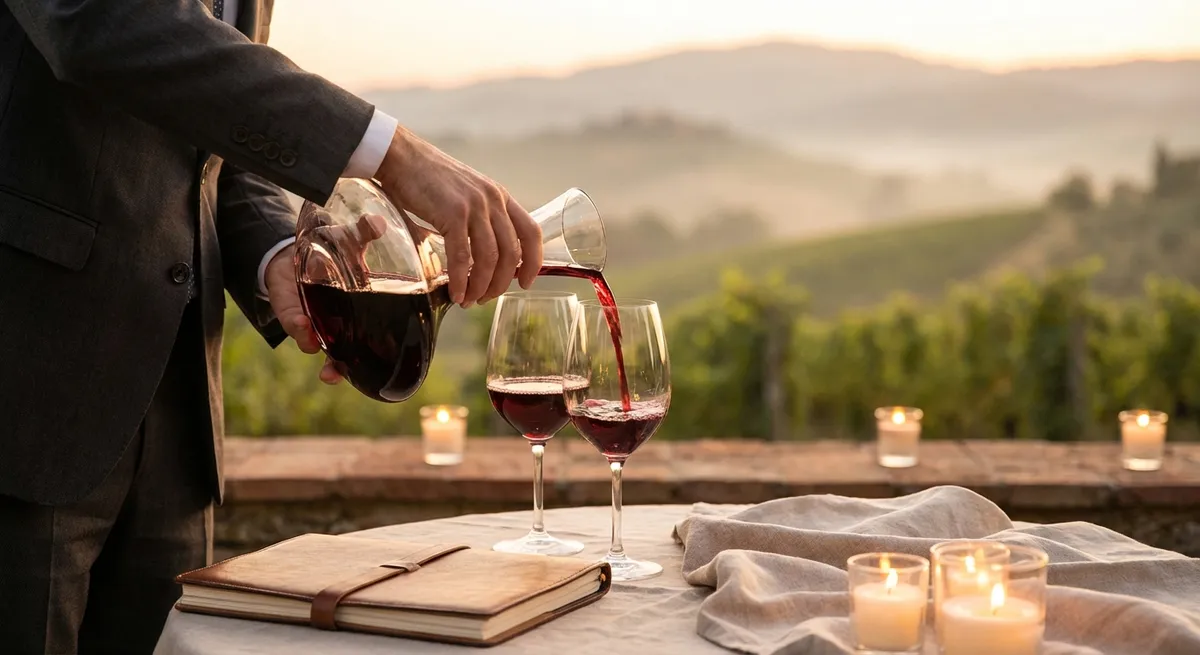
When making your selection, ask explicitly about aging windows, food pairings beyond clichés, and how the wine evolves over two or three days once opened. Producers who think seriously about longevity will share precise, often surprisingly detailed guidance: decanting durations, ideal serving temperatures, and when in the wine’s life it will truly sing.
Back home, recreate elements of your tour—glassware, serving temperature, a moment of unhurried quiet—when you open that anchor bottle. A well‑chosen wine, enjoyed with intention, can restore the entire journey with striking clarity.
Conclusion
A refined wine tour is not a checklist of famous labels; it is a deliberately composed sequence of light, place, texture, and time. By designing your day around the subtleties that most visitors overlook—sunlight instead of traffic, vineyard walks instead of only tasting bars, textures rather than just flavors, cellars as philosophies, and final selections made with quiet intention—you transform travel into an art form.
For those who seek more than postcards and prestige, these nuances are where true luxury resides: in the depth of understanding, the quality of attention, and the memories that continue to unfold every time a carefully chosen cork is pulled.
Sources
- Wine Institute – Discover California Wines – Overview of visiting wine regions and tasting room experiences in California
- Institute of Masters of Wine – What is Terroir? – In‑depth discussion of terroir and how site characteristics influence wine
- UC Davis Department of Viticulture and Enology – Technical resources on winemaking, barrel aging, and wine structure from a leading academic institution
- Wine Spectator – How to Taste Wine – Practical guidance on professional tasting techniques, including focus on structure and texture
- Decanter – Wine Ageing and Cellaring Guide – Expert insights on aging potential, cellaring conditions, and serving mature wines
Key Takeaway
The most important thing to remember from this article is that this information can change how you think about Wine Tours.