Some wineries pour wine; premium wineries choreograph an experience. Behind the polished tasting rooms and meticulously folded linens lies a world defined less by spectacle and more by obsessive detail—of soil temperatures recorded at dawn, barrels chosen for a single vineyard row, and hospitality that feels more like a private audience than a public visit. For travelers who seek more than a postcard-perfect view, understanding what truly distinguishes a premium winery transforms every visit into a richer, more nuanced encounter.
The Signature of Place: When Terroir Becomes a Narrative, Not a Slogan
Premium wineries treat terroir not as marketing shorthand, but as a narrative thread running through every decision—from pruning to pouring.
Rather than simply naming a region or appellation, these estates articulate the micro-differences within their land: the cooler pocket at the base of a slope where morning fog lingers a little longer, the gravel seam that stresses the vines just enough to concentrate flavor, the block where wind exposure yields thicker skins and more structured tannins. You taste not “Napa Cabernet” or “Burgundy Chardonnay,” but a particular intersection of soil, altitude, and climate expressed with precision.
During a visit, this sensitivity often appears in how the story is told. Maps are not decorative; they are reference tools. Vineyard designates are explained not as prestige badges, but as distinct sensory experiences. You may be invited to taste a wine from a single parcel next to an estate blend, or compare two vintages shaped by markedly different growing seasons. For the tuned-in enthusiast, this is less a tasting and more an exploration of place, guided by a producer who understands that true luxury lies in specificity.
The Invisible Hand of Time: Extended Aging and the Luxury of Patience
One of the clearest signatures of a premium winery is its relationship with time. Where volume-driven producers are bound by release schedules and inventory turnover, serious estates often choose the slower, more expensive path: extended barrel aging, prolonged bottle maturation, and deliberate late releases.
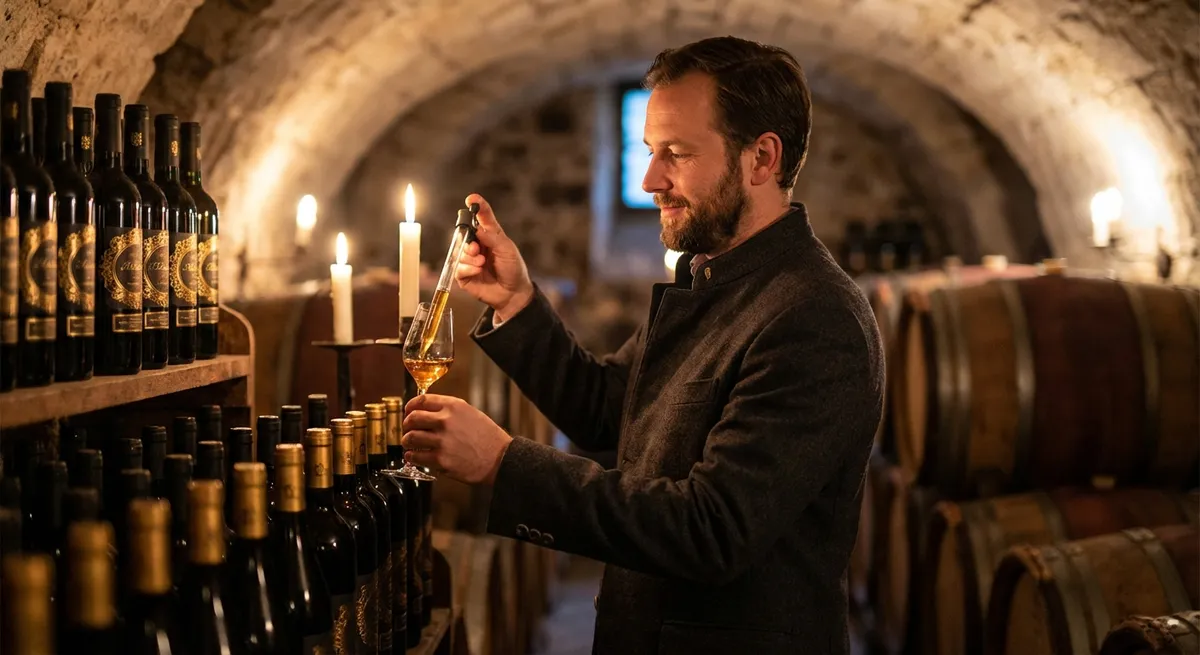
This patience manifests in multiple ways. Barrels may rest longer on lees for added texture and complexity. Red wines might remain in oak for an extra season, then slumber in bottle until tannins knit together and primary fruit recedes just enough to reveal secondary and tertiary notes—dried herbs, leather, truffle, or honeyed tones in whites. The financial cost of tying up stock for years is significant, which is why this level of aging is rarely seen outside the premium echelon.
For visitors, this often translates into access to library releases or vertical tastings that trace a wine’s evolution over a decade or more. You taste not just what a wine is, but what it becomes. The experience challenges the consumer’s usual rhythm—drink upon purchase—and replaces it with a more reflective relationship to cellaring, development, and the right moment to open something truly special.
Craft at the Edges: Micro-Lots, Experimental Blocks, and Quiet Obsession
Beyond their flagship wines, many premium wineries maintain a quieter, more intimate universe: micro-lots, experimental blocks, and limited bottlings known mostly to members and insiders. These are not vanity projects; they function as a laboratory for excellence.
A single hillside row might be vinified separately to understand its potential. Slightly different coopers may be used for the same fruit to assess how grain density, toast level, or origin shifts aromatic profile and texture. A minute variation in harvest date, maceration time, or whole-cluster inclusion may be isolated in a handful of barrels just to see how it plays out in the glass.
Guests who are fortunate enough to taste these wines gain access to the frontier of the estate’s thinking. The wines may be offered as “estate cellar selections,” “research cuvées,” or quietly poured only in seated, appointment-only tastings. For the enthusiast, this is where you glimpse the winemaker’s curiosity—and where you learn that true refinement often happens at the edges of what is commercially practical.
Precision in Hospitality: Curated Experiences Without Theatrics
Premium wineries increasingly understand that luxury is not about excess, but about intentionality. This is reflected in how they host.
Appointments are often limited not for exclusivity’s sake, but to preserve a particular cadence of experience: enough time to ask questions, space to observe the vineyard without crowds, and staff who are genuinely conversant in viticulture and enology rather than reciting memorized notes. Tastings may be seated, course-like, with glassware selected to match varietal and style. The pace is unhurried, with pauses that invite reflection rather than rushed pour-and-go sequences.
Details that might escape casual notice—exact serving temperatures, decanting time calibrated to the wine’s age, the choice to pour a slightly older vintage first—signal a hospitality philosophy rooted in respect for the guest’s palate and the wine’s integrity. Luxury here is quiet: you feel cared for without being performed to, and the emphasis is always on the wine, not the show.
Sustainability as Stewardship: When Environmental Care Becomes a Hallmark of Quality
Among serious producers, sustainability has evolved beyond a label or certification and become a core expression of long-term quality. Premium wineries increasingly adopt organic, biodynamic, or regenerative practices not solely for image, but because healthier soils, balanced ecosystems, and thoughtful resource use are inseparable from the wines they aspire to craft.
Cover crops are planted not just for erosion control but to enhance biodiversity and soil microbiome. Irrigation, where allowed, is minimized through careful canopy management and soil monitoring, emphasizing deep root systems and resilience. Pest management might rely on beneficial insects, owl boxes, and falconry rather than chemicals. Energy use can be mitigated with solar arrays, gravity-flow winery design, or geothermal systems.
For visitors attuned to these subtleties, vineyard walks become a window into philosophy. You notice the wildflowers between vine rows, the insect hotels at the edge of a parcel, the restrained, almost meditative cultivation of the landscape. The message is clear: premium is no longer defined only by what is in your glass today, but by how responsibly that glass was made—and how thoughtfully the land will be passed to the next generation.
Conclusion
Premium wineries reveal their true character not in glossy labels or trend-driven tasting rooms, but in a pattern of small, deliberate choices: the way they interpret their land, the time they allow their wines to rest, the experiments they keep off the main stage, the calm precision of their hospitality, and the seriousness with which they steward their environment.
For the discerning traveler, recognizing these quiet signals transforms a winery visit from simple recreation into a deeper conversation with place, craft, and time. The reward is not only finer wine, but a more nuanced appreciation of the people and philosophies that make those wines possible—an experience that lingers long after the last glass is poured.
Sources
- Wine Institute – Sustainable Winegrowing - Overview of sustainable winegrowing practices and their impact on quality and environment
- Napa Valley Vintners – What Is Terroir? - Detailed explanation of terroir and how site-specific factors shape wine character
- University of California, Davis – Viticulture and Enology - Educational resources on vineyard management and grape growing for quality wine production
- Decanter – The Art of Maturation - Discussion of wine aging, cellar practices, and the influence of time on wine style and complexity
- OIV (International Organisation of Vine and Wine) - International standards and technical references for viticulture and oenology practices
Key Takeaway
The most important thing to remember from this article is that this information can change how you think about Premium Wineries.