Australia is trending again—this time not just for its beaches and wildlife, but for the very particular “culture shocks” it delivers to first‑time visitors. A recent feature on tourists’ most unexpected Australian moments has been circulating widely, from the unapologetically casual service culture to the way locals move seamlessly from surfboard to boardroom. For wine travelers, this isn’t just amusing travel commentary; it subtly signals how Australia is reframing luxury: less about white tablecloths, more about world‑class experiences in improbably relaxed settings.
For those planning their 2025 wine adventures, Australia’s evolving global image offers a compelling backdrop. The same off‑beat charm that leaves visitors both bewildered and delighted is now shaping some of the world’s most intriguing coastal wine itineraries—from Margaret River to the Mornington Peninsula and Tasmania’s windswept vineyards. Below, we explore how the realities behind these “culture shocks” are creating uniquely elevated, distinctly Australian wine tours, and share five refined insights to help you experience them at their very best.
Where Beach Culture Meets Bordeaux Ambition
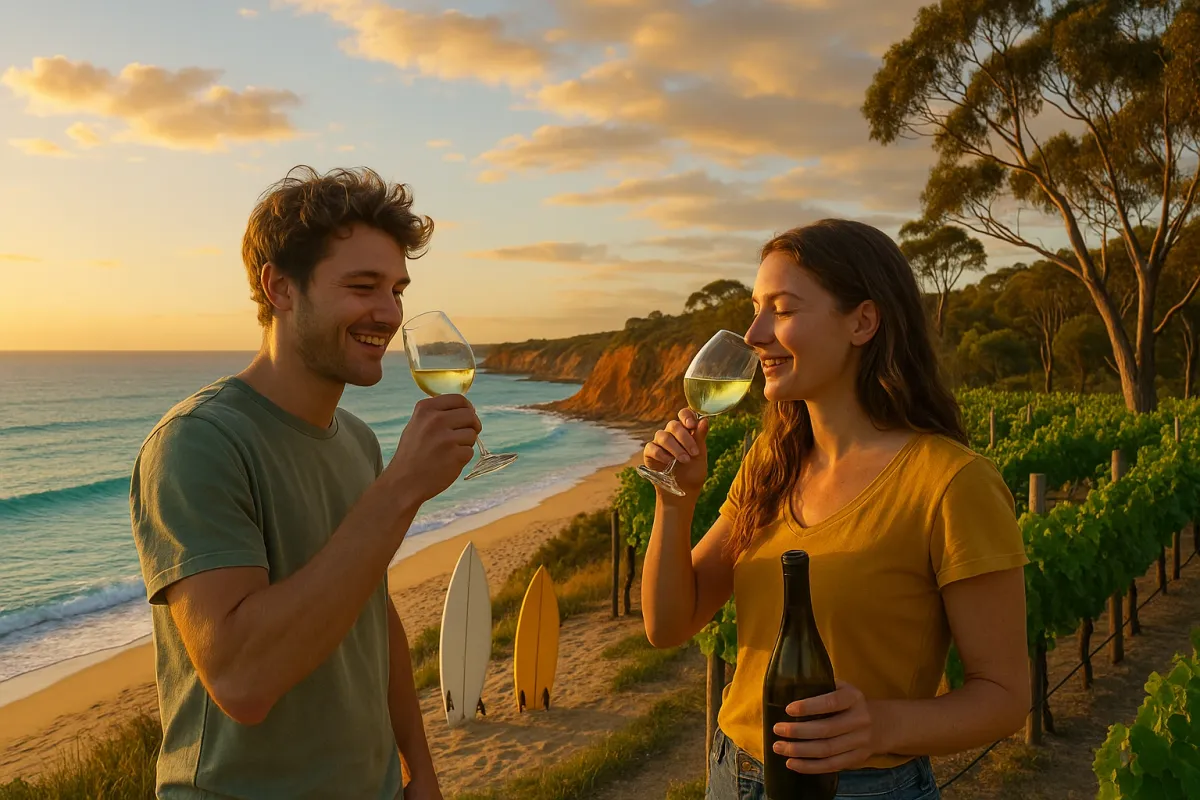
One of the most common surprises visitors report is just how deeply the beach permeates Australian life: wetsuits hanging by café entrances, sandy feet at serious restaurants, and a nonchalant attitude toward dress codes—even in affluent enclaves. In wine regions like Margaret River and the Mornington Peninsula, this coastal ease coexists with almost Bordeaux‑level ambition in the cellar. Producers such as Cullen Wines, Vasse Felix, and Ten Minutes by Tractor are crafting wines that comfortably sit on the same tables as classified growths and top Burgundies, yet their tasting rooms remain disarmingly unpretentious.
For the discerning traveler, this contrast is precisely the luxury. You might land a private vertical tasting of museum‑release Cabernet in a cellar that opens out to surf‑pounded coastline, or enjoy a precisely calibrated Chardonnay flight in a relaxed lounge where no one blinks if you arrive directly from a morning swim. The experience is not about ostentatious formality; it’s about access—intimate proximity to serious winemaking in a setting that feels more like an elegantly curated holiday home than a traditional chateau. The sophistication lies in the details: stemware quality, impeccable glassware polishing, temperature‑perfect pours, and quietly world‑class sommeliers moving with the unhurried cadence of the sea.
The Luxury of Distance: Remote Vineyards, Rare Access
Another recurring theme in travelers’ accounts is the sheer sense of distance in Australia—long drives, vast stretches of road, and the feeling that urban density simply dissolves beyond city limits. For wine lovers, this geography becomes an asset. Regions like Tasmania’s Coal River Valley, the Yarra Valley’s upper reaches, or the far‑flung Great Southern in Western Australia offer a level of seclusion that translates almost directly into exclusivity.
This remoteness isn’t about isolation for its own sake; it creates a particular kind of experience that’s difficult to duplicate in more densely touristed regions of Europe. Private transfers that trace wild coastline, helicopter drop‑ins over vineyard mosaics, or sunrise drives that culminate in a personal barrel tasting with the winemaker all feel heightened precisely because of the distance you’ve traveled. Producers like Tolpuddle Vineyard in Tasmania or Leeuwin Estate in Margaret River are leveraging this sense of journey: pairing high‑allocation wines with immersive estate experiences, sculpture walks, or seasonal tasting menus that foreground local abalone, marron, and line‑caught fish. The result is a refined, time‑rich kind of luxury where getting there is an integral part of the story.
Five Exclusive Insights for the Sophisticated Australian Wine Traveler
1. Book Beyond the Cellar Door: Private Library Sessions Are the New Benchmark
While many travelers still settle for standard tasting counters, serious Australian wineries are quietly expanding their “by‑invitation” tiers. Estates such as Penfolds (for their Bin and Grange experiences), Cullen Wines, and Giant Steps in the Yarra Valley increasingly offer library tastings that never appear on public booking engines. These sessions often take place in architect‑designed private rooms or among barrel halls closed to regular visitors, focusing on back vintages, single‑block releases, and experimental cuvées that rarely leave the country.
Discerning guests should think of the regular cellar door as the prologue, not the story. The key is to work with a high‑end tour operator or concierge who has established relationships with the estates; many of these experiences are unlocked through personal introductions rather than online reservations. Expect precise, slow pacing—fewer wines, more depth—and the opportunity to discuss soil mapping, clonal selection, and microvinification in a context that feels more like a private salon than a tourist tasting.
2. Embrace the “No Rush” Rhythm: Lunch Is the True Centerpiece
Visitors often comment on how unhurried Australian dining can feel, particularly outside major cities. In wine regions, this translates into long, almost meditative lunches that act as the anchor of your day rather than a quick interval between tastings. The country’s leading winery restaurants—think Voyager Estate and Leeuwin Estate in Margaret River, Doot Doot Doot at Jackalope on the Mornington Peninsula, or Oakridge in the Yarra Valley—have elevated the leisurely lunch into a signature experience.
For wine travelers, the most elegant approach is to structure your day around a single, extended lunch with a carefully curated pairing, rather than multiple rushed visits. Arrive early to walk the grounds, perhaps begin with a short barrel tasting or vineyard tour, then transition into a multi‑course menu that explores regional produce in lockstep with estate wines and select museum releases. This slower cadence not only combats palate fatigue; it allows the wines to be experienced in their proper context—alongside food, time, and conversation.
3. Look to the Fringe: Cool‑Climate and Coastal Is Where the Energy Is
While Barossa Shiraz and Hunter Valley Semillon remain foundational, the most exciting energy in Australian wine currently lies in cooler, coastal, and high‑altitude zones. The same article highlighting tourists’ astounded reactions to Australia’s varied landscapes underscores just how dramatically the scenery—and climate—can shift within a few hours’ drive. Regions like Tasmania, the Adelaide Hills, Orange, and the cooler fringes of Margaret River are leveraging these microclimates to craft wines of striking precision and freshness.
For enthusiasts, this is the moment to prioritize estates focusing on Chardonnay, Pinot Noir, and nuanced sparkling wines rather than only the archetypal big reds. A day spent among Tasmania’s sparkling specialists or the Adelaide Hills’ new‑wave Chardonnay producers offers a very different, highly contemporary expression of Australian terroir. Seek out producers experimenting with single‑parcel bottlings, amphora aging, or minimal‑intervention techniques—but framed within impeccable technical winemaking standards. The result is a profile that feels more Côte d’Or or Champagne‑adjacent, yet distinctly shaped by maritime winds and piercing Australian light.
4. Elevate the Casual: Decode Dress Codes and Expectations
One recurrent culture shock for visitors is how casually Australians dress—even in environments that, by European or American standards, would seem to demand more formality. In premium wine regions, this can create uncertainty: Is a designer linen shirt overdressed for a serious tasting room where the host is in rolled‑up chinos and sneakers? The answer lies in understanding that true Australian luxury is almost always under‑signaled.
The most sophisticated approach is to aim for quiet, relaxed elegance: natural fibers, neutral palettes, pieces that move comfortably from tasting room to ocean‑view terrace. Think unstructured jackets, elevated resort wear, and footwear that can handle vineyard paths. Wineries are paying attention—many premium estates are designing spaces that feel like curated living rooms rather than formal salons, with deep armchairs, textural linens, stone, and timber. Dressing appropriately for this aesthetic signals that you understand the underlying code: excellence without ostentation, refinement without rigidity.
5. Prioritize Experiences Where the Winemaker Shows Up
Amid tourists’ tales of unexpected interactions with locals—from baristas who remember their order to strangers who offer detailed road‑trip advice—the thread that consistently emerges is the value placed on direct, human connection. In Australia’s wine regions, this ethos manifests in the increasing number of experiences where the winemaker, viticulturist, or owner is personally present.
The most rewarding reservations are those that promise more than a scripted tasting. Look for tours that include vineyard walks with the viticulture team, blending sessions led by the winemaker, or intimate dinners hosted by the estate family. In regions like McLaren Vale, Margaret River, and Tasmania, many top producers are still small enough that the person behind the label can feasibly lead your experience. These encounters are where technical discussions—about canopy management in a warming climate, regenerative agriculture, or cover cropping—come alive. For the serious enthusiast, this is where an Australian wine tour transcends sightseeing and becomes a deep, personal conversation with place.
Conclusion
The viral accounts of “culture shocks” in Australia—distance, informality, surprising coastal sophistication—are more than travel anecdotes. They offer a lens through which to understand the country’s most compelling wine journeys right now: expansive, quietly luxurious, and anchored in an effortless blending of serious craft with an almost insouciant sense of ease.
For those planning a 2025 itinerary, the opportunity is clear. Move beyond simple cellar‑door hopping and embrace the distinctly Australian equation of luxury: remote yet welcoming, ambitious yet unpretentious, meticulously crafted yet completely relaxed. In doing so, you’ll discover that the real culture shock isn’t how different Australia feels—it’s how quickly this coastal, cool‑climate, time‑rich style of wine travel begins to feel like the new global standard.
Key Takeaway
The most important thing to remember from this article is that this information can change how you think about Wine Tours.