In the world of premium wineries, the dining table has become just as important as the tasting room. As conversations online fixate on what really happens behind the pass—fueled by viral pieces like Bored Panda’s “26 Chef Memes That Describe What Working In A Kitchen Is Really Like”—high-end estates are quietly responding. They’re opening their kitchens, elevating their chef brigades, and transforming wine country into one of the most intriguing culinary stages on earth.
For travelers who demand more than a standard tasting flight, today’s leading wineries are orchestrating chef-driven experiences that feel closer to a Michelin-level service than a countryside lunch. The heat, pressure, and precision we romanticize in professional kitchens are now being harnessed in vineyard settings—from Napa and Sonoma to Bordeaux, Tuscany, and Margaret River—to craft some of the most intimate, high-touch experiences in luxury travel right now.
Below, a closer look at five insider shifts reshaping how serious wine lovers should think about pairing food, place, and the bottle.
1. The Rise of the “Estate Chef” as the New Cellar Master
Not long ago, winery restaurants were pleasant side notes; now, the estate chef often sits alongside the winemaker as a co-author of the brand’s identity. Around the world, blue-chip producers—think Opus One in Napa, Château Smith Haut Lafitte in Bordeaux, Antinori nel Chianti Classico in Tuscany—are investing in deeply integrated culinary programs where menus are developed in lockstep with the vintage.
In these kitchens, chefs aren’t merely pairing dishes with existing wines; they’re tasting barrel samples months before release, adjusting seasoning, texture, and cooking methods to mirror what’s happening in the cellar. A herb-forward, lower-extraction Cabernet may inspire a lighter jus and fire-kissed vegetables, while a structured, age-worthy Bordeaux blend might call for long-braised meats, slow reductions, and deeper Maillard notes. For guests, this means that the tasting menu is no longer just “wine-friendly”—it becomes an edible narrative of that specific vintage, on that specific estate, in that specific year.
2. Open Kitchens, Hidden Complexity: Transparency as Luxury
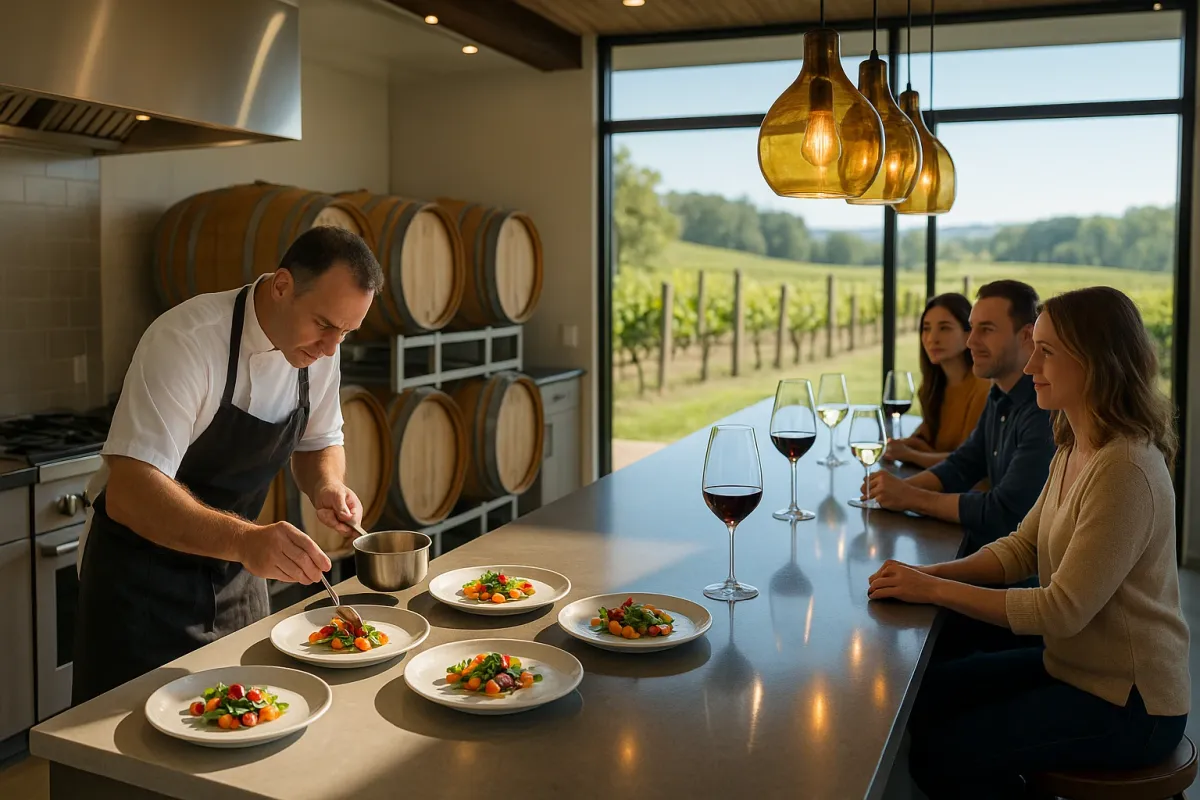
While viral chef memes reveal the stress and chaos of professional kitchens, premium wineries are choreographing that same intensity into something far more refined. Open kitchens overlooking vineyards—often framed in glass—allow guests to glimpse the dance of service without feeling its heat. The polished plating you see at properties like The Restaurant at Meadowood’s partners in Napa or the culinary salons at Penfolds’ Magill Estate in Australia is only possible because of the meticulous, high-pressure systems that those behind-the-scenes memes hint at.
For discerning travelers, the luxury here is transparency. Watching a saucier quietly reduce a Cabernet demi-glace or a pastry chef torching late-harvest wine–infused meringue adds a layer of theater that complements the cellar tour. It underscores a simple truth: in the world’s top wineries, culinary excellence is not an afterthought—it is a parallel craft, governed by the same discipline, repetition, and obsession with detail as winemaking itself.
3. From Staff Meal to Guest Table: Elevated “Kitchen Culture” Dishes
The online fascination with what chefs really eat—quick staff meals, improvisational bowls, stolen bites at the pass—is now subtly influencing premium winery menus. While the dining room may be linen-clad, many of the most compelling dishes nod to the unfussy, flavor-first cooking that fuels a busy brigade.
At high-end estates in regions like Sonoma and the Willamette Valley, you’ll increasingly find refined versions of what might once have been family meal: deeply reduced ragùs made with leftover braising cuts and splashes of Sangiovese; grilled sourdough brushed with Chardonnay lees butter; or silky egg pastas enriched with yolks from the estate’s own hens and finished with a drizzle of late-harvest wine reduction. The presentation is elevated, but the soul is resolutely kitchen-side—comfort, intensity, and a quiet wink to industry insiders who recognize where these ideas were born.
For guests, these dishes are a bridge: they bring you closer to the working culture of the estate while still honoring the premium setting. It’s the culinary equivalent of tasting from the barrel—an intimate glimpse behind the polished label.
4. Precision Pairings: Reading Tannins the Way Chefs Read Heat
Professional cooks live by heat management: searing, resting, tempering, and timing to the second. Top winery chefs are now applying that same precision to tannins and acid, translating “sommelier speak” into actual mouthfeel on the plate. As wine lists grow ever more complex, this quiet collaboration between the kitchen and the cellar is becoming one of the most meaningful luxuries on offer.
Consider how a chef in Bordeaux might respond to a tightly structured young Left Bank blend. The tannins demand protein and fat—but not just any. Dry-aging, for instance, can be dialed to match the grip and grain of the wine; fat caps are trimmed, then reintroduced, to create just enough richness without overwhelming the palate. In cooler-climate regions like Burgundy or Oregon, where Pinot Noir expresses more delicacy, you’ll see gentler cooking methods—poaching in clarified butter, slow confit, barely smoked fish—ensuring the wine’s fine, silken structure isn’t overshadowed.
The result is pairing that feels almost engineered to your palate: a sense that each course has been tuned not only to a grape, but to the exact arc of the wine’s evolution in the glass from first sip to last.
5. The New Social Currency: Sharing the “Service Story”
As social media amplifies candid snapshots of kitchen life—from line cooks venting in meme form to chefs posting last-minute menu changes—the narrative around fine dining has shifted. Luxury guests no longer want only the pristine finished plate; they want the story, the process, the human texture that led there. Premium wineries are uniquely positioned to deliver this, because they already operate with a multigenerational, long-horizon mindset.
Today’s most forward-thinking estates are embracing this by crafting experiences designed to be both lived and shared. Think: a pre-service walkthrough with the winery’s culinary director as they preview the evening’s pairings, or a short, quietly shot video showing grapes harvested at dawn and transformed into a reduction that will glaze your main course that very evening. A chef might appear tableside not just to describe a dish, but to reference the specific barrel lot or block from which the accompanying wine was drawn that week.
For wine lovers who curate their travels—and their feeds—with care, these details matter. They transform a beautiful meal into a narrative you can bring home, a series of moments that extend beyond a single evening in the cellar.
Conclusion
As the internet continues to peel back the curtain on what it really means to work in a high-pressure kitchen, premium wineries are elevating that reality into a new benchmark of hospitality. The estate chef now stands alongside the winemaker, open kitchens offer curated glimpses of controlled chaos, staff-meal sensibilities are polished into memorable plates, and pairings are calibrated with almost scientific precision.
For the sophisticated traveler, this convergence of vineyard and kitchen culture is redefining what a visit to a top estate can be. It is no longer just about swirling, sniffing, and sipping—it is about immersing yourself in a live, evolving collaboration between chef and winemaker, where every course and every pour is part of a single, elegantly choreographed story.
Key Takeaway
The most important thing to remember from this article is that this information can change how you think about Premium Wineries.