The global fascination with what really happens behind the kitchen doors has reached a fever pitch. Viral chef memes, tell‑all posts from the line, and a renewed respect for haute cuisine’s pressures (as spotlighted in today’s “26 Chef Memes That Describe What Working In A Kitchen Is Really Like”) are reshaping how discerning travelers think about food—and, increasingly, about wine. For wine lovers planning their next escape, the story is no longer just about vineyards and cellars; it is about the kitchens, brigades, and chef-driven philosophies that frame every glass.
Around the world’s great wine regions, the most coveted tours are now those that move with the rhythm of the professional kitchen. They mirror the intensity, precision, and choreography of top restaurant culture—yet translate it into slow, immersive, deeply pleasurable experiences in situ at the estate. Below, we explore five insider-level perspectives inspired by the real-life kitchen world that are quietly redefining what a premium wine tour can be in this very moment.
The “Service Window” Tasting: Experiencing Wines in a Chef’s Timeframe
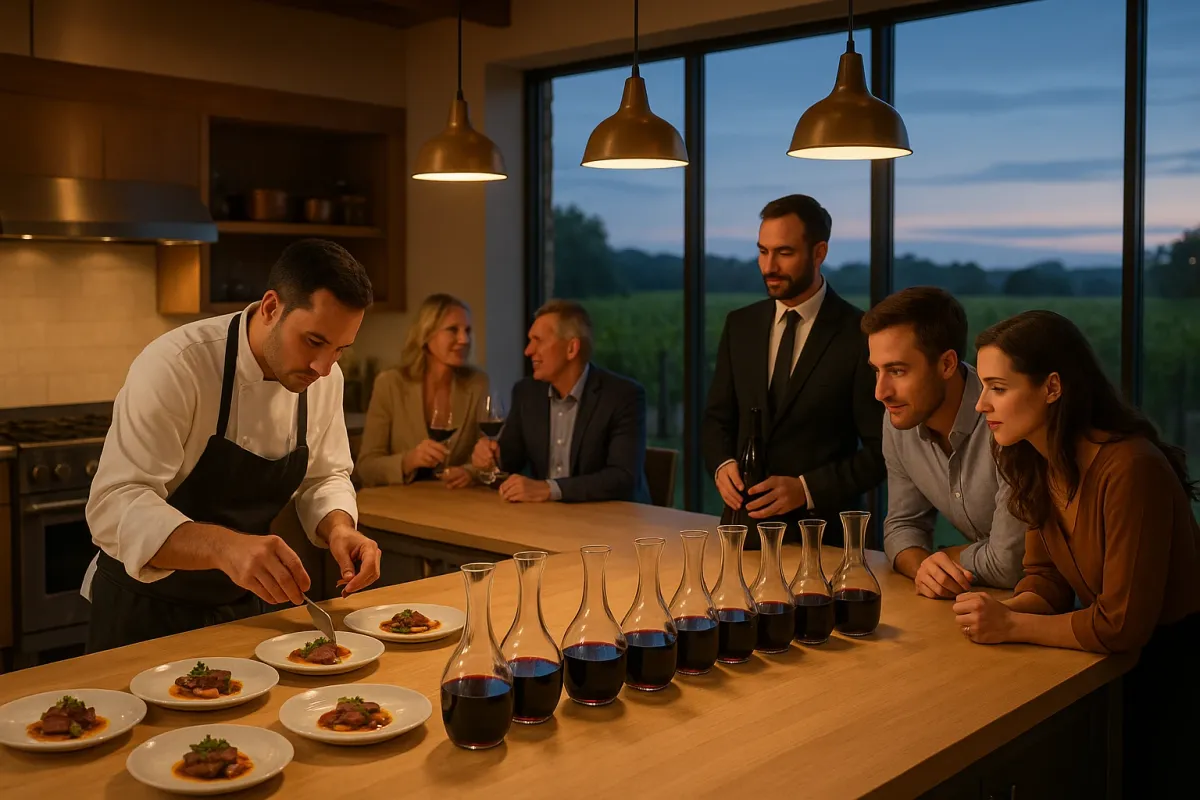
In elite kitchens, “service” runs in controlled waves: prep, fire, plate, pass. Increasingly, top estates in regions like Napa, the Willamette Valley, Bordeaux, and Stellenbosch are borrowing this tempo, offering what some are informally calling “service window” tastings—structured sessions that mirror the cadence of a dinner service rather than a conventional, static flight.
Instead of a row of glasses poured at once, wines appear in a sequence aligned with temperature, aromatic peak, and food pairing, as they would in a Michelin-level dining room. A Riesling or Champagne may arrive first, as a chef might send a bright, cleansing amuse-bouche; a textural white or nuanced orange wine follows when your palate is warm but not yet tired; structured reds are deliberately held back until your senses are primed. For enthusiasts, this format reveals how sommeliers and chefs actually design a night of drinking, and underscores something the current chef discourse reminds us of daily: that timing, not just terroir, defines the experience. When booking, ask whether the estate offers “progressive” or “sommelier-led service” tastings—these are often the experiences that feel closest to stepping into a restaurant’s live service philosophy.
From Line Heat to Vineyard Calm: Why Chef-Run Winery Kitchens Are the New Insiders’ Choice
As memes and behind-the-scenes stories illuminate the relentless grind of kitchen life, many chefs are seeking refuge in wine country—opening estate restaurants, private-chef programs, and hyper-seasonal pop-ups directly on vineyard grounds. For travelers, following this quiet migration is one of the most sophisticated ways to curate a wine tour that feels truly of-the-moment.
In regions such as Sonoma, the Douro, and the Adelaide Hills, chef-run winery kitchens are evolving beyond “tasting room food” into fully realized gastronomic destinations: think multi-course lunches built around vineyard vegetables, fermentations, and house-cured preparations that speak the same language as the wines. The intensity of a service shift is swapped for the slower rhythm of the vines, but the discipline and standards remain uncompromising. Seek estates where the chef has a notable restaurant background—especially those who have walked away from big-city brigades. Their menus tend to show an almost reverent sensitivity to the estate’s varietals and microclimates, resulting in pairings that rival, and sometimes surpass, what you find in urban fine-dining temples.
The Brigade Behind the Bottle: Treating Cellar Teams Like a Kitchen Line
One of the revelations from today’s kitchen-centric conversation is just how collaborative a great dish really is. The same is true of wine, yet we often focus on the winemaker as auteur and overlook the cellar team—the quiet brigade executing each critical task with near-military precision. The most rewarding contemporary wine tours are those that expose this reality, much as chef narratives are demystifying the myth of the solitary genius.
Top-tier estates in Burgundy, Champagne, Tuscany, and beyond are beginning to offer guest experiences that parallel a kitchen stage. Instead of a simple cellar walk-through, you might shadow the racking process, watch meticulous sorting, or observe how small teams communicate during harvest crush. Ask for tours that are framed around “production workflow” or “harvest immersion,” rather than generic visits. Pay attention to how teams move together, how tasks are delegated, how calmly problems are solved. When you next swirl a grand cru or single-vineyard syrah, you’ll taste, with sharper clarity, the collective discipline behind each bottle—discipline not unlike a well-drilled kitchen on a sold-out Saturday night.
Pairing as Performance: Learning From Chefs’ Obsession With Texture and Contrast
The popularity of chef memes often comes from watching professionals wrestle with impossible demands: plates must be perfect, consistent, and timed to the second. Underneath the humor, though, lies a rigorous understanding of how texture, temperature, and contrast keep a diner engaged for hours. The most forward-thinking wineries are now applying that same lens to their pairing experiences, moving well beyond “this cheese goes with that cabernet.”
In Champagne and Franciacorta, sparkling houses are experimenting with pairings built around acoustic-like contrasts: crisp brut with silky custards; mature, autolytic cuvées with shatteringly crisp pastries or crackling chicken skin. In coastal regions—from Galicia to Margaret River—salinity is treated as an ingredient in its own right, with wines paired to dishes that amplify or counterpoint their mineral edge. When you visit, look for experiences described as “culinary collaborations,” “textural flights,” or “chef-curated pairing journeys.” The goal is not just harmony but narrative: a sequence of small revelations that keeps your palate, and attention, perfectly tuned—just as a chef scripts the arc of a tasting menu.
The New Luxury: Slowing Down in a World Obsessed With Kitchen Chaos
Today’s fascination with the chaos of the pass—the shouting, the rush tickets, the barely controlled fire—is also triggering a subtle counter-movement: a desire for radical slowness. In wine tourism, true luxury is increasingly defined not by excess, but by the deliberate deceleration of every moment around the glass. The most sophisticated estates are consciously positioning themselves as the antithesis of kitchen frenzy.
In Bordeaux, the Cape Winelands, and parts of Northern Spain, you’ll find experiences where the schedule is designed around the vineyard’s own tempo: sunrise vineyard walks, long-table lunches that stretch into late afternoon, twilight barrel tastings lit by candle or soft lanterns. Staff are trained to minimize interruption rather than maximize interaction, leaving you space to actually sit with a wine as it evolves in the glass. When booking, prioritize words like “residency,” “salon,” or “estate afternoon” over “tour” or “tasting.” These are often the programs that understand that the real indulgence, in an era fixated on kitchen drama and instant content, is uninterrupted, graceful time—time to watch a decanted Bordeaux open, to see a white Burgundy warm a few precious degrees, to feel an entire day arc around your glass.
Conclusion
As the world peers more closely into the pressures and peculiarities of professional kitchens, wine tourism is quietly entering a more thoughtful, chef-informed era. The best winery experiences now borrow the precision of service, the choreography of the brigade, and the textural intelligence of great menus—while offering something kitchens rarely can: space, silence, and time.
For the wine enthusiast, 2025 is a moment to travel not just to vineyards, but into the deeper philosophies that link the bottle, the plate, and the people who shape them. Choose the estates that behave like great restaurants at their calmest and most considered, and your next wine tour will feel less like a visit—and more like being granted a seat at the pass of the world’s most elegant, open-air kitchen.
Key Takeaway
The most important thing to remember from this article is that this information can change how you think about Wine Tours.