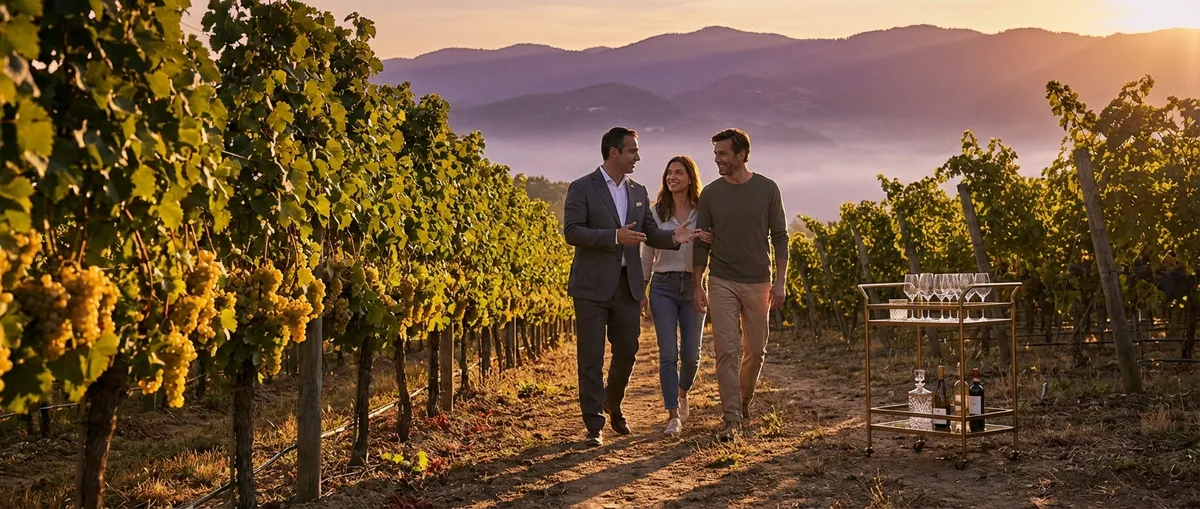
There is a moment, just before the first glass is poured, when a vineyard visit reveals its true promise. The air shifts, the light sharpens, and the surrounding vines feel less like scenery and more like a living archive of choices—of soil, climate, and philosophy. For travelers who seek more than a pleasant afternoon among the vines, a vineyard visit can become an exploration of craftsmanship at its most meticulous. This is where wine ceases to be a mere beverage and becomes a lens through which to experience place, time, and intention.
Reading the Vineyard Before the First Sip
Long before you reach the tasting counter, the vineyard itself has begun speaking. Attentive guests read these cues the way a sommelier reads a wine list. Note the spacing between rows, the angle at which the vines face the sun, and the overall vigor of the canopy. Tight spacing and low, neatly trained vines often signal an emphasis on quality over quantity, forcing roots deeper and restricting yields to concentrate flavor.
Observe the ground: is it stony, clay-rich, or dusted with chalky white fragments? The soil composition you see underfoot will echo in the glass. Gravel and stones typically foster excellent drainage, encouraging small, intense berries; limestone and chalk often contribute to wines with notable tension and freshness. Even the presence of cover crops—mustard, clover, or wild grasses—reveals the estate’s attitude toward biodiversity and soil health. By the time you arrive at your first pour, you are not merely tasting a wine; you are verifying the story the vineyard has already told you.
Decoding Winery Architecture and Design Choices
In a truly considered estate, the architecture is not just aesthetic—it is a technical instrument. Pay attention to how the winery has been built, both above and below ground. A gravity-flow facility, for instance, minimizes pumping and mechanical stress on the grapes and juice, a detail that often corresponds to a winemaker’s dedication to preserving delicacy and texture. Cellars tunneled into hillsides or constructed partially underground use the earth itself as insulation, maintaining stable temperatures that nurture careful, unhurried élevage.
Design details offer further clues. Sleek, glass-and-steel tasting rooms perched above the vines often reflect a forward-looking, innovation-driven approach to winemaking, perhaps embracing cutting-edge fermentation vessels or experimental blending. By contrast, a restrained stone façade or a meticulously restored farmhouse may indicate reverence for tradition and long-standing regional practices. Neither is inherently superior, but each signals a distinct philosophy—innovation versus inheritance—and your visit becomes richer when you recognize the intention embedded in the built environment.
Private Time in the Cellar: The Quiet Theater of Wine
If you have the opportunity to request a semi-private or fully private cellar visit, seize it. The cellar is where a vineyard’s public narrative gives way to its inner monologue. Here, details that rarely reach the average visitor reveal themselves: rows of barrels sourced from specific forests in France, amphorae lined discreetly along one wall, or egg-shaped concrete tanks designed to foster a gentle, natural circulation of lees.
Notice the diversity—or uniformity—of vessels. A cellar dominated by small French oak barrels suggests a focus on structure, complexity, and textural layering; a mix of larger foudres, neutral oak, and stainless steel hints at a more nuanced, often terroir-driven approach with minimal interference. Ask about topping-up schedules, batonnage practices, and length of aging; these are the “brushstrokes” that define a wine’s final character. The most illuminating visits are not about chasing secret techniques, but about understanding how each choice in the cellar serves a coherent, articulated vision in the glass.
Beyond Varietals: Understanding Micro-Parcels and Precision
While many tasting rooms present wines by grape variety or broad appellation, the estates that captivate serious enthusiasts increasingly frame their work around micro-parcels. A single hillside divided into a mosaic of blocks, each vinified separately, can produce astonishingly distinct expressions. During your visit, listen for references to “blocks,” “clones,” or “parcel selections”—these terms signal a philosophy centered on precision, nuance, and site identity.
An exclusive insight is to request a comparative tasting of wines from different parcels or single-vineyard bottlings, if available. Comparing two wines made from the same variety, in the same year, but from adjacent yet distinct plots, is one of the most compelling experiences a vineyard can offer. You are tasting topography, soil depth, exposure, and wind patterns—factors invisible to the eye yet tangible on the palate. This level of granularity transforms a casual visit into a masterclass in how fine wine translates its origin into flavor, structure, and longevity.
Five Insider Touchpoints for the Discerning Visitor
For enthusiasts who crave depth and discretion, these five refined insights can elevate a vineyard visit from pleasant to exceptional:
Time Your Arrival With the Vineyard’s Rhythm
Aim for mid-morning or late afternoon, when the light is gentle and the estate is less crowded. This is when staff are most available for nuanced conversation, and the vines themselves present a truer picture of daily life—harvest preparations, canopy work, or quiet winter pruning.
Request to Taste a Work-in-Progress Wine
Politely inquire whether you might sample a barrel, tank, or soon-to-be-bottled wine. Tasting a wine in evolution offers an insider’s view of structure before polish, allowing you to understand how tannin, acid, and fruit will knit together over time.
Study the Glassware and Serving Temperatures
Premium estates treat glassware as part of the wine’s architecture. If you notice different shapes for whites, reds, or sparkling wines—and precise serving temperatures—it is a strong indicator of rigorous hospitality standards and respect for detail.
Ask About Vintage Variability, Not Only ‘Best Years’
Rather than simply asking which vintages are “great,” delve into how the estate responded to challenging years. Adaptations in canopy management, picking dates, or blending decisions often reveal more about a winery’s integrity and skill than its performance in ideal conditions.
Observe How the Estate Connects Wine, Food, and Place
Whether through thoughtfully paired bites, local artisan collaborations, or seasonal menus, elite estates curate a culinary context that frames their wines. Pay attention to salt levels, textures, and aromatic bridges between food and wine; these pairings often distill the estate’s deepest understanding of its own wines.
Curating Your Own Narrative From Each Visit
A refined vineyard visit is less about accumulating labels and more about composing a personal lexicon of experiences. After each estate, take a moment to record not only tasting notes but also atmospheric impressions: the sound of the wind through the vines, the way the cellar smelled, the demeanor of the team, the clarity with which they explained their craft. Over time, these impressions form a private map of the wine world, one that guides future travel and collecting.
The most memorable visits leave you with a sense of continuity: the line that runs from geology to vine, from vine to cellar, from cellar to glass, and finally from glass to memory. When you begin to perceive that thread—when architecture, vineyard, and wine feel aligned—you move beyond tourism into true connoisseurship. That is where vineyard visits become not just destinations, but recurring chapters in an ongoing story of taste, curiosity, and discovery.
Conclusion
To visit a vineyard at a truly elevated level is to step behind the curtain of hospitality and into the quiet choreography of nature, craftsmanship, and time. By learning to read the vineyard before the tasting, to interpret the meaning behind architectural and cellar choices, and to seek micro-parcel detail and work-in-progress wines, you transform each visit into a dialogue rather than a presentation. For the discerning traveler, this is the real luxury: access not only to fine bottles, but to the intellect, landscape, and legacy that shape them. In this deeper engagement, every vineyard visit becomes a finely tuned experience—measured not by the number of wines tasted, but by the precision and resonance of the insights you carry away.
Sources
- [Wine Institute – Winegrowing & Terroir](https://wineinstitute.org/winegrowing) - Overview of how climate, soil, and topography influence wine quality and style
- [UC Davis Department of Viticulture and Enology](https://caes.ucdavis.edu/departments/viticulture-enology) - Academic resources on vineyard management, fermentation, and cellar practices
- [Institute of Masters of Wine – Understanding Terroir](https://www.mastersofwine.org/features/understanding-terroir) - In-depth discussions on site expression, micro-parcels, and precision in winemaking
- [Decanter – Guide to Wine Cellar Design and Maturation](https://www.decanter.com/learn/wine-cellar-design-329189/) - Explores cellar architecture, temperature control, and aging vessels
- [Wines of California – Sustainable Vineyard Practices](https://discovercaliforniawines.com/learn/sustainable-winegrowing/) - Details on cover crops, biodiversity, and environmental stewardship in vineyards
Key Takeaway
The most important thing to remember from this article is that this information can change how you think about Vineyard Visits.