Wine tasting, at its most rewarding, is less a performance and more a form of quiet cartography—mapping texture, time, and place in a single glass. For those who have moved beyond “red or white” and seek a more elevated experience, refinement lies in subtleties that are almost never printed on the label. These are the details that transform a tasting from pleasant to profound, especially when enjoyed amid the vineyards themselves.
Below are five exclusive insights designed for enthusiasts who want their next wine tour—and every glass—to feel both more intelligent and more intimate.
The Architecture of the Glass: Designing the Experience Before the First Sip
Before aroma or flavor, the glass itself is the first “decision” in your tasting. Shape, volume, and rim design do far more than influence aesthetics; they stage how the wine reveals itself. A large bowled glass for complex reds allows oxygen to gently interact with phenolic compounds, softening tannins and releasing layered aromatics. A more tapered bowl for aromatic whites, on the other hand, concentrates delicate esters—those fragile floral and citrus notes—so they are not lost to the room.
Pay close attention on your next winery visit: top estates rarely use a single universal glass for everything they pour. Notice how the same wine feels different when offered in a narrow, upright glass versus a broad, tulip-shaped one. The difference in perception of acidity, texture, and aromatic intensity can be dramatic.
An additional nuance: the angle at which you hold the glass as you swirl dictates how much oxygen you invite in and how quickly volatile aroma compounds are released. Seasoned tasters often favor a slow, controlled swirl, especially for older vintages where over-aeration can strip nuance rather than unlock it. The quiet ritual of watching the wine coat the bowl, observing the legs or tears, is not a cliché; it’s the early mapping of density, alcohol, and extract—architectural clues to the style of winemaking and the vintage’s temperament.
Reading Silence in the Wine: Texture as the True Luxury
Aromas can be flamboyant; flavor descriptors can be theatrical. Texture, by contrast, is where true luxury often hides. Many enthusiasts stop at “smooth” or “full-bodied,” but refined tasting explores how a wine moves—how it enters, expands, and exits across the palate.
Consider these textural dimensions on your next tour tasting:
- Entry: Does the wine arrive quietly, almost weightless, or does it announce itself with immediate density?
- Mid-palate: Does it broaden, gaining volume and layering, or does it move in a precise, linear fashion?
- Tannins: For reds, are tannins powdery, chalky, silky, or fine-grained? For whites, is there a waxy, glycerol-like glide or a crystalline, almost saline precision?
- Finish: How does the texture dissolve—does it taper gently like silk being pulled between fingers, or does it snap cleanly, mineral and taut?
During barrel tastings or vertical flights at an estate, texture is often the most reliable guide to understanding terroir and winemaking philosophy. Aromas can be influenced by oak, yeast, and timing; texture is more deeply tied to fruit quality, vineyard management, and extraction. When a winery speaks of “precision,” “tension,” or “energy,” they are quietly pointing you to texture. Train your attention there and the entire tasting takes on another dimension.
The Quiet Role of Temperature: Precision, Not Preference
Most wine lists reduce temperature to broad, imprecise categories: “chilled” for whites, “room temperature” for reds. A refined approach recognizes that the final few degrees between cool and cool-ish can recalibrate the entire experience.
At many high-caliber tasting rooms, the most memorable pours are served just slightly cooler than guests expect for reds, and slightly warmer than the average refrigerator for whites. This is deliberate:
- Whites around 10–13°C (50–55°F) allow floral and orchard-fruit notes to bloom while still preserving structure and freshness. Too cold, and all you will taste is acidity and oak; too warm, and the wine feels heavy and unfocused.
- Reds around 15–18°C (59–64°F) stay poised. Warmer temperatures make alcohol feel more pronounced and blur the fine lines between fruit, earth, and spice.
On your next winery visit, quietly note the serving temperature and how it changes as the glass sits. Taste the wine at first pour, then again after 10–15 minutes. The evolution is often as instructive as a second or third wine. Enthusiasts who travel with a compact wine thermometer are not being precious—they’re simply ensuring that a carefully crafted bottle is allowed to speak in its intended register.
Vintage as Atmosphere: Tasting the Year, Not Just the Wine
Most drinkers acknowledge that vintage matters; few are taught how to taste it. When you tour wine regions, the atmosphere of a given year—heat spikes, cool nights, rain at harvest—is written into the glass.
In curated vertical tastings (multiple vintages of the same wine), pay attention not to which year you “like” more, but to how the wine’s personality shifts with the season’s conditions:
- Warmer, drier years often produce wines with riper fruit profiles, higher alcohol, and softer acidity. They feel generous, immediate, sometimes opulent.
- Cooler or more variable years can yield wines with firmer structure, pronounced freshness, and a longer arc of development. Initially more reserved, they often reveal greater complexity as they age.
Sophisticated estates often design their tasting flights to reveal this narrative. Rather than simply pouring “the latest release,” they might include an earlier vintage specifically to demonstrate the evolution of the estate’s vineyards across time. When you ask questions, frame them around the year: What was happening in the vineyards this season? How did that influence your decisions in the cellar? You will often receive far deeper, more candid insights than by asking about flavor notes alone.
Over time, you begin to develop an internal map: how a cool year in a continental climate differs from a cool year in a maritime one; how a drought year shapes tannin phenolics versus a year with a long, even growing season. This is where enthusiasts quietly cross the threshold into true connoisseurship.
Pairing the Setting: How Surroundings Shape Perception in the Glass
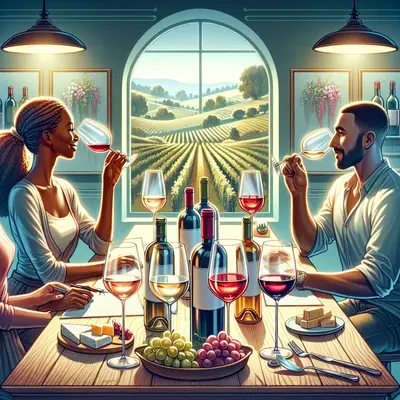
On a wine tour, the glass is never isolated. Light, landscape, architecture, even sound, subtly manipulate what you perceive. Thoughtfully designed estates employ this intentionally: tasting on a shaded terrace overlooking sunlit vines is not simply photogenic—it calibrates your attention in ways that favor certain expressions in the wine.
Several refined cues to observe:
- Light: Natural light reveals color and clarity far better than dim interiors. A pale, shimmering rosé or a delicate Pinot Noir reads differently in crisp daylight than under warm, low evening light.
- Soundscape: Quiet settings encourage slower, more contemplative tasting. The absence of background noise allows you to focus on the wine’s pacing—how quickly or slowly flavors unfold on the palate.
- Architecture & Materials: Stone, wood, glass, and steel all contribute to the thermal and visual atmosphere. A cool stone cellar primes you for freshness and structure; a sun-drenched, wood-accented room may frame richer, more textural wines.
To refine your own practice, taste the same wine in different contexts during your travels: a barrel hall, a tasting salon, outdoors under the pergola. Notice how your descriptors shift. This awareness prevents you from confusing atmospheric charm with intrinsic quality, while still allowing you to savor the exquisite interplay between wine and place—a vital part of why wine tourism is so compelling.
Conclusion
The most memorable tastings rarely hinge on rare bottles or extravagant settings. Instead, they arise when attention to detail matches the care that went into the wine itself: the right glass, the exact temperature, a sensitivity to texture, a curiosity about vintage, and an awareness of how environment shapes perception.
For the discerning traveler, these five insights are not rules but instruments—fine tools that allow each visit, each pour, to feel more intentional and more deeply rewarding. On your next Wine Tour Adventures journey, bring them with you. The wines will not taste the same—and that is precisely the point.
Sources
- [University of California, Davis – Wine Aroma and Flavor](https://wineserver.ucdavis.edu/industry-info/enology/wine-aroma-and-flavor) - Technical overview of how aroma, flavor, and perception develop in wine
- [Cornell University – Influence of Glass Shape on Wine Perception](https://grapesandwine.cals.cornell.edu/news/2014-research-focus-influence-glass-shape-wine-perception/) - Research discussion on why different glassware shapes change how wine is experienced
- [Wine & Spirits Education Trust (WSET) – Serving and Storing Wine](https://www.wsetglobal.com/knowledge-centre/wine/serving-and-storing-wine/) - Guidelines on ideal service temperatures and conditions for various wine styles
- [Wine Institute – Understanding California Wine Vintage Variations](https://www.wineinstitute.org/resources/winefactsheets/article89) - Background on how climate and vintage influence wine character
- [Decanter – How Serving Temperature Affects Wine](https://www.decanter.com/learn/serving-temperature-why-it-matters-329138/) - Expert commentary on the nuanced impact of temperature on wine aroma and taste
Key Takeaway
The most important thing to remember from this article is that this information can change how you think about Wine Tasting.