There is a moment, just before the first sip, when a vineyard reveals itself more clearly than any tasting note ever could. For the discerning traveler, a vineyard visit is not simply an afternoon among vines, but a quiet pilgrimage to the source of flavor, texture, and time itself. At its best, the experience feels less like tourism and more like a private study in place, craft, and intention.
Reading the Landscape: Understanding the Vineyard Before the Cellar
The most memorable vineyard visits begin not in the tasting room, but at the edge of the rows, with a deliberate pause to read the landscape. Elevation, exposure, and soil composition are not abstract concepts for textbooks; they are the first language of the wine in your glass.
Notice how the slope directs sunlight and air flow. South- and southeast-facing sites in the Northern Hemisphere often enjoy more even ripening, while breezy exposures help preserve freshness and reduce disease pressure. Observe how close the vines are planted to one another; tighter spacing can signal an attempt to encourage vine competition and concentration.
The ground itself is an underappreciated guide. Stony, well-drained soils may be visible on the surface, while heavier clays or loams reveal themselves in how water lingers after rainfall. Simply walking the rows—feeling the crunch of gravel underfoot or the firmness of packed clay—can prepare you to understand the wine’s structure long before you raise the glass.
When the winemaker speaks of “site expression,” you will have already glimpsed the stage on which that expression is set.
Seasons of the Vine: Choosing When to Visit for Deeper Insight
Wine regions are often marketed as perpetual summer postcards, yet the most revealing visits often occur outside peak season. An informed enthusiast chooses timing with as much care as destination.
During late winter and early spring, the vineyard is bare, its architecture fully visible. This is when pruning decisions—arguably among the most critical quality choices in viticulture—are on display. Observing how many buds are left, how the canes are positioned, and how uniform the rows appear offers insight into the producer’s philosophy of yield, ripeness, and longevity.
Late summer and early autumn, by contrast, are about tension and timing. Berry size, canopy management, and crop load are visible clues to how the estate balances concentration with freshness. If you visit just before harvest, ask to see the sampling process: how berries are tasted, how seeds are examined, how decisions are made about picking by parcel rather than by calendar.
Even in winter’s quiet, barrels slumber and base wines for sparkling cuvées or blends rest in tank. Off-season visits can also mean more time with key members of the team—time that translates into richer conversation and access to wines that rarely appear on standard tasting flights.
Beyond the Tasting Flight: Five Exclusive Insights for the Devoted Palate
For those who travel not simply to taste but to understand, certain subtleties elevate an ordinary visit into something enduring. The following five insights are rarely highlighted on tour brochures, yet they distinguish a merely pleasant stop from a truly instructive encounter.
1. Ask to Taste by Parcel, Not Just by Label
Many serious estates vinify different blocks or parcels separately before blending. If possible, request to taste individual components or pre-blend lots. Sampling a wine from a cooler, wind-swept block beside one from a warmer, more sheltered parcel reveals how micro-terroir shapes texture, aromatics, and acidity.
This is particularly illuminating in regions like Burgundy, the Mosel, or high-elevation parts of California and Chile, where small changes in slope or soil can translate into strikingly different wines. It transforms the tasting from a product showcase into a master class in nuance.
2. Pay Attention to the “Quiet Corners” of the Cellar
The loudest stories in the cellar are the flagship cuvées; the most revealing are often the experimental lots resting in the shadows. Look for amphorae, concrete eggs, unusual barrel sizes, or older, large-format casks tucked away from the main rows.
Ask about these quiet corners: Are they trials in extended lees contact, whole-cluster fermentation, low-sulfur regimes, or alternative varieties adapted to climate change? These projects often foreshadow where the estate—and, in some cases, the region—is heading. Tasting from one of these vessels, even if the wine will never be commercially released, offers a privileged glimpse into the producer’s thinking.
3. Study the Glassware and Service Rituals
At a serious property, the choice of glass is rarely incidental. Note whether different shapes are used for aromatic whites, structured reds, or sparkling wines, and how the staff explains those choices. Pay attention to serving temperatures; a thoughtful estate will resist the temptation to serve whites too cold or reds too warm purely for immediate appeal.
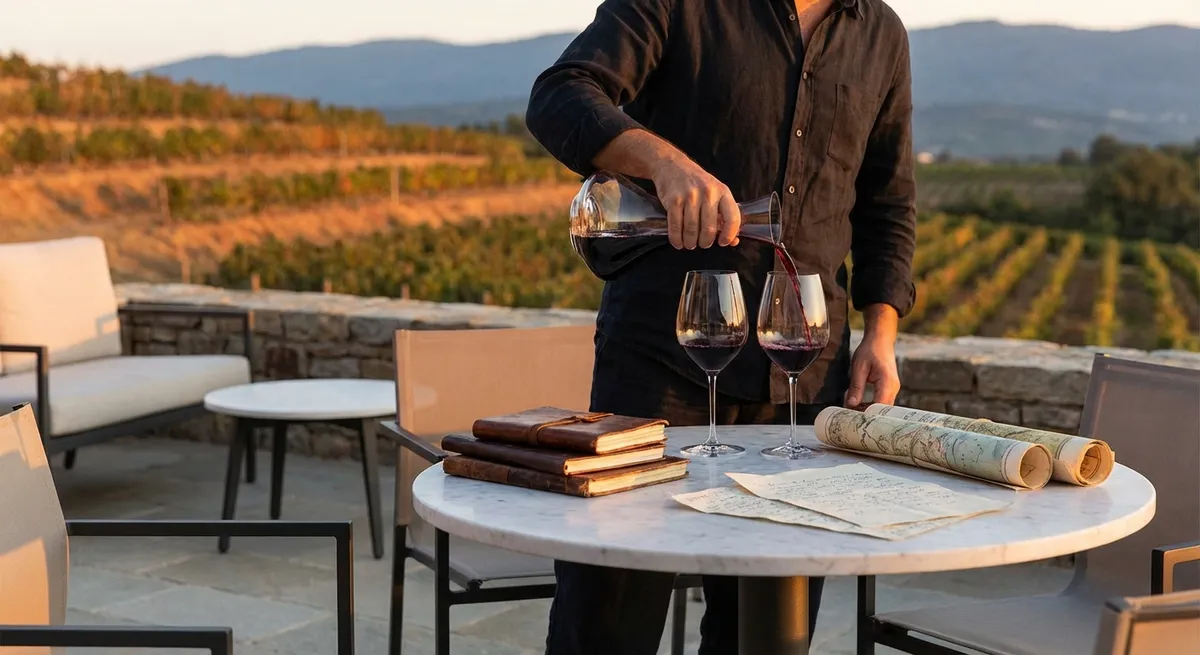
Ask to taste the same wine in two different glasses if possible. The contrast is often striking and can permanently recalibrate how you serve wine at home. Service details—decanting times, the order of the lineup, the pacing of pours—quietly signal how the estate believes their wines should be experienced.
4. Compare Multiple Vintages Side by Side
Vertical tastings—sampling several vintages of the same wine—are among the most instructive experiences you can have at an estate. If it is available, prioritize a vertical over a wider range of different cuvées.
Side-by-side vintages reveal not only weather variations, but also the evolution of the winemaker’s style, changes in vineyard age, and refinements in technique. Listen carefully to how the estate describes “challenging” years; producers who speak with pride and specificity about difficult vintages often manage their vineyards with discipline and humility—qualities that tend to correlate with long-lived wines.
5. Walk with the Vineyard Manager, Not Just the Winemaker
The winemaker is the visible face of the estate; the vineyard manager is the steady hand behind the scenes. If the opportunity arises, ask to spend part of your visit walking the vines with the person responsible for their health.
Their vocabulary—cover crops, canopy density, water stress, biodiversity, pruning strategies—reveals the foundation upon which the wines rest. In regions under climate pressure, the vineyard manager can speak to earlier harvests, changing disease pressures, and adaptations like drought-resistant rootstocks or shade management. For the informed enthusiast, this is where the story of the wine truly begins.
Designing a Visit Around Texture, Not Just Taste
Experienced wine travelers increasingly design their vineyard visits around texture—the way a wine feels on the palate—rather than just aroma or flavor descriptors. This shift invites richer, more technical conversations during your appointment.
When tasting, focus on how the wine moves: Is it linear or expansive? Silky, chalky, or firm? Does the acidity feel vertical and precise, or more rounded and enveloping? How does the tannin register—powdery, grainy, or angular?
Frame your questions around these sensations. Ask how canopy management, picking dates, or extraction choices in the cellar were used to shape that specific mouthfeel. Producers working at a high level will often light up when the conversation turns to texture, structure, and balance; you move beyond “notes of cherry and spice” into the realm where stylistic intent is most clearly expressed.
Over time, you will find certain estates whose tactile signatures resonate deeply with your preferences. Vineyard visits then become less about accumulating labels and more about curating a personal vocabulary of textures.
Capturing the Experience: Sharing Vineyard Visits with Intention
In an era of constant documentation, there is a quiet luxury in the way you choose to share your vineyard experiences. Rather than a quick snapshot of a bottle and a view, consider capturing the details that fellow enthusiasts appreciate: the soil under your hand, the pruning cuts on an old vine, the handwritten chalk marks on a barrel head.
When recounting your visit—whether in a brief social post or a longer reflection—focus on what made that estate distinct: an unusual varietal planted on a marginal slope, a radical shift toward regenerative agriculture, a particular barrel regimen, or an illuminating side-by-side tasting. Mention the people by name where appropriate; serious wine is always, at its core, a human endeavor.
Thoughtful sharing not only enriches your own memory of the experience, it also guides others toward visits that honor craftsmanship and depth over spectacle.
Conclusion
A vineyard visit, approached with curiosity and precision, is one of the most rewarding experiences a wine lover can pursue. It is a rare chance to place your feet where the roots drink, to see the decisions that never appear on a label, and to converse with the people who translate landscape into liquid.
For the informed enthusiast, the goal is not simply to discover “good” wines, but to understand why they are good—and how place, season, and human judgment converge in every glass. When you step away from the crowd, ask the right questions, and seek out these quieter insights, each vineyard becomes more than a destination. It becomes a chapter in your personal atlas of taste.
Sources
- UC Davis Viticulture and Enology – Terroir and Vineyard Site Selection – University of California, Davis overview of how soil, climate, and topography influence wine quality
- Cornell University – Grapevine Canopy and Crop Management – Technical guidance on canopy and crop practices that shape wine texture and balance
- Wine Institute – California’s Winegrowing Regions – Authoritative background on regional variation and vineyard conditions across California
- Burgundy Wine Board (BIVB) – Understanding Climats and Terroir – Detailed explanation of how small site differences translate into distinct wines in Burgundy
- OIV (International Organisation of Vine and Wine) – Viticulture and Oenology Publications – International reference documents on vineyard practices, winemaking techniques, and global trends
Key Takeaway
The most important thing to remember from this article is that this information can change how you think about Vineyard Visits.