There is a echelon of wineries that rarely appear on billboards or tourist maps, yet their reputations move quietly among collectors, sommeliers, and seasoned travelers. These are not simply “high-end” properties; they are houses of intent, where viticulture, architecture, and hospitality are orchestrated with meticulous restraint. For the discerning wine enthusiast, understanding what truly sets these estates apart transforms a pleasant tour into a deeply resonant experience—one where every glass, terrace, and barrel room tells a story you will want to share long after the last pour.
The Vineyard as a Precision Instrument
At premium wineries, the vineyard is not a backdrop; it is the primary instrument in a finely tuned orchestra. Rather than chasing maximum yields, these estates pursue precision—parcel by parcel, sometimes row by row, and increasingly vine by vine.
Winemakers may map their land using high-resolution satellite imagery and soil conductivity scans to understand micro-variations in texture, drainage, and mineral composition. This means Cabernet Sauvignon on a stony, elevated slope might be harvested days earlier than the same grape planted just a few meters downslope on deeper clay. The decisions are granular. If you pay attention during a visit, you’ll often hear the team speaking in terms of “blocks” and “parcels,” each with its own personality and picking schedule.
For the guest, this manifests in wines that feel strikingly defined—tension, elegance, and depth instead of mere concentration. As you tour, ask to see a vineyard map and note how the estate speaks about specific plots. When a winery is willing to walk you through soil pits or point out subtle changes in canopy density, you’re not just learning agriculture; you’re being invited into the logic behind every bottle.
Exclusive Insight #1: In truly premium vineyards, harvest is often staggered across multiple passes in the same block, with picking teams returning repeatedly to isolate clusters at ideal ripeness. This surgical approach to timing is rarely advertised, but it is one of the quiet signatures of world-class wine.
Fermentation as a Conversation, Not a Recipe
In the cellar, premium wineries treat fermentation less as a fixed formula and more as a conversation between fruit, vessel, and time. While many properties can explain their use of stainless steel tanks or oak barrels, exceptional estates go further, aligning specific vineyard parcels with precise fermentation methods.
You may encounter open-top concrete tanks for a structured, textural red; large-format oak casks for a slow, oxygen-managed evolution; or amphorae for a white wine where purity and mineral expression are paramount. The goal is not novelty but nuance—each choice exists to articulate a particular facet of the grapes.
Temperature control is often hyper-detailed, with winemakers adjusting by a degree or two to preserve aromatics or encourage delicate tannin extraction. Pump-overs and punch-downs are no longer simply scheduled tasks; they are calibrated responses to taste and texture, assessed repeatedly each day.
Exclusive Insight #2: Some premium estates conduct “micro-vinifications” in tiny tanks or barrels, vinifying individual rows or clone selections separately. These lots may never be bottled alone, but they serve as high-definition color swatches for the final blend, allowing the winemaker to paint with remarkable precision.
The Art of Blending: Where Restraint Becomes Luxury
To the uninitiated, blending might sound like mixing; to the elevated winery, it is compositional art. Once separate lots have completed fermentation and initial maturation, the cellar becomes a quiet studio. Dozens of samples—each with distinct texture, aromatic profile, and structural frame—are evaluated, often over many sessions.
Premium winemakers frequently taste blind, removing preconceptions tied to specific blocks or barrels. Structure, length, and energy matter as much as fruit expression. A small percentage of a high-acid component might be added solely to lift the finish; a powerful, dense lot could be used sparingly to provide backbone without dominance.
You will rarely see this process in motion during a tour, but you can sense its influence in the glass. Precision blending results in wines that seem seamlessly layered, where no single note feels out of place. When you visit, ask whether the estate offers comparative tastings of different cuvées or vintages; these side-by-side experiences reveal the house’s blending philosophy more clearly than any cellar tour.
Exclusive Insight #3: In elite cellars, the “final blend” can be adjusted multiple times over months, with separate trial bottlings and re-tastings under different conditions. The wine you ultimately drink is often the product of dozens—sometimes hundreds—of micro-decisions that balance expression against longevity.
Hospitality as Curated Silence and Subtle Storytelling
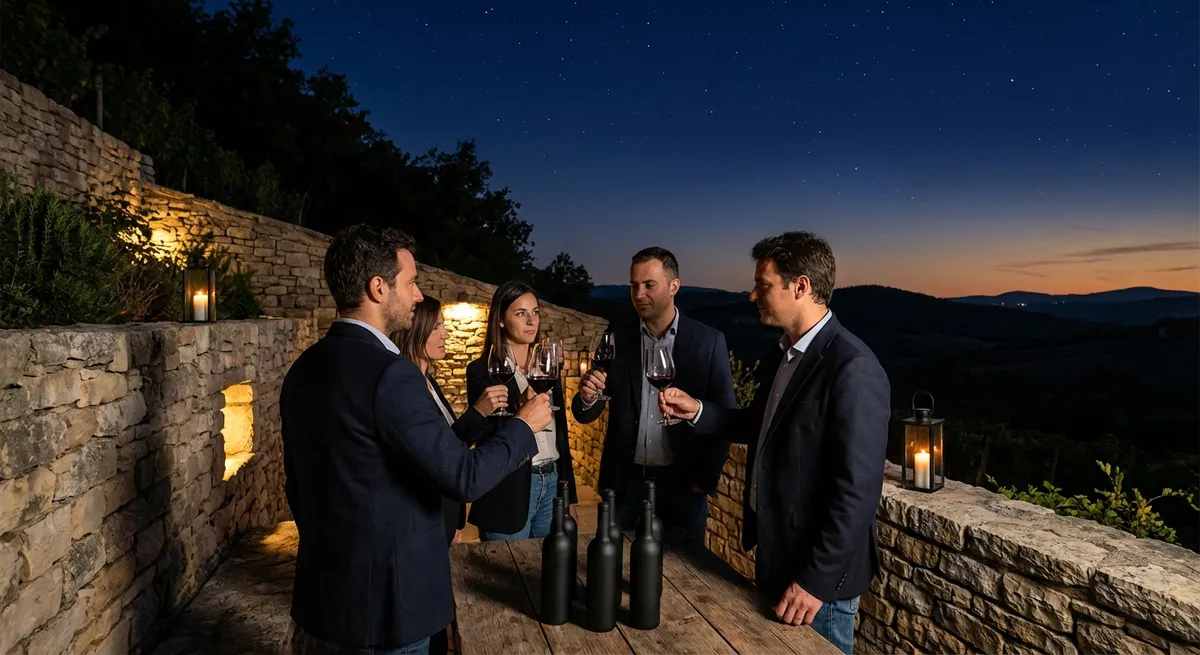
Premium wineries understand that the luxury of a visit is not measured by how much you are shown, but by how thoughtfully your attention is guided. Rather than crowded tasting bars and loud music, you often find deliberate quiet: a private terrace overlooking a single, meaningful vineyard parcel, or a softly lit tasting salon where the architecture gently frames the landscape beyond.
Staff are not just versed in flavor descriptors; they are capable interpreters of the estate’s philosophy. They can explain why the owner chose a particular hillside decades ago, or how the winery adapted as climate patterns shifted. They invite questions that extend beyond “What am I tasting?” to “Why does this place exist as it does?”
This level of hospitality rarely announces itself with overt opulence. It lives in the pacing—no rushed flights, no inflexible scripts—and in the way your preferences are absorbed and reflected back. A thoughtful recalibration of the tasting sequence based on your reaction to the first wine, a spontaneously opened library bottle when the conversation turns to an older vintage: these gestures signal not customer service, but cultivated attentiveness.
Exclusive Insight #4: Some of the most refined wineries quietly track return visitors’ preferences and prior tastings—not for marketing blasts, but to personalize your next visit’s lineup, vineyard focus, and even glassware. When a host remembers exactly which parcel most captured your imagination years ago, you are experiencing a form of bespoke hospitality rarely advertised.
Time as the Ultimate Luxury: Cellars, Libraries, and Patience
Perhaps the most profound distinction of premium wineries is their relationship with time. While the broader market often demands early releases and rapid turnarounds, elevated estates are willing to let wine—and reputation—unfold at a slower tempo.
In the cellar, this patience appears in extended lees contact, carefully calibrated barrel aging, and delayed release schedules designed so that wines reach the table with at least a hint of maturity. Many hold back significant volumes for a “library,” building an archive that allows both the estate and its guests to understand how vintages evolve across decades.
Collecting and aging wine at home becomes far more meaningful once you have witnessed this long view in person. A vertical tasting—sampling multiple vintages of the same cuvée—can be revelatory. It demonstrates not only vintage variation but also how the estate’s philosophy has evolved, which sometimes includes subtle shifts in picking dates, oak regimes, or vineyard practices in response to a changing climate.
Exclusive Insight #5: At select properties, internal tasting panels regularly open library bottles from many past decades, not for sale, but as a form of continuous calibration. Current winemaking decisions are measured against a living archive of older vintages, ensuring that stylistic evolution is intentional rather than accidental.
Conclusion
To move through a premium winery with informed attention is to realize how much of true luxury is quiet. It resides in the care taken in a single vineyard row, the invisible choices inside a fermentation tank, the unsentimental rigor of blending, the crafted stillness of a private tasting, and the long discipline of building a cellar for the next generation rather than the next quarter.
For the serious wine traveler, seeking out these discreet constellations of excellence reshapes what a “wine tour” can be. You are no longer just visiting a destination; you are entering into a decades-long conversation between land, craft, and time—one that rewards not only your palate, but your curiosity. Those are the experiences worth sharing, revisiting, and, most of all, returning to in person.
Sources
- Napa Valley Vintners – Understanding Terroir - Overview of how site, soil, and climate shape wine styles in premium vineyards
- Institute of Masters of Wine – The Art of Blending - Expert discussion of blending philosophy and techniques at the highest level
- Wine Spectator – Inside the Modern Winery - Exploration of contemporary cellar practices and fermentation choices in quality-focused estates
- UC Davis Department of Viticulture & Enology - Research-based resources on advanced viticultural practices and their impact on wine quality
- Decanter – Why Great Wines Need Time - In-depth look at aging, cellaring, and release decisions for fine wines
Key Takeaway
The most important thing to remember from this article is that this information can change how you think about Premium Wineries.