There is a particular hush that falls over a vineyard in the late afternoon—a stillness that feels less like silence and more like anticipation. For many, a vineyard visit is a charming diversion. For the true wine enthusiast, it is something else entirely: an intimate encounter with the place, the people, and the precise decisions that shape what ultimately fills the glass. When approached with intention, a day among the vines becomes not just pleasurable, but profoundly revealing.
Below are five exclusive, nuance-rich insights designed for travelers who want to move beyond picturesque views and tasting notes, and step into the deeper, more quietly luxurious dimension of vineyard experiences.
Reading the Vineyard: How to “See” Terroir With Your Own Eyes
Terroir is often spoken of as an abstract concept, a poetic catch-all for soil, climate, and topography. Yet a careful vineyard visit allows you to quite literally see terroir at work.
Walk the rows slowly and pay attention to transitions. Where do the slopes begin to tilt more steeply? Where does the soil color subtly shift from pale limestone to darker clay, or from gravel to sand? These visual cues often map directly to the differences you later sense in the glass—more tension and minerality from stony plots, more generosity and depth from clay-rich parcels.
Notice the spacing of the vines and the height of the canopy. Tight spacing in cooler regions may indicate a push for concentration and competition among vines, while wider spacing in warmer climates can help manage vigor. Look at the orientation of the rows relative to the sun; a north-facing slope in a warm region might be prized for its ability to preserve freshness, just as a south-facing bank in a marginal climate might be the most coveted parcel on the property.
Instead of merely admiring the scenery, allow the vineyard to become a map: the subtle gradients of soil, slope, and exposure are the topography of flavor you will later encounter in each wine.
The Vineyard Whisper: Observing Canopy, Pruning, and the Pursuit of Balance
Behind every elegant wine is a series of quiet decisions made among the vines, long before harvest. A truly rewarding vineyard visit involves reading these choices like a connoisseur.
Examine the canopy. Are the leaves dense and shading the clusters, or carefully opened to allow dappled sunlight and airflow? Meticulous leaf management reduces disease pressure and tailors ripeness, revealing how closely the estate is attuned to balance rather than sheer volume.
Look at pruning styles. Spur pruning versus cane pruning, the number of buds left, the apparent age of wood—all of these tell a story about yield management and desired wine style. Shorter pruning with fewer buds often suggests a focus on concentration over quantity.
Notice whether the ground cover is bare or planted. Clover, grasses, or wildflowers between rows can indicate a commitment to soil health, erosion control, and biodiversity. Subtle details such as insect hotels, owl boxes, or hedgerows hint at integrated pest management and a broader environmental philosophy.
For the attentive visitor, the vineyard is not just scenic—it is a living record of the estate’s priorities: precision, restraint, and long-term thinking.
The Cellar Conversation: Asking Questions That Go Beneath the Script
Every estate has a polished narrative, but the most enlightening vineyard visits happen when you gently move beyond the standard tour script. A sophisticated guest knows that the right questions unlock the most telling insights.
When in the cellar, inquire about how the team approaches a difficult vintage. Ask, for example: “In a cooler or rainier year, what are the most important decisions you change in the vineyard or cellar?” The answer reveals their philosophy under pressure—whether they chase ripeness at all costs, or embrace the character of the year.
Ask how they decide when to harvest. Is it purely based on sugar levels (Brix), or do they track phenolic ripeness, seed color, and taste of the berries? A producer who speaks fluently about tannin maturity, acidity, and flavor development is likely to craft wines with nuance rather than blunt ripeness.
Discuss their approach to oak. Instead of merely asking whether they use French or American barrels, invite them to explain how they adjust oak influence by vintage or cuvée. Subtle answers about toast levels, barrel age, and length of elevage show how they think about texture, not just flavor.
These conversations, handled with genuine curiosity and respect, transform a visit from a performance into a shared exploration. You leave not just with tasting notes, but with a deeper understanding of the mind behind the wine.
Vertical Tasting on Site: Experiencing Time and Place Intertwined
One of the most refined experiences a vineyard can offer is a vertical tasting—sampling multiple vintages of the same wine, ideally in the very landscape where those grapes once hung on the vine. For seasoned enthusiasts, this is where vineyard visits become truly transcendent.
A vertical exposes the interplay between vintage and terroir: how a cool, structured year expresses the same parcel differently from a warm, generous one. Tasting side by side reveals what is constant—the signature of the site—and what is variable—the personality of the season.
Pay attention to how the wine’s texture evolves across vintages. Does the estate’s hallmark remain a certain tension, a particular silkiness, or a recognizable aromatic profile, even as weather patterns change? This continuity suggests a confident, consistent hand in both vineyard and cellar.
When possible, ask to revisit a younger vintage after tasting an older one. You will often find that what seems taut or reserved in a recent year is simply an earlier chapter of what you admired in the mature bottle. Experiencing this arc while standing within view of the vines themselves gives an almost cinematic sense of time layered onto place.
For the committed traveler, arranging vertical tastings—whether formally scheduled or informally pieced together from open bottles—is one of the most revealing and rewarding ways to understand an estate’s true character.
Private Rituals: Curating a Discreetly Luxurious Vineyard Day
Exceptional vineyard visits are less about extravagance than about thoughtful, well-orchestrated detail. Those who travel for wine at a high level know how to shape a day that feels quietly indulgent rather than ostentatious.
Consider timing your visit to capture the vineyard at two distinct moments: early morning, when mist still lingers and the air is cool, and late afternoon, when the light softens and shadows lengthen. The same landscape reads differently, and tasting after each walk allows you to connect these shifting moods with how you perceive the wines.
Arrange for tasting formats that reward attention. A comparative flight of single-parcel wines, for instance, can be far more enlightening than a broad sweep of the entire range. If the estate offers it, opt for seated, guided tastings where pacing is deliberate, glassware is carefully chosen, and temperature control is impeccable.
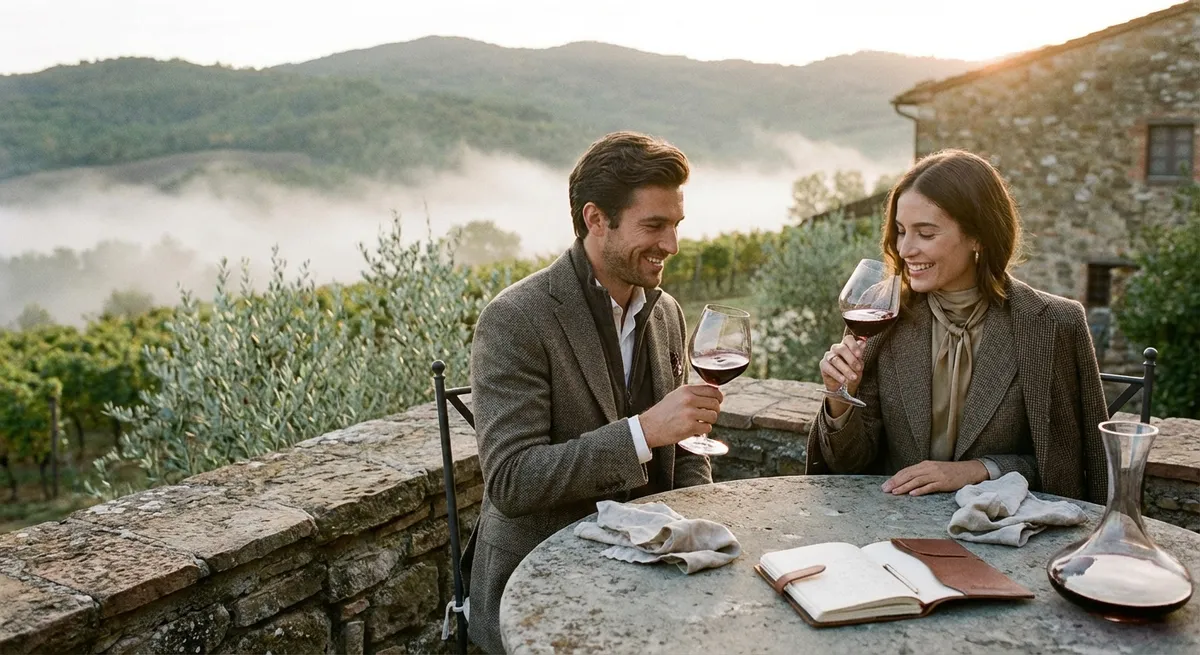
Build contemplative pauses into your itinerary. Instead of rushing from one estate to another, allow time simply to sit with a glass, facing the rows from which it came, perhaps with a carefully selected local pairing. A well-chosen artisan cheese or cured ham, sourced from nearby producers, reinforces the sense of place without overwhelming the wine.
Document your experience with intention: brief tasting notes that capture mood and texture, not just flavor descriptors; photographs that frame soil, slope, and sky, not only the bottle. These quiet rituals transform a pleasant day into a deeply personal archive of your relationship with that vineyard.
Conclusion
A vineyard visit, at its finest, is not a checklist of wineries but an evolving conversation between traveler, landscape, and craft. By learning to read the vineyard with your eyes, to observe the subtleties of canopy and pruning, to ask cellar questions that invite candor, to explore time through vertical tastings, and to curate your own refined rituals on site, you elevate the experience from scenic outing to true immersion.
For those who care as much about the path to the glass as what shimmers within it, these understated practices reveal the quiet, enduring luxury of wine at its source.
Sources
- University of California, Davis – Terroir and the Importance of Site - Overview of how soil, climate, and topography shape wine character
- Wine Institute – Sustainable Winegrowing Practices - Insights into vineyard management, biodiversity, and environmental stewardship
- Cornell University – Vineyard Canopy Management - Technical background on canopy practices and their effect on fruit quality
- Decanter – Guide to Vertical Tastings - Explanation of vertical tastings and what they reveal about wine and vintage variation
- Wine & Spirits Education Trust (WSET) – Factors Influencing Style and Quality - Educational resource on vineyard decisions and their impact on wine style and quality
Key Takeaway
The most important thing to remember from this article is that this information can change how you think about Vineyard Visits.