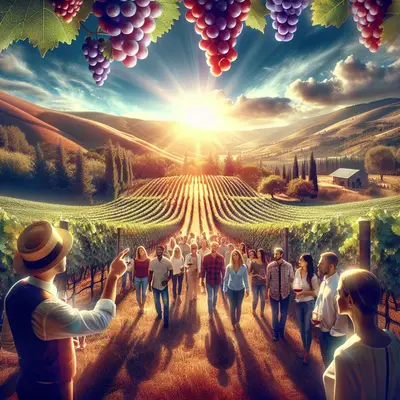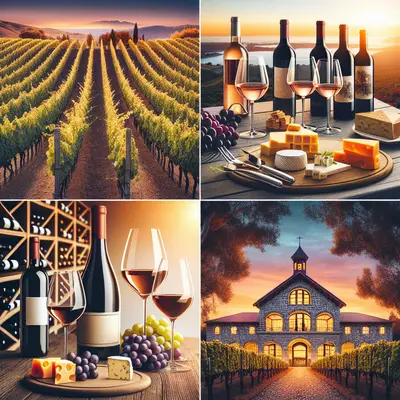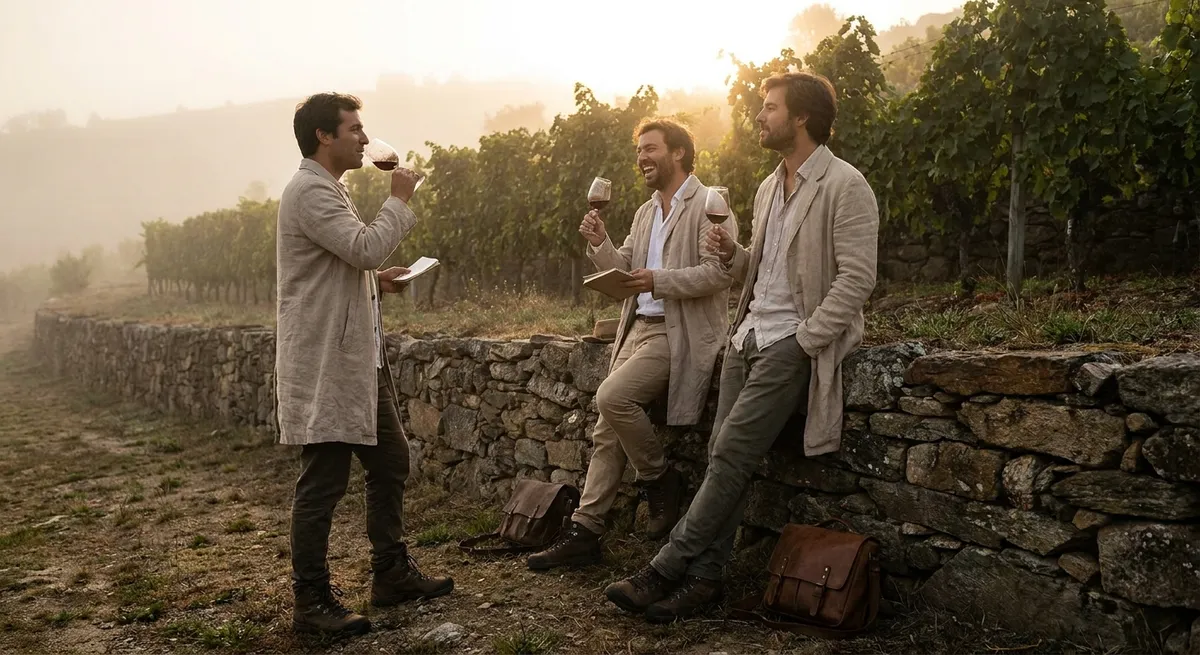
There is a certain kind of traveler who arrives at a winery not for the spectacle, but for the quiet revelation—a subtle shift in light over the vines, the measured cadence of a winemaker’s voice, the way a single barrel room can reset your sense of time. For this guest, a wine tour is less an outing and more a precisely tuned experience. At Wine Tour Adventures, we design for that mindset: the traveler who values nuance over noise, intimacy over itinerary, and depth over abundance.
Below, you’ll find five exclusive, less-discussed dimensions of wine touring—refinements that transform a pleasant visit into an experience worth traveling for.
1. The Elegance of Timing: Reading a Vineyard’s Daily Rhythm
The most memorable wine tours are not defined by the day of the week, but by the hour of the visit. Arrive mid-morning and you may catch the cellar team in quiet, methodical motion—hoses humming, tanks whispering with fermentation, barrels being tasted in contemplative silence. Late afternoon, the vineyard itself becomes the main stage, with lengthening shadows pulling texture and definition from every row of vines.
Truly thoughtful itineraries work with the natural rhythm of each estate. For cool-climate regions, a crisp early visit can reveal the energy of the harvest team, while in warmer regions an early evening tasting on a shaded terrace allows wines to show with greater poise. The refined traveler inquires not just “What time do you open?” but “When is your vineyard at its most expressive?” Aligning your visit with a property’s living pulse—pruning in winter, budburst in spring, veraison in midsummer, harvest in autumn—turns a tour into a seasonal portrait rather than a static snapshot.
2. Behind the Label: Conversing in the Language of the Cellar
The most rewarding moments on a wine tour often unfold not in the tasting room, but in the cellar—where the air is cool, the light is measured, and the conversation can move beyond description into philosophy. Winemakers who welcome attentive questions will reveal how their decisions around fermentation vessels, aging regimes, and blending are less about fashion and more about fidelity to a place.
Ask how they decide between stainless steel and oak, large casks and small barrels, native yeasts and cultured strains. Notice how their answers trace a deliberate line between technical choice and sensory outcome: tension versus generosity, precision versus opulence, structure versus silk. Observing how they taste from barrel—what they look for, what they disregard, what makes their eyes narrow in concentration—teaches you to decode the finished wine. In these quiet exchanges, you learn not only what is in the glass, but why it exists in that particular form.
3. Micro-Terraces and Marginal Rows: Discovering a Vineyard’s Private Corners
Many visitors see a single, sweeping vineyard and think of it as one uniform landscape. The more discerning guest knows that the most compelling wines often come from the least obvious corners: the slightly higher terrace where the wind is a fraction cooler, the stony patch where roots must struggle, the row that ripens just a touch later than the rest. These micro-sites—sometimes barely visible, always fiercely protected—are where the estate’s most honest wines are often born.
When touring, look for opportunities to walk the vineyard with someone who truly knows its contours: a viticulturist, vineyard manager, or owner. Notice how the soil shifts underfoot—from loam to limestone, from gravel to clay—and how the vine spacing, canopy height, and row orientation respond to each subtle change. Ask which parcels they would never dream of replanting, and which ones they are still learning to understand. These details illuminate why a single estate can produce wines of strikingly different character, and why certain bottlings quietly command the attention of serious collectors.
4. Precision in the Glass: Tasting as a Dialogue, Not a Recital
On a refined wine tour, the tasting itself is not a one-way presentation but a considered dialogue. Rather than rushing through a list, a thoughtfully curated session is paced to encourage reflection. Glassware matters: the shape, the weight in your hand, the way the rim directs the wine. Serving temperature, too, distinguishes a careful estate from a merely competent one—no overchilled whites, no overheated reds dulling nuance.
A premium tasting feels almost choreographed, yet never forced. You may move from a leaner, mineral-driven white to a textural, barrel-aged counterpart, then onto reds layered by vineyard or soil type rather than simply by price. Discuss what you notice: the tactile quality of the tannins, the way acidity frames fruit, the length of the finish. A skilled host adjusts the progression in real time, bringing in a library vintage or a new cuvée if your curiosity leans that way. In this kind of setting, you are not simply consuming; you are participating in the estate’s ongoing exploration of its own identity.
5. The Art of Leaving Well: Curating Memory, Not Just Bottles
The most sophisticated wine tours recognize that what you take home is more than a case of bottles—it is a set of carefully constructed memories. The final moments of a visit can be as decisive as the first pour. Perhaps it’s a last taste of a quietly extraordinary vintage, shared standing at the edge of the vineyard as the light softens. Or a brief visit to the library cellar, where dust-covered bottles tell the story of the estate’s long experiment with time.
As you depart, consider how you’ll revisit this place long after the journey ends. Select bottles that represent specific experiences: the parcel you walked through, the barrel sample you discussed with the winemaker, the unexpected varietal that surprised you. Make note of vintage conditions—warmer, cooler, or classically balanced years—and how they shaped the wines you enjoyed. When opened years later, these bottles will not only show the evolution of the wine; they will recall the cadence of that day, the character of the people you met, and the precise texture of the air in the cellar. A truly elevated wine tour lingers in this way—quietly, insistently, long after the last glass is poured.
Conclusion
For the attentive traveler, a wine tour is an invitation into a world of deliberate choices and finely tuned details. The best experiences are not defined by extravagance, but by intention: the right hour of the visit, the quiet honesty of the cellar, the overlooked corners of the vineyard, the precision of the tasting, and the thoughtfulness with which you depart. At Wine Tour Adventures, these are the dimensions we seek to reveal—so that each journey through wine country feels less like a visit and more like an intimate, enduring conversation with place.
Sources
- [Wine Institute – California Wine Country Tourism](https://wineinstitute.org/our-industry/california-wine-country/) - Overview of California wine regions, visitor experiences, and regional distinctions
- [Wine Tourism in Europe – European Commission](https://single-market-economy.ec.europa.eu/sectors/tourism/promoting-sustainable-tourism/wine-tourism_en) - EU perspective on wine tourism, sustainability, and regional development
- [Napa Valley Vintners: Winegrowing & Terroir](https://napavintners.com/napa_valley/terroir.asp) - Detailed explanation of how vineyard sites, soils, and microclimates shape wine character
- [Bordeaux Wine Council (CIVB) – Discover Bordeaux Vineyards](https://www.bordeaux.com/us/Our-Terroir/Discover-the-Vineyards) - Insight into vineyard diversity, appellations, and the role of terroir in a classic region
- [UC Davis Department of Viticulture & Enology](https://wineserver.ucdavis.edu/) - Research-based information on winemaking, viticulture, and sensory evaluation of wine
Key Takeaway
The most important thing to remember from this article is that this information can change how you think about Wine Tours.