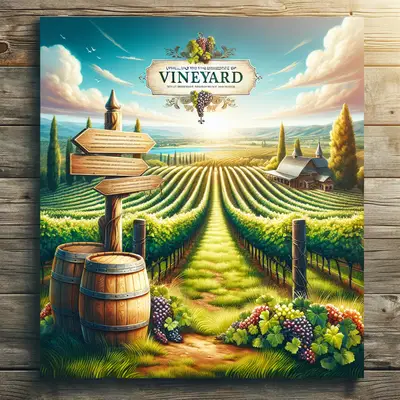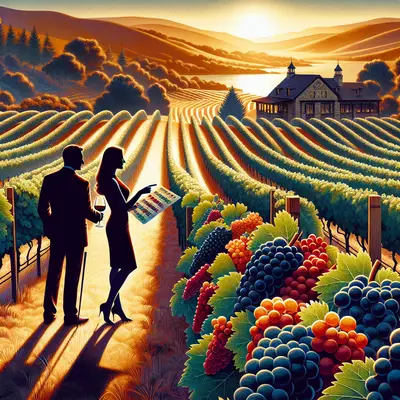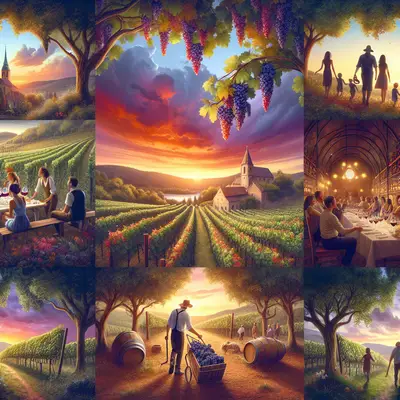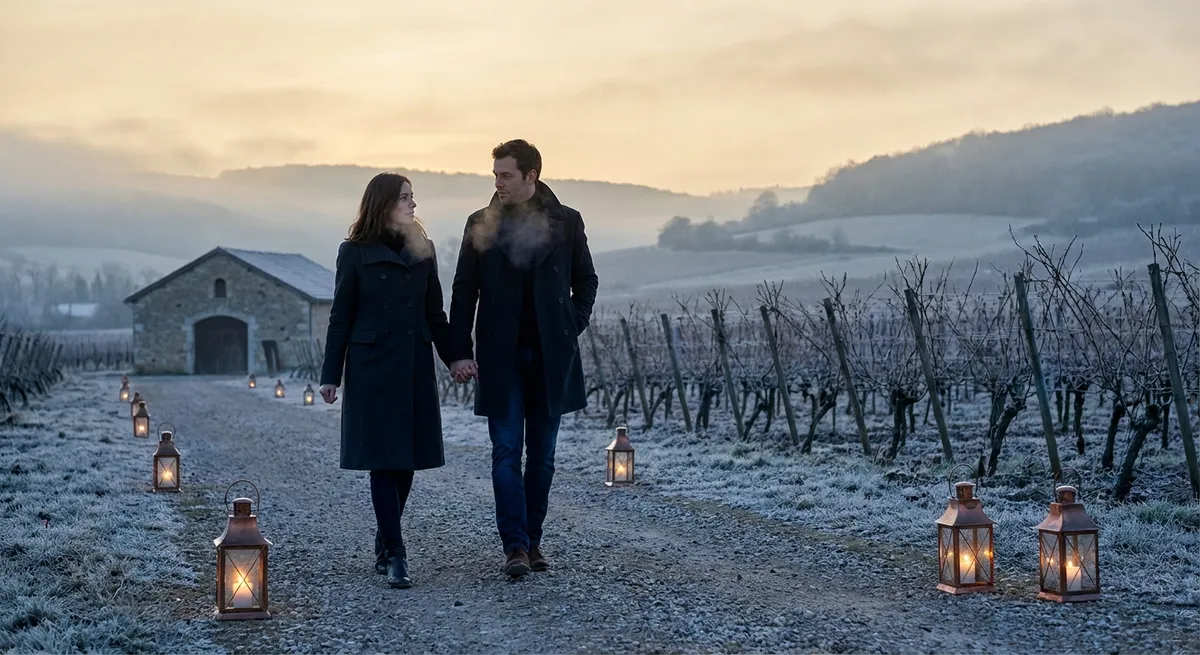
There is a particular stillness in a vineyard before the first tasting room door opens, when dew clings to the vines and the only sound is the muted hum of tractors in the distance. This is where the essence of a truly refined wine experience begins—not in the glass, but in the cadence of the place itself. For travelers who seek more than a standard pour, vineyard visits can become exquisitely tailored encounters with craft, time, and terroir. The difference lies in knowing how to look, listen, and ask.
Below are five exclusive, detail-driven insights designed for discerning wine enthusiasts who wish to elevate their next visit from pleasant to unforgettable.
Reading the Vineyard Before the First Pour
The most revealing part of a winery often isn’t the tasting room—it’s the quiet geometry of the vineyard itself. Before you step up to the bar or sit at your reserved table, take a deliberate walk or guided tour among the rows (whenever permitted). Observe the spacing of the vines, the presence or absence of cover crops between rows, the orientation toward sun and wind, and how the soil looks beneath your feet.
These details expose the producer’s philosophy. Tight vine spacing can suggest an emphasis on limiting vigor and concentrating flavor. Cover crops such as clover or grasses hint at soil health management and a preference for biodiversity over intensive inputs. Terracing, windbreaks, or shade structures reveal how seriously the estate approaches microclimate control. Ask your host why certain parcels are planted to particular varieties and why some blocks are harvested earlier or later. You will quickly distinguish vineyards that are farmed for yield from those cultivated for character. When you finally taste, you will be mapping flavors back to specific slopes you’ve actually seen, not just imagined.
Decoding Cellar Architecture and Atmosphere
Once inside the winery, pay attention to the cellar as carefully as you do to the wines. Architecture is never neutral in a serious estate—it is a physical manifestation of how the wine is meant to evolve. Gravity-flow designs, where grapes and wine move gently downhill rather than being pumped, signal a commitment to delicacy and preservation of aroma. Subterranean caves carved into rock suggest a long-term vision where constant temperature and humidity are prized for slow, graceful maturation.
Take note of the range of vessels: oak barrels (their origin, age, and size), concrete eggs, amphorae, stainless steel tanks. Instead of asking simply, “Is this aged in oak?” refine the question: “How do you decide which parcels go into concrete versus barrel?” or “What do you gain by using larger-format foudres rather than small barriques?” The responses reveal the winemaker’s hierarchy of structure versus freshness, texture versus purity. A cellar that appears almost obsessively orderly, with meticulous labeling and spotless floors, often corresponds to wines that are precise, clean-lined, and structured. A cellar with a more artisanal, almost bohemian atmosphere may produce wines with wilder aromatics and a more experimental edge. Both can be excellent; your task is to understand the intent.
The Winemaker’s Language: What to Listen For
When you are fortunate enough to encounter the winemaker or vineyard manager, focus less on rehearsed narratives and more on the language they use when speaking off-script. Listen for how they describe a challenging vintage, a failed experiment, or an unpopular decision. The most serious artisans welcome nuanced questions and respond candidly about compromises, experiments, or pivots in style.
Subtle clues in vocabulary are telling. References to “balance,” “tension,” and “energy” often indicate a pursuit of elegance over sheer power. Frequent mentions of “phenolic ripeness,” “pH,” or “canopy management” point to a technically meticulous approach. Winemakers who speak lovingly of particular parcels by name (“that north-facing block by the cypress trees”) tend to craft wines that are highly site-expressive. Ask what they chose not to do in a recent vintage—what they refrained from blending, what they left unbottled, what they declassified. The story of what never reached the market is frequently the clearest window into their standards.
Private Tastings with a Purpose, Not Just a Price Tag
Private or appointment-only tastings are no longer rare, but they vary wildly in value. The premium experience is not defined solely by exclusivity or cost, but by intent and structure. Seek out estates that offer comparative or thematic tastings rather than simple lineups: verticals of a single cuvée across many vintages, side-by-side terroir explorations from different plots, or contrasting styles under the same label (oak-aged versus amphora-aged, for example).
Before booking, inquire specifically about the format: Will older vintages be included? Will you be able to taste limited production or single-parcel wines not normally poured? Who leads the tasting—a dedicated host, the sommelier, the winemaker, or a senior member of the viticulture team? A thoughtful estate will be transparent about this, and truly premium wineries often limit group size to ensure your questions receive considered, unhurried answers. During the tasting, keep brief notes on texture as much as flavor—how the wine moves across the palate, how long the finish persists, and whether that finish changes after a few minutes in the glass. These observations will serve you far better than a long list of tasting descriptors.
Curating a Post-Visit Cellar That Tells a Story
The most refined vineyard visits continue long after you have left the estate, in the way you integrate those wines into your own cellar and occasions. Rather than purchasing indiscriminately, curate with narrative in mind. Select a bottle that represents the estate’s flagship expression, another from a specific parcel or experimental cuvée, and, if possible, at least one bottle with genuine aging potential. Ask for the recommended drinking window and ideal cellaring conditions for each.
Back home, record not only technical details (vintage, grape, appellation) but also contextual memory: the time of year you visited, the weather, what you observed in the vineyard, and a few key insights from the winemaker. When you eventually open these bottles—perhaps years later—you will be uncorking an experience, not just a beverage. Consider hosting intimate tastings where you serve wines from different estates visited in the same region, inviting discussion about how site, philosophy, and vintage express themselves in the glass. In this way, your personal collection evolves beyond labels and ratings into a curated archive of journeys, conversations, and landscapes.
Conclusion
A vineyard visit need not be ostentatious to feel genuinely luxurious. True refinement lies in attentive observation, well-chosen questions, and a willingness to look beyond the obvious touchpoints of décor and price. When you learn to read vines and cellars, to decode the quiet cues in a winemaker’s language, and to collect with intention, each journey becomes a study in nuance rather than a checklist of famous names.
On your next excursion, move slowly. Arrive early, walk the rows, linger in the cellar, and let your curiosity set the rhythm. The most memorable wines are rarely just poured; they are revealed, one quiet detail at a time.
Sources
- [Wine Institute – California Wine Country Facts](https://wineinstitute.org/our-industry/by-the-numbers/california-wine-country-facts) - Context on vineyard regions, acreage, and diversity, illustrating the scale and variety behind vineyard visits
- [UC Davis Department of Viticulture and Enology](https://wineserver.ucdavis.edu/) - Educational resource on grape growing and winemaking, useful for understanding technical terms encountered during tours
- [Institute of Masters of Wine – Understanding Terroir](https://www.mastersofwine.org/what-is-wine/terroir) - In-depth discussion of terroir, helping visitors better interpret differences between vineyard sites
- [Decanter – Guide to Wine Cellar Design and Storage](https://www.decanter.com/learn/how-to/store-wine/how-to-build-a-wine-cellar-329621/) - Background on cellar conditions and storage, relevant to interpreting winery architecture and managing a home collection
- [OIV (International Organisation of Vine and Wine)](https://www.oiv.int/en/wine-and-vine) - Global perspective on viticulture and oenology, offering authoritative context for practices seen during vineyard and cellar visits
Key Takeaway
The most important thing to remember from this article is that this information can change how you think about Vineyard Visits.