Not all wine greatness announces itself with grand façades and crowded tasting rooms. The most compelling premium wineries cultivate something far more elusive: a resonant calm where craftsmanship, place, and time converge. For the traveler who seeks more than a checklist of “must-visit” estates, the true luxury lies in nuance—of texture, of service, of philosophy. This is the realm where a pour is never just a pour; it is a considered invitation into the mind of a producer and the character of a landscape.
Below are five exclusive, insider-level insights that reveal how discerning enthusiasts can recognize, appreciate, and truly inhabit the world of premium wineries.
1. Architecture as a Silent Tasting Note
In the premium tier, the building is never merely a backdrop to the glass; it is a subtle prelude to the wines themselves. The finest estates use architecture as a kind of sensory calibration, shaping how you arrive, how you breathe, even how you perceive time.
Notice the entry sequence: a long, gently curving drive that obscures the main building until the final turn; a quiet forecourt where the first sound you register is wind in the vines rather than engines or chatter. These details are intentional. They slow your pulse and pull your attention outward into the landscape and inward toward your own senses.
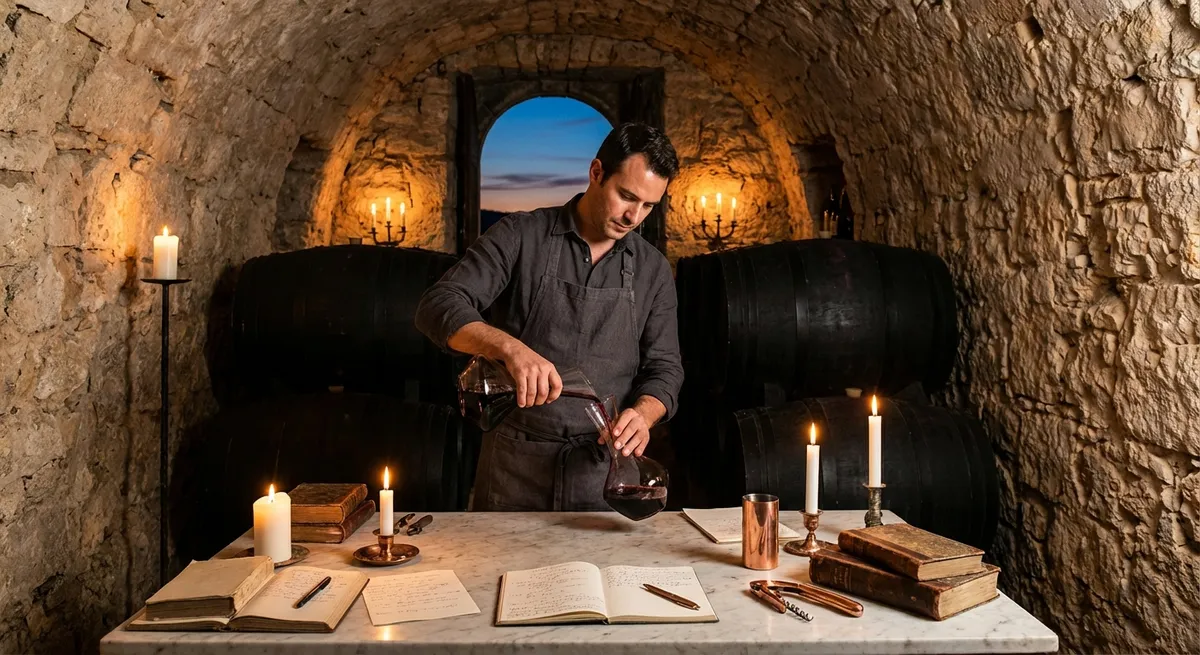
Inside, design often favors hushed acoustics, natural light, and restrained materials—stone, untreated wood, lime-washed walls that absorb noise rather than echo it. Tasting counters are frequently lower and more intimate, encouraging conversation rather than transaction. Spatial cues guide the experience: you might begin in a reception salon, move through a fermentation hall flooded with indirect light, then descend into a barrel room that feels almost chapel-like in its stillness.
The most sophisticated wineries treat physical space as part of flavor architecture. The environment quiets visual and auditory distractions so that texture, temperature, and aroma in the glass can move to the foreground. When you step into such a place and instinctively lower your voice, you are already tasting—long before the first pour.
2. Elevated Service: Precision Without Performance
True premium hospitality is rarely theatrical. Instead, it is discreet, anticipatory, and technically fluent—designed not to impress you with showmanship, but to remove friction from your experience so that you can focus fully on the wine.
Look for staff who command detail without reciting a script. They know the clonal material of the estate’s Pinot Noir, can explain why one parcel is always harvested pre-dawn, and remember that you favored the textural tension of the Chardonnay rather than its aromatics. They ask questions not as a formality, but as a diagnostic: “Do you tend to prefer structure or silk in a red?” “How sensitive are you to oak?” “Would you like to revisit that Cabernet after the Syrah to compare tannin quality?”
Glassware is curated with similar rigor. You may see different stem shapes selected for wines within the same flight, not as a gimmick but to emphasize line, breadth, or aromatic lift. Temperatures are precise, often a few degrees cooler than what’s common in casual tasting rooms, allowing wines to unfold gradually. Pours are measured, but you rarely have to request a re-taste; it appears as the conversation naturally turns to comparison.
Premium wineries understand that the highest expression of service is not constant attention, but calibrated presence. They give you sufficient space to form your own impressions, stepping in at exactly the moment a question crystallizes—or a doubt about a wine’s potential needs a quiet, confident answer.
3. Vineyard Narratives: From Topography to Texture
For the devoted enthusiast, vineyard talk can either be a blur of names or a precise map of flavor. At the upper echelon, wineries treat their vineyard stories as an intellectual and sensory framework, not just a marketing vocabulary.
Rather than listing blocks and clones, they connect topography to texture. A steep, rocky slope with thin soils becomes the explanation for the vertical, linear profile of a particular Syrah. A lower, colluvial fan with more organic matter reveals why one Chardonnay cuvée feels broader, with a satin edge rather than a taut thread. They speak in relationships: elevation to acidity, aspect to ripeness windows, canopy management to phenolic finesse.
The most compelling estates also embrace imperfection and variability. They will tell you why one vintage shows more savory, herbal detail and another leans into dark fruit, and they will resist narratives of “consistency at any cost.” Instead, they will talk about fidelity—how each year’s weather writes a fresh chapter onto the same terroir. Tasting becomes an exercise in reading those changes across vintages, understanding that a slightly more austere year may age with astonishing grace.
You might find yourself walking specific rows rather than merely admiring a panoramic view. The winemaker may ask you to feel the soil, to notice how gravel shifts to clay underfoot within a few meters. When you later taste two wines that come from parcels separated only by a stone wall, you begin to perceive that the wall is not a boundary but a pivot point—a fine adjustment in the instrument of the vineyard.
4. Cellar Philosophy: When Technology Serves Restraint
Premium wineries are rarely defined strictly by “traditional” versus “modern” methods. Instead, you will find something more nuanced: a philosophy in which technology and restraint co-exist, always answering to the character of the fruit.
Open-top fermenters may stand beside small, impeccably controlled stainless-steel tanks. You might see gravity-flow systems designed to minimize agitation of the must, paired with rigorous lab analysis that monitors fermentation health in real time. The guiding principle is clarity: intervene precisely where it protects purity or stability, and step back when the wine expresses its own momentum.
Oak use offers one of the clearest windows into this philosophy. Barrels are not chosen for prestige alone, but for their grain, toast level, and coopers’ individual signatures. A top-tier estate can explain not only how many new barrels they use, but why a certain forest produces tighter-grained staves that better suit their slow-developing Cabernet, or why a larger-format cask keeps their Grenache vivid and aromatic rather than saturated with wood.
In such cellars, “minimal intervention” is not a slogan but a practiced discipline. Decisions around whole-cluster inclusion, maceration length, or lees contact are made vintage by vintage, sometimes parcel by parcel. There is often a quiet confidence in acknowledging what they chose not to do—no late sugar additions to chase higher alcohol levels, no aggressive fining to standardize texture, no flashy extraction to court points.
For the attentive visitor, a cellar tour at this level becomes less a demonstration of equipment and more a masterclass in decision-making under constraint—when to act, when to wait, and when to trust the vineyard’s inherent intelligence.
5. Time as the Ultimate Luxury: Aging, Patience, and Perspective
Among all the markers of a premium winery, the most subtle yet decisive is how they manage time. The most serious estates think beyond release calendars and tourist seasons; they choreograph years, even decades, into their wines and their guest experiences.
You may notice that what’s poured in the tasting room is not always the current release. A library vintage appears, not as a rarity but as a reference point—a way of illustrating where today’s young wine might travel over ten or fifteen years. Vertical flights trace the evolution of a single cuvée, revealing not only shifts in climate and winemaking, but the estate’s own evolving self-awareness.
Production volumes are shaped by this temporal discipline. Rather than expand aggressively to meet demand, these producers often choose to reduce allocations, hold back stocks, or extend élevage. A Cabernet may spend an additional year in bottle before it’s deemed ready to represent the estate; a sparkling wine might rest on lees far beyond regional minimums, building composure and complexity that you can feel more than taste.
Even the pace of the visit reflects this time philosophy. You will rarely be rushed from one pour to the next. Silence is permitted between sips; revisiting a wine after several minutes is encouraged. The itinerary itself may stretch longer than standard tours, with space built in for contemplation rather than constant movement.
For the enthusiast attuned to these cues, the message is profound: in the premium tier, luxury is not chiefly about scarcity or spectacle; it is about the dignity of unhurried time—time given to the vineyard, to the cellar, and ultimately, to you as the guest invited to savor it.
Conclusion
Premium wineries reveal their true character in the details that are easy to overlook: the way a room absorbs sound, the precision of a pour, the honesty of a vineyard story, the quiet discipline of the cellar, and the unspoken confidence to let wines and experiences unfold slowly. For travelers who seek something deeper than a postcard moment, these estates offer a different kind of luxury—one measured not in excess, but in refinement.
To step into this world is to accept an invitation into slowness, depth, and attentiveness. The reward is an experience that lingers long after you’ve left the estate: not just the memory of a particular vintage, but a sharpened sense of how profoundly place, craft, and time can resonate in a single glass.
Sources
- Institute of Masters of Wine – Understanding Terroir - Explores how soil, climate, and topography influence wine style and quality.
- Napa Valley Vintners – Aging & Cellaring Wine - Provides guidance on how time in bottle shapes premium wines and their ideal drinking windows.
- Wine Institute – Sustainable Winegrowing Practices - Details modern vineyard and winery practices that support quality-focused, environmentally conscious production.
- UC Davis Department of Viticulture and Enology - Offers technical insights into winemaking decisions, fermentation management, and cellar practices.
- Decanter – The Role of Oak in Winemaking - Explains how barrel choices and oak regimes shape the texture and complexity of fine wines.
Key Takeaway
The most important thing to remember from this article is that this information can change how you think about Premium Wineries.