There is a particular quiet that settles over a great vineyard—part light, part history, part anticipation. A thoughtfully curated wine tour is less about moving from glass to glass and more about moving from moment to moment. For the discerning enthusiast, the true luxury lies in nuance: understanding not just what is in the glass, but why it tastes the way it does, who shaped it, and how to draw the most from every visit. This guide reveals five exclusive, often-overlooked dimensions that transform a pleasant tour into a profoundly resonant wine experience.
Tasting the Landscape: Reading Terroir Beyond the Label
Every vineyard is a layered conversation between geology, climate, and human intention. Sophisticated travelers know that terroir is not a marketing flourish; it is the underlying architecture of flavor.
Rather than asking simply, “Which wines do you produce?”, invite your host to walk you—literally or figuratively—through the vineyard’s soils. Are you standing on limestone, basalt, gravel, or clay? Each soil type influences drainage, root depth, and ultimately the tension, minerality, or plushness in your glass. An estate rooted in limestone might reveal wines with linear acidity and graceful length, while volcanic soils can introduce a darker, more brooding character.
Note the topography: slope orientation, altitude, proximity to bodies of water, and wind exposure all shape ripening patterns. Ask to taste side-by-side wines that come from different parcels or aspects of the estate. You will begin to sense that even within a single property, there are micro-identities—subtle but persistent signatures the attentive palate can learn to recognize.
A refined wine tour becomes a cartography of taste: every vineyard block an accent, every soil layer a sentence. The landscape ceases to be a backdrop and becomes a central character in your experience.
The Cellar as a Library: Understanding Style Through Aging Choices
If the vineyard is the story’s setting, the cellar is its editorial room. Two wines from the same grapes and the same parcel can diverge dramatically depending on how they are raised. Discerning visitors treat the cellar as a library of choices, each barrel, tank, and vessel a different interpretation of the same raw manuscript.
When touring a cellar, notice the variety of containers: new versus neutral oak, French versus American barrels, large-format casks, concrete eggs, amphorae, stainless steel tanks. Each introduces a distinct texture, aromatic profile, and sense of structure. Ask your host which wines are intended for early, joyful drinking and which are crafted with patience in mind.
Seek out barrel or tank samples when possible—not merely for novelty, but to appreciate how a wine evolves from its youthful, primary state to something layered and resolved. Pay attention to how oak is used: in the most sophisticated estates, oak is a frame, never the painting itself. The most memorable experiences often come when you can taste the same wine across different aging vessels or vintages, tracing the estate’s stylistic decisions over time.
In this way, the cellar visit becomes a masterclass in intention. You are no longer just tasting “a red blend,” but a philosophy about structure, longevity, and elegance.
Conversing with Vintages: Making Time an Essential Part of the Tour
For the attentive wine traveler, time is not just a date stamped on a label; it is a dimension you can explore. Vintages are the climate’s journal entries—each year inscribing its own weather, challenges, and triumphs into the wine.
When possible, design your tour to include vertical tastings: multiple vintages of the same wine. This allows you to observe how a particular site and winemaking style respond to different climatic moods. A cooler, more restrained year might emphasize perfume and freshness, while a warmer vintage could offer more generosity and texture. Ask your host how harvest timing, frost events, heat spikes, or rainfall shaped their decisions in those years.
Pay attention not only to flavor evolution but to structure: how tannins soften, acids integrate, and aromatics shift from fruit-driven to spice, floral, or tertiary notes over time. These details reveal both the resilience of the terroir and the estate’s capacity to craft wines with genuine aging potential.
The sophisticated enthusiast treats vintages as individual characters in a narrative. A refined tour doesn’t just ask, “What did you pour?” but “How did this year speak, and how did you respond?”
Private Moments in the Vineyard: Curating Silence, Space, and Service
Premium wine touring is defined as much by what you do not see—the crowds, the queues, the hurried pour—as by what you do. The most memorable visits are often those created through deliberate privacy and precision, even when the estate is not formally exclusive.
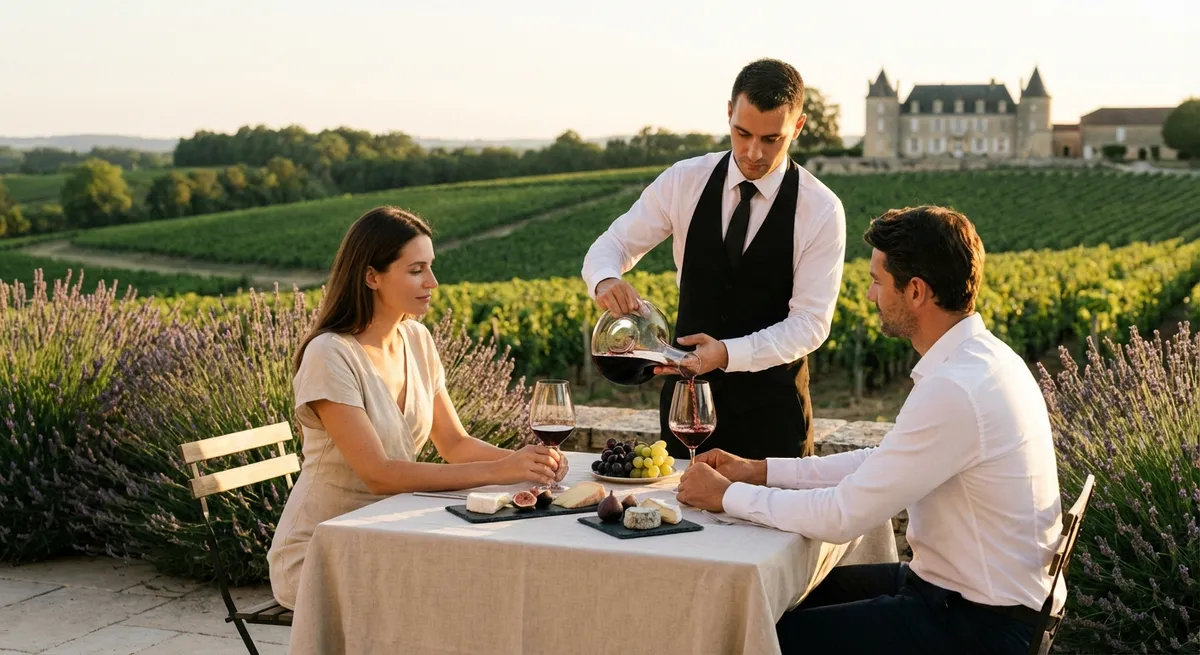
Seek experiences that allow time to linger in the vines: an early-morning vineyard walk before the tasting room opens; a curated picnic among the rows with library wines; a twilight tasting on a terrace overlooking the estate. These moments transform the visit from transactional to immersive.
When arranging visits, inquire about off-peak time slots, appointment-only tastings, or elevated experiences that limit group size. A dedicated host who can track your preferences—your sensitivity to oak, your affinity for higher acidity, your curiosity about lesser-known varieties—adds an almost bespoke dimension to the experience. Subtle gestures such as customized flight sequencing, adjusted glassware, or the opportunity to taste reserve or experimental cuvées distinguish an ordinary tour from a truly considered one.
This focus on quiet luxury is not about ostentation; it is about curating conditions in which the wines, the landscape, and your own perceptions can fully unfold.
Beyond the Glass: Integrating Gastronomy, Culture, and Craft
Wine does not exist in isolation; it is woven into local culture, cuisine, and craftsmanship. Elevated wine tours recognize that the glass is a gateway, not a conclusion.
Ask your host how local gastronomy shapes their understanding of balance. Many of the world’s most enduring wine styles evolved alongside regional dishes: the tension of high-acid whites with coastal seafood, the structure of tannic reds softened by slow-cooked meats, the precision of sparkling wines cutting through rich sauces. Arrange a tasting that includes thoughtfully paired small bites or a seated lunch in which each course dialogues with a particular cuvée.
Look also for ways to connect with the broader cultural fabric: visits to artisanal cheesemakers, olive mills, or charcuterie producers; stops at nearby historical villages, architectural landmarks, or contemporary art installations on the estate grounds. Some properties host seasonal events—harvest days, blending workshops, or pruning demonstrations—that reveal the agricultural rhythm behind the glamour.
For the refined traveler, true luxury lies in coherence. A wine tour becomes exceptional when the wines, the food, the setting, and the local stories form a seamless, memorable whole—an itinerary where every element amplifies the others.
Conclusion
A sophisticated wine tour is ultimately an exercise in attentiveness. It is less about how many estates you can fit into a day and more about how deeply you can engage with each place you visit. By learning to read terroir with your senses, to appreciate the cellar as a space of intentional craftsmanship, to converse with vintages as living expressions of time, to curate private, unhurried moments, and to integrate local gastronomy and culture, you transform your travels into something enduring.
What remains long after the last bottle is opened is not just the memory of a particular flavor, but the feeling of having understood, however briefly, the full story behind it.
Sources
- [Institute of Masters of Wine – Understanding Terroir](https://www.mastersofwine.org/what-is-terroir) – Explores the components of terroir and how they influence wine character
- [Wine Spectator – Oak’s Role in Winemaking](https://www.winespectator.com/articles/how-oak-affects-wine) – Detailed look at how different oak choices shape wine style and texture
- [University of California, Davis – Wine Aging and Maturation](https://wineserver.ucdavis.edu/industry-info/enology/wine-aging) – Educational overview of how wines develop over time and in different vessels
- [Decanter – What Is a Vertical Tasting?](https://www.decanter.com/learn/vertical-tasting-ask-decanter-292694/) – Explains the value of tasting multiple vintages of the same wine
- [Harvard T.H. Chan School of Public Health – Wine and Food Pairing Basics](https://www.hsph.harvard.edu/nutritionsource/healthy-drinks/wine/) – Discusses wine in the context of food, culture, and dining practices
Key Takeaway
The most important thing to remember from this article is that this information can change how you think about Wine Tours.