There is a moment, just after you step between the rows, when the world narrows to sun, soil, and the quiet geometry of the vines. Vineyard visits, when thoughtfully chosen and unhurried, are far more than a pleasant backdrop for tasting. They are an immersion into the sensibilities, decisions, and quiet risks that shape every bottle. For the traveler who seeks not spectacle but substance, the vineyard itself becomes the most eloquent storyteller.
Reading the Vineyard Before the First Sip
A refined vineyard visit begins long before any glass is poured. The landscape itself offers a quiet prelude to the wines you will encounter later in the cellar.
Notice the contours of the land first: the way the rows lean into or away from the slope, where the vineyard opens to the sun and where it retreats into shade. Subtle variations in elevation can mean meaningful differences in ripeness, structure, and aromatic depth. A parcel that faces the morning light often yields wines of lifted, precise aromatics, while warmer afternoon exposures can translate into richer textures and more opulent fruit.
Look at vine spacing and training. Low, tightly spaced vines often betray European influence and an emphasis on concentration; more generous spacing can suggest a pursuit of ripeness and generosity. The height of the canopy hints at how the estate manages vigor and light—disciplined lines of foliage signal meticulous, almost architectural viticulture, while a slightly wilder canopy may signal a more minimal-intervention philosophy.
Even the ground between the rows offers clues: a living carpet of grasses and wildflowers suggests a commitment to biodiversity and soil health, while bare, meticulously worked earth points to another, equally deliberate, style of vineyard management. By the time you enter the tasting room, you should already be forming quiet hypotheses about the wines to come.
The Unseen Conversation: Soil, Roots, and the Winemaker’s Hand
To the thoughtful visitor, the vineyard is a visible expression of a more hidden conversation: that between the soil profile, the root system, and the choices made by the grower.
If your host offers a walk that includes a freshly cut soil pit or a view of exposed earth, pay close attention. Sandy, well‑draining soils can produce wines of perfumed elegance and supple tannins; clay often brings structure and density; limestone and chalk may yield wines of pronounced tension and length. Ask not just “what soil is this?” but “how does this soil change the way you farm and when you pick?”
Roots are rarely seen, yet they define longevity and nuance. Old vines, often with gnarled trunks and measured yields, signal a different register of complexity—less obvious fruit, more depth and resonance. Inquire how the estate thinks about replanting versus preserving old parcels; a considered answer here often reveals a long-term philosophy that goes far beyond marketing language.
The most revealing exchanges occur when you gently press on the tension between what the vineyard naturally wants to express and what the winemaker chooses to emphasize. Does the estate ever sacrifice yield for precision? Are certain parcels harvested earlier for freshness, others later for texture? These are the quiet decisions that separate the merely pleasant from the profound.
Experiencing Time: Vintage, Weather, and Patience in the Cellar
An elevated vineyard visit is also a lesson in time—how a single site narrates different stories from year to year.
Ask to taste the same cuvée across multiple vintages, ideally while still holding a sensory memory of the vineyard under your feet. Cooler years may bring higher acidity, more linear structure, and savory nuances; warmer years tend toward generosity, riper tannins, and expansive aromatics. The most distinguished estates do not chase sameness across vintages; they refine a consistent voice while allowing each year to speak in its own accent.
Weather is the quiet antagonist and collaborator in this story. When your host mentions frost, drought, heat spikes, or late harvest rains, think of how those events might have shaped the textures and balance in your glass. In great cellars, resilience is tasted as poise rather than power—wines that remain composed even when the season has been anything but.
Barrel rooms and aging cellars add another layer to this conversation with time. Note the proportion of new to neutral oak, the size of the vessels, and even the ambient mood of the cellar itself. Smaller barrels often confer more overt spice and structure; larger formats, concrete, or amphorae whisper rather than shout, allowing the vineyard’s voice to remain central. When a host speaks of “waiting” rather than “producing,” you are likely in the hands of a team that understands that patience is not a delay but a deliberate ingredient.
From Hospitality to Intimacy: The Art of a Meaningful Visit
In a world of polished tasting rooms and curated vistas, the most memorable vineyard visits are those that feel intimate rather than orchestrated.
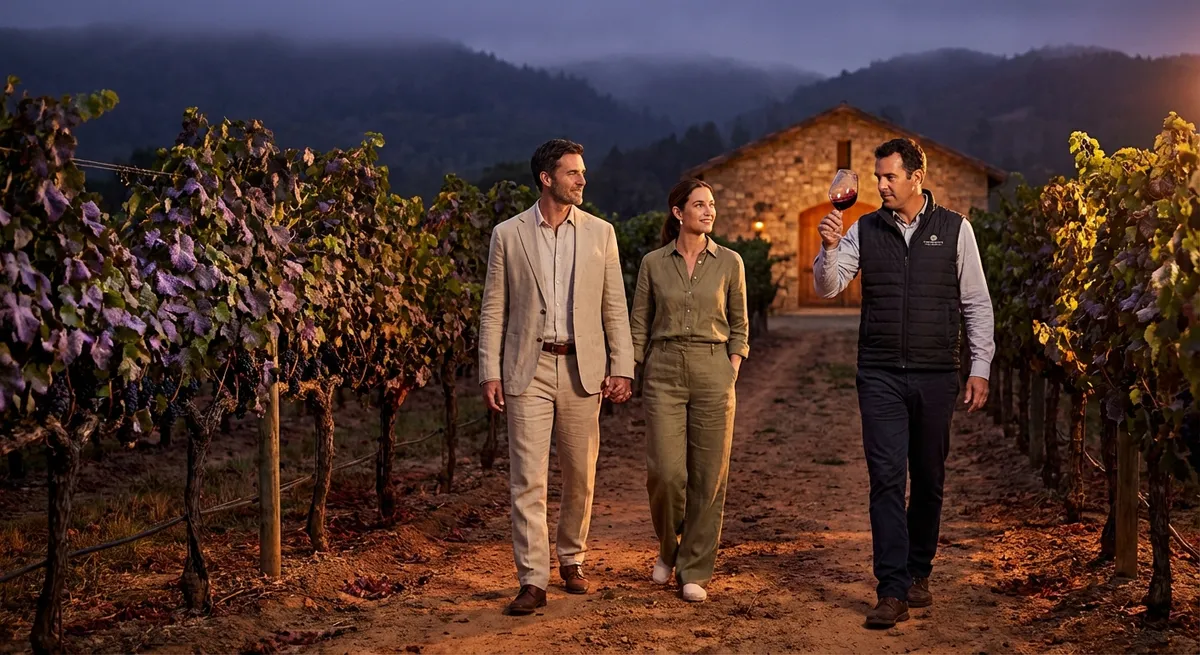
A premium experience often reveals itself in the pacing. A visit that allows for silence among the vines, unhurried questions in the cellar, and contemplative time with the wines will always feel more meaningful than one optimized for volume. Seek appointments where you are guided by someone directly involved in the estate’s decisions—an owner, winemaker, or vineyard manager—rather than a script‑bound host.
Notice the alignment between what you see and what you are told. When a winery speaks of sustainability, do you see cover crops, wildlife corridors, water‑conscious irrigation, and careful erosion control? If they champion precision, do you witness meticulous pruning, clean equipment, and a cellar where every movement seems intentional?
The finest estates will tailor the experience subtly to your level of interest. Ask detailed questions and watch how your host responds: with enthusiasm, specifics, and perhaps a walk to a particular parcel or barrel, or with rehearsed phrases. Genuine hospitality in wine is never theatrical; it is the generous sharing of knowledge, history, and personal stakes in the wine’s success.
Five Exclusive Insights for the Attuned Visitor
For enthusiasts seeking to elevate every vineyard visit into a quietly exceptional experience, five refined insights can reshape how you travel through wine country:
Ask to Taste the “Edges” of the Portfolio
Beyond flagship cuvées, request a look at something experimental or limited: a single‑parcel bottling, an amphora‑aged lot, or a wine made in minuscule quantities for the estate’s inner circle. These wines often reveal the winemaker’s most personal curiosities and the estate’s future direction more clearly than their most widely distributed labels.
Compare Elevations or Exposures Side by Side
When estates farm multiple slopes or aspects, ask if you can taste wines that mirror these differences. A comparative flight—north vs. south exposure, hilltop vs. mid‑slope—transforms your visit into an advanced masterclass in terroir, allowing you to connect the landscape underfoot directly to nuances in the glass.
Request a Barrel or Tank Sample—With Purpose
If appropriate and offered, taste a maturing wine alongside its finished counterpart from a previous vintage. This reveals how structure, oak integration, and aromatics evolve over time and gives rare insight into the estate’s blending and aging decisions. Ask what the winemaker is waiting to see before they deem the wine ready to bottle.
Observe What Is Not Being Said on the Label
Labels often condense a narrative to a few lines, but the vineyard visit allows you to explore what is intentionally left out: specific parcel names, minute differences in soil, or experimental farming practices. Discreet details—like hand‑harvesting at night, partial whole‑cluster fermentations, or subtle co‑fermentations—may be omitted from marketing yet profoundly influential in the glass.
Pay Attention to How the Estate Speaks About Imperfection
The most serious producers will speak candidly about challenging vintages, difficult parcels, and wines they chose not to bottle under their main label. Ask what they did not produce and why. Their willingness to declassify or drastically reduce volumes in weaker years is often the clearest indicator of integrity—and of why their best wines feel so unwaveringly composed.
Conclusion
A vineyard visit, at its most elevated, is not a checklist of tastings but a finely layered encounter with place, time, and intent. When you learn to read the lines of the landscape, to listen for nuance in the cellar, and to seek the quiet, revealing details that never reach a label, each estate becomes a chapter in your own evolving understanding of wine.
For the discerning traveler, these visits leave something far more lasting than a pleasant memory: they cultivate a more informed, intuitive palate, one that recognizes not only quality but character. In the end, the most exquisite souvenir of any vineyard visit is the subtle shift in how you experience every glass thereafter.
Sources
- [Wine Institute – California Wine Country Facts](https://wineinstitute.org/our-industry/california-wine-country-facts/) – Overview of key aspects of California wine regions, geography, and vineyard characteristics
- [UC Davis Department of Viticulture and Enology](https://wineserver.ucdavis.edu/) – Research-based insights into viticulture, winemaking practices, and terroir expression
- [Cornell Viticulture and Enology – Terroir and Site Selection](https://grapesandwine.cals.cornell.edu/extension/grapes/terroir/) – Educational resources on soils, climate, and how vineyard site shapes wine style
- [Institute of Masters of Wine – Understanding Terroir](https://www.mastersofwine.org/understanding-terroir) – Professional-level discussion of terroir, vineyard decisions, and wine expression
- [OIV (International Organisation of Vine and Wine)](https://www.oiv.int/en/technical-standards-and-documents) – Global technical references on viticulture, enology, and production standards
Key Takeaway
The most important thing to remember from this article is that this information can change how you think about Vineyard Visits.