There is a tier of winery that never needs to announce itself. It does not rely on tour buses, souvenir glasses, or crowded patios. Its promise is quieter: immaculate detail, disciplined restraint, and wines that speak in long sentences rather than exclamation points. For travelers who crave depth over spectacle, these are the properties that transform a pleasant outing into a memory that lingers for decades. This is the realm of truly premium wineries—places where every choice, from canopy management to glassware weight, is made with intention.
What Truly Defines a Premium Winery Today
The language around “premium” has become so crowded that the word can feel weightless. Yet in the upper echelon of wineries, the distinction remains sharp. These estates are rarely defined by architecture alone, though many are striking. What sets them apart is a philosophy: obsessive precision in the vineyard, ruthless selection in the cellar, and an unhurried commitment to time.
Premium wineries tend to operate on the principle that volume is the first compromise. Yields per vine are often deliberately low, sacrificing quantity for concentration. Indigenous or carefully selected yeasts are employed to capture nuance, not simply to ensure efficiency. Oak is used with the sophistication of a seasoned perfumer—layered and transparent, never overpowering. Hospitality mirrors this aesthetic: appointments are limited, pacing is measured, and staff are selected as much for their conversational intelligence as their wine knowledge. In this world, luxury is not flash—it is control, silence, and the feeling that nothing has been left to chance.
The Architecture of Restraint: How Space Shapes the Experience
In premium wineries, architecture does not exist simply to be admired; it sets the emotional temperature of the visit. A well-conceived estate acts like a frame around the wine itself, directing your attention rather than competing for it. You will notice a pattern: light, views, and acoustics are all orchestrated to keep your focus on the glass and the landscape.
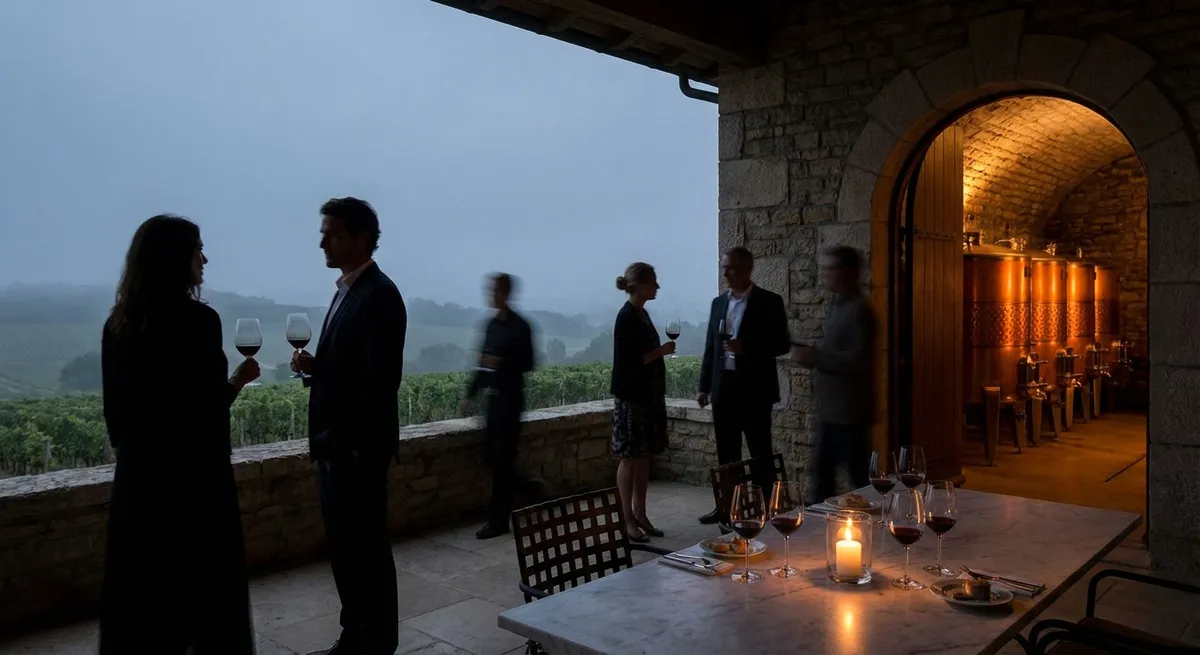
Tasting rooms are often surprisingly understated. Neutral palettes, tactile materials—stone, wood, linen—and generous spacing between tables create an atmosphere of discreet privacy. Sound is deliberately softened, so conversations feel intimate rather than public. Barrel halls and caves are designed not merely for temperature and humidity control but to introduce you to the rhythm of the winery: the quiet echo of footsteps, the subtle scent of oak, the muted glow over resting barrels. Outdoors, terraces are aligned toward vineyard blocks of significance, so when you taste a single-vineyard wine, you are physically oriented toward its origin. The result is not theatricality, but a serene sense of coherence: every vista and surface is curated to make the wine the central protagonist.
Five Exclusive Insights for the Attentive Wine Enthusiast
Premium wineries reward curiosity. Those who know what to look for will uncover layers of meaning—and pleasure—that many guests never notice. The following five insights can subtly transform your next high-end visit from simply enjoyable to profoundly revealing.
1. Follow the Vineyard Map, Not the Tasting Menu
The most complete way to understand a premium winery is to treat the visit as a vineyard tour that happens to include a tasting—not the other way around. Seek out the estate’s vineyard map, often displayed in the tasting room or available on request. Pair each wine with the exact plot it came from, paying attention to elevation lines, aspect (direction of the slope), and proximity to features such as rivers, forests, or hills.
Ask to taste wines that contrast specific blocks or soil types if available: gravel versus clay, slope versus valley floor, east-facing versus west-facing. These comparisons reveal why the estate has chosen to bottle certain parcels separately and blend others. With this lens, each wine becomes less a stylistic choice and more a geographical expression. You leave not only knowing what you enjoyed, but why this specific place can never be replicated elsewhere.
2. Read the Cellar Like a Library
Stepping into the cellar of a premium winery is like entering a library where every barrel is a book in progress. Instead of simply admiring the symmetry of oak rows, observe the details: diversity of barrel coopers, toasting levels marked in chalk, variation in barrel size from barriques to puncheons or foudres. These are editorial decisions shaping the narrative of the wine.
Ask which lots are destined for the flagship cuvée and which are typically declassified. The most serious estates will describe an almost ruthless blending process, where otherwise excellent barrels are excluded to preserve the identity of the grand vin. Look for the coexistence of stainless steel, concrete, and oak—each indicating a different textural or aromatic aim. When you understand the role of each vessel, tasting becomes an exercise in reverse engineering: identifying which fermenter or barrel type contributed to the texture, grip, or lift in your glass.
3. Watch the Service Rituals—They Reveal the Winery’s Philosophy
At premium properties, service choreography is as revealing as the wines. Take note of glassware shape and weight; serious wineries often invest in varietal-specific stems designed to clarify aromatic precision. Observe whether bottles are opened out of sight or at the table; whether the first pour is small—a sensory introduction rather than a full serving. These gestures signal the estate’s understanding of pacing and respect for the wine’s evolution in air.
Temperature control is another subtle but crucial marker. Whites that arrive cool but not frosted, reds served slightly below room temperature—these are signs of a house that prefers clarity over comfort. When staff suggest revisiting an earlier wine after it has warmed or interacted with air, accept. You are being invited to experience the wine’s arc over time, not just its first impression. This is the level at which premium wineries subtly train your palate rather than simply indulge it.
4. Listen for the Vintage Story Beneath the Marketing
Every winery, premium or otherwise, has a narrative. The difference at the top level is that the story is anchored in vintage rather than slogans. When your host describes a year, listen for specifics: rainfall distribution, heat spikes, harvest dates, disease pressures, and the timing of key decisions such as leaf pulling or green harvesting.
Ask to taste across multiple vintages of the same wine if possible. This vertical perspective reveals the estate’s core identity: which characteristics remain constant (structure, texture, length), and which fluctuate with the year (aromatics, ripeness, tension). Premium wineries are comfortable acknowledging challenging vintages, because their confidence lies in their ability to navigate them. When you hear a candid discussion of difficult weather and disciplined choices, you are in the presence of a philosophy rather than a marketing script.
5. Observe What Is Not for Sale
One of the most revealing aspects of a premium winery is what they choose to protect from commercial pressure. Library collections held back for future release, tiny experimental lots not offered in the public tasting, or magnums reserved for long-term aging—these are clues to the estate’s time horizon and sense of custodianship.
Notice how aggressively—or gently—membership and allocation programs are presented. The most serious houses rely less on urgency and more on alignment: your palate, their style, and a shared belief in age-worthiness. Ask how the winery envisions the evolution of a particular cuvée over ten or twenty years. Homes for these wines—private cellars, serious restaurant programs, specific export partners—form a quiet ecosystem of trust. When a winery is willing to delay revenue to allow wine to mature properly, you are witnessing the most expensive luxury of all: patience.
From Visitor to Co-Conspirator in Excellence
The most refined wineries do not simply entertain; they invite you into a long conversation between land, climate, and human intention. As you become more attuned—to vineyard maps rather than tasting lists, barrels as editorial tools, service as philosophy, vintage as narrative, and cellars as acts of restraint—you step beyond the role of visitor and toward that of co-conspirator in the estate’s pursuit of excellence.
For travelers who seek more than a beautiful backdrop, premium wineries offer something rare: the chance to feel time, place, and craftsmanship converging in a single glass. On your next journey, look for the properties where silence feels intentional, details feel inevitable, and each pour seems to elongate the afternoon. That is where the true luxury of wine resides—less in what is displayed, and more in what is quietly, confidently, perfected.
Sources
- Wine Institute – California Wine Regions Overview – Background on major wine regions and factors that define quality-focused estates
- Napa Valley Vintners – What Makes Napa Valley Unique – Insight into terroir, climate, and premium winegrowing practices in a benchmark region
- Bordeaux.com – Understanding Terroir and Appellations – Detailed explanation of terroir, vineyard zoning, and appellation structure in a classic premium wine region
- Institute of Masters of Wine – The Role of Oak in Winemaking – Technical exploration of barrel choices, cooperage, and their impact on wine style
- UC Davis Department of Viticulture & Enology – Research-based resources on viticulture and enology practices used by top-tier wineries
Key Takeaway
The most important thing to remember from this article is that this information can change how you think about Premium Wineries.