The most memorable wine journeys rarely announce themselves with grandeur. They unfold in quiet corridors of barrel halls, in the precise arc of a decanter, in the unhurried dialogue between winemaker and guest. Premium wineries are not defined merely by price or prestige, but by an orchestration of details—architectural, agricultural, sensory—that subtly recalibrate how we experience wine. For the traveler who seeks more than a tasting flight, these estates offer an immersion in craft, culture, and cultivated restraint.
Below, we explore five exclusive, under‑the‑radar insights that transform a visit from pleasant to profound—and reveal what truly sets premium wineries apart.
The Architecture of Intention: Spaces That Shape the Senses
At the most meticulously curated estates, architecture is not a backdrop; it is a sensory instrument. Every corridor, courtyard, and tasting salon is designed to choreograph your perception of wine before the first swirl of the glass.
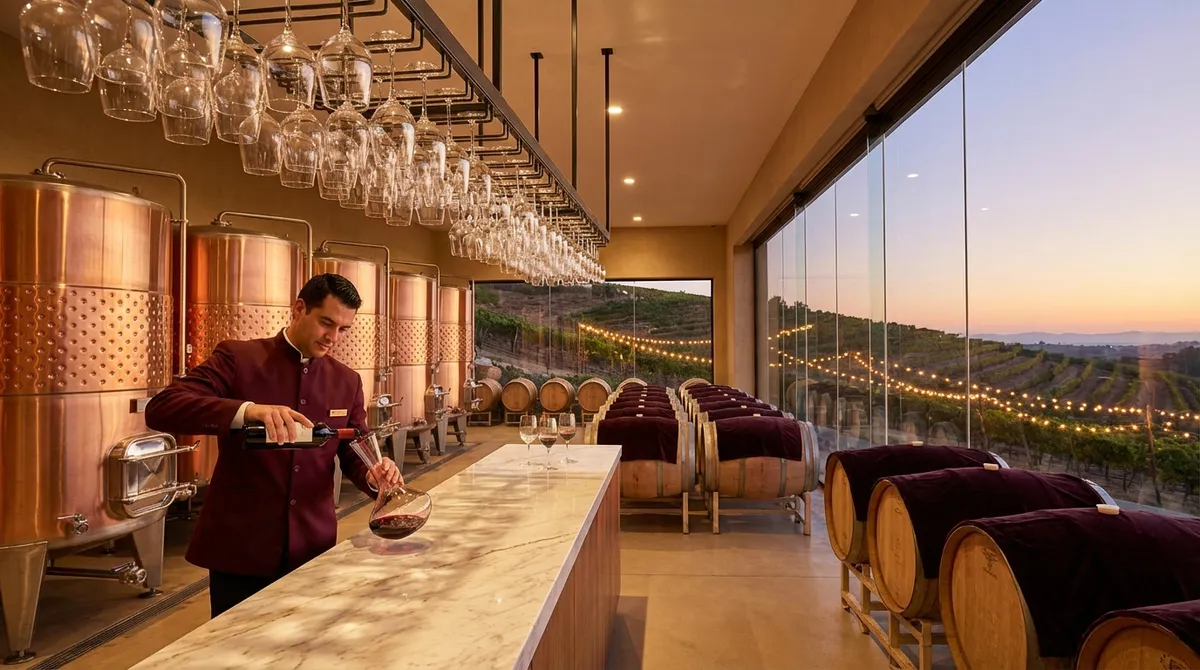
Premium wineries increasingly partner with leading architects and designers to create spaces that modulate light, sound, and temperature with surgical precision. Natural light may be filtered through latticed stone or patinated metal to minimize ultraviolet exposure, preserving both the wine and your ability to observe its color accurately. Acoustics are softened by natural materials—oak, limestone, wool—to dampen echo and allow conversation to settle into a low, elegant hum rather than a cacophony.
In these environments, your eye is gently guided from landscape to glass: sweeping windows frame the vineyard rows, while interior lines draw your gaze toward curated bottle displays or aging barrels. The interplay of cool stone and warm wood mirrors the contrast of bright acidity and rounded tannins in the wines themselves. Even seating height and table dimensions are considered, positioning your nose at an ideal distance from the glass for aromatic exploration.
The effect is subliminal yet unmistakable: by the time you taste, your senses have been subtly tuned to the estate’s aesthetic and viticultural philosophy.
Precision in the Vineyard: Invisible Luxury Beneath the Soil
The true signature of a premium winery is etched not on the label, but in the rows where no visitor crowds the narrow paths. While guests often admire vines as a scenic backdrop, the elite estates treat vineyards as laboratories of precision.
Soil mapping has become one of the defining tools of serious terroir expression. Using electromagnetic surveys, core sampling, and geographic information systems (GIS), vintners chart micro‑variations in soil texture, drainage, and mineral composition across even small plots. This data informs where to plant specific clones, how densely to plant, and which parcels merit single‑vineyard bottlings.
Canopy management—how leaves are positioned and trimmed—is executed with a sculptor’s care. Subtle differences in leaf coverage can mean a few degrees more or less of grape temperature at midday, which in turn affects aromatic compounds, tannin ripeness, and phenolic complexity. At premium estates, you’ll often see experimental rows treated differently, serving as realtime research into how minuscule shifts in shade or airflow translate into the glass.
Equally refined is the approach to water. Many top wineries now work with deficit irrigation or even dry farming where possible, encouraging vines to root deeply and regulate their own growth. The resulting grapes are often smaller, with more concentrated flavors—less visually dramatic, but profoundly expressive when fermented.
These practices are not theatrical; they are nearly invisible from a distance. Yet they form the quiet foundation of wines that speak with clarity, depth, and a sense of place.
The Art of Time: Beyond Barrel Ageing and Release Dates
Time is the most luxurious element in the world of fine wine, and premium wineries treat it as both medium and message. The casual visitor may see rows of oak barrels and think only of aging; the attentive guest will notice the choreography of decisions that define how time is used.
Rather than simply aging wines “for 12 months in French oak,” high‑end estates segment their cellaring by lot, barrel, and even stave origin. A single cuvée might evolve in a mosaic of vessels: new oak for structural backbone, seasoned barrels for gentle micro‑oxygenation, large-format foudres to preserve freshness, concrete or ceramic to maintain purity of fruit. The winemaker then conducts meticulous blending trials, tasting dozens of variations to determine the most nuanced expression.
Time also extends beyond bottling. Premium producers are increasingly holding back vintages in their own cellars, releasing library selections with optimal maturity rather than pushing each year’s wine immediately to market. For the guest, this means the rare opportunity to taste wines at multiple stages of evolution—youthful, primary bottlings beside gracefully aged examples—within a single visit.
Even the pacing of the tasting itself is a study in temporal refinement. Flights are arranged not only by vintage or grape variety, but by structural progression: moving from delicacy to density, from linear to opulent, allowing your palate to acclimate and expand without fatigue. At the finest estates, you may notice that nothing feels rushed; silence, too, is part of the experience, giving each wine the time it deserves to unfold.
Curated Hospitality: When Service Becomes a Form of Storytelling
In the realm of premium wineries, hospitality is never generic. It is curated with the same intentionality as the vineyard blocks, anticipating not just what you drink, but how you like to discover.
Your host is often not merely a server, but a trained educator, sommelier, or even a member of the winemaking or vineyard team. This shifts the dialogue from scripted notes (“blackberry, spice, vanilla”) to an intelligent, evolving conversation. Instead of reciting a memorized history, your guide might begin with a question: how do you usually explore wine? Aromatically, texturally, intellectually? The experience then subtly reshapes itself around your answer.
Details that might feel incidental—a private tasting salon, glassware specific to each varietal, the cadence of poured versus self‑poured wines—are in fact intentional. Premium estates often invest in top-tier stemware, understanding that bowl shape, rim diameter, and crystal quality can significantly influence the aromatic expression and tactile impression of a wine.
The storytelling itself is carefully layered. Rather than overwhelming you with facts, the best hosts reveal the estate’s philosophy in chapters: a walk through the vines to ground you in terroir, a cellar visit to illustrate technique, then a seated tasting to link narrative and sensory experience. You are invited into the logic behind each decision, not simply the outcome.
This style of hospitality respects both your time and your curiosity. It treats you not as an audience for a performance, but as a discerning participant in a shared exploration.
The Quiet Codes of Collectability and Access
Among connoisseurs, premium wineries operate with an unspoken set of codes—signals that a property is not merely producing fine wine, but cultivating a long‑term legacy. For the observant visitor, these cues can reveal a deeper layer of exclusivity and intent.
Allocation systems and membership models are one such indicator. Instead of broad distribution, many top-tier estates limit availability through tightly managed lists, offering small quantities to collectors who demonstrate consistent engagement over time. During a visit, you may be gently guided through current releases, then subtly introduced to “member‑only” cuvées or micro‑parcels—wines rarely seen outside the estate.
Cellar design also speaks volumes. A dedicated library room, with perfectly catalogued back vintages stored under constant conditions, is more than a visual flourish; it signals a commitment to how the wines will age over decades. Some wineries now pair this with digital traceability—QR codes or blockchain‑linked identifiers that verify provenance, vintage integrity, and storage history for serious collectors.
Even the language used in tastings can hint at collectability. References to ageworthiness, structural backbone, and specific drinking windows (“best from 2028–2045”) position the wines not as ephemeral pleasures, but as long‑term companions for future tables and occasions. In some cases, you may be offered the opportunity to reserve future vintages en primeur, aligning your visit with the winery’s long horizon.
For enthusiasts attuned to these subtleties, a visit becomes more than a momentary indulgence. It becomes the opening chapter of an ongoing relationship with an estate that thinks in decades rather than seasons.
Conclusion
To step into a premium winery is to enter a world where every detail—seen and unseen—serves a singular purpose: elevating your encounter with wine from simple enjoyment to cultivated understanding. Architecture guides your senses; vineyards whisper their complexities beneath your feet; time is sculpted in barrel and bottle; hospitality becomes a refined dialogue; and subtle codes of access hint at a deeper continuity beyond the visit itself.
For the traveler who values nuance over noise, these estates offer more than tastings—they offer perspective. In their silken circuits of luxury, you experience not only what is in the glass, but the discipline, restraint, and quiet conviction that brought it there.
Sources
- Wine Institute – California Wine Country Facts – Overview of California wine regions, production data, and industry context for premium estates
- Napa Valley Vintners – Napa Valley Terroir – Detailed explanation of terroir, soil variation, and climatic factors that underpin high-end viticulture
- Institut des Sciences de la Vigne et du Vin (Bordeaux) – Research institution covering advanced viticulture and enology, including soil studies and canopy management (site in French)
- Decanter – The Role of Oak in Winemaking – In-depth look at how barrel choices, formats, and aging regimes influence premium wines
- Wine & Spirit Education Trust (WSET) – How Wine Ageing Works – Educational resource explaining the science and practice of aging wines in cellar and bottle
Key Takeaway
The most important thing to remember from this article is that this information can change how you think about Premium Wineries.