Wine tasting, at its most refined, is less a pastime and more a quiet dialogue between place, time, and the person holding the glass. For the devoted enthusiast, the true luxury lies not in opulence, but in the subtleties—those fleeting, silken moments when aroma, texture, and memory align. This is where wine transcends the ordinary and becomes an intimate, curated experience.
Below, we explore five exclusive insights designed for those who wish to move beyond the surface of “see, swirl, sip” and into a more nuanced, resonant way of tasting.
The Prelude: Preparing Your Palate as a Fine Instrument
An elevated tasting begins long before the first pour. Your palate, like a concert hall, can either amplify or mute the performance. Subtle choices—what you’ve eaten, how rested you are, even the scent of your surroundings—determine how clearly you will perceive a wine’s character.
Avoid strong flavors and aromas for at least an hour before tasting: no mint-heavy toothpaste, perfumed hand creams, or lingering espresso. Opt instead for neutral, lightly salted foods if you need a small bite. Hydration is equally important; a well-hydrated palate is more receptive to texture and nuance, allowing tannins to feel structured rather than harsh.
Temperature matters as much as readiness. A white served too cold or a red poured too warm can flatten aroma and distort balance. Aim for a gentle chill on whites and sparkling wines, and a cool, composed service for reds—cellar temperature rather than room temperature. This careful prelude ensures that when the first aromas rise from the glass, they meet a palate in perfect readiness.
Insight I: Reading Texture as a Signature of Craft
Most tasters focus on flavor first: fruit, spice, oak. Devoted enthusiasts, however, learn to “read” texture as a winemaker’s signature—the brushstroke in a glass. Beyond light, medium, or full-bodied, texture reveals how a wine was grown, handled, and raised.
Pay attention to how the wine moves across your tongue. Does it glide like silk or feel more like finely woven linen? Is there a cool, crystalline edge, or a rounded, almost cashmere softness? High-quality wines often display precision in texture: tannins that feel fine-grained rather than coarse, acidity that is taut but never shrill, and a finish that tapers gracefully instead of abruptly cutting away.
Consider, too, how texture evolves with air. A structured red that begins with a firm, architectural frame may soften into something more pliant and layered over 15–30 minutes. White wines with extended lees contact can feel creamy without ever becoming heavy. These tactile clues tell you as much about the wine’s origin and craftsmanship as its flavors do—if you are attentive enough to notice.
Insight II: The Vertical Moment – Tasting Time Within a Single Glass
While formal vertical tastings compare multiple vintages side by side, there is a more discreet, almost private version of this experience hidden within a single glass: tasting time itself. Fine wines are not static; they unfold. Observing that evolution is one of the most luxurious dimensions of elevated tasting.
Pour a modest amount and give the wine a minute of stillness before swirling. Smell, then pause, then smell again. Note how the aromatic register shifts—perhaps beginning with primary fruit, then revealing floral or herbal notes, and finally hints of earth, spice, or savory tones. Repeat this slow observation over 20–30 minutes, letting the wine breathe and warm subtly in the glass.
Instead of chasing the “perfect” moment, savor the progression. A young wine may feel tight and narrowly focused at first, then gradually open its shoulders, offering breadth and complexity. An older bottle may show its most fragile, ethereal notes in the earliest minutes, then gently fade. In this vertical moment within a single pour, you taste not only the wine, but its journey from bottle to glass, and its fleeting, beautiful arc of expression.
Insight III: Calibrating Glassware to the Wine, Not the Occasion
The true connoisseur understands that glassware is not about display; it is about precision. The shape and size of your glass can sharpen or blur a wine’s articulation, much like the acoustics of a concert hall influence how music is heard. Choosing the correct stem is an act of respect—for the wine, and for your own senses.
For structured reds, look for a bowl with enough volume to allow generous swirling and oxygen contact, but not so large that aromatics dissipate too quickly. Pinot Noir and other aromatic, delicate varieties often shine in glasses that taper inward slightly at the rim, concentrating the perfume and guiding it toward the nose. Crisp whites and sparkling wines benefit from a narrower, more upright shape that preserves freshness and directs the wine to the center or tip of the tongue, heightening the sensation of acidity and finesse.
Most importantly, favor fine, thin rims and unadorned, clear crystal or glass. Heavy stems and thick lips dampen the wine’s precision and disrupt the tactile sensation on the lips. When you match the glass to the wine—rather than to formality, tradition, or trend—you allow subtleties of aroma and texture to emerge with effortless clarity.
Insight IV: Training Your Nose to Recognize Place, Not Just Fruit
Many tasting notes stop at fruit descriptors—blackberry, peach, citrus. Refined tasting moves beyond these basics to detect “place”: the interplay of soil, climate, and human choice that we call terroir. Over time, the nose can be trained not only to recognize aromas, but to sense where they come from.
Begin by distinguishing between primary (fruit and floral), secondary (fermentation- and aging-related, such as brioche, butter, or yogurt), and tertiary (developed with bottle age: leather, dried flowers, forest floor) aromas. As you build this internal library, start to notice patterns. Certain cool-climate whites may regularly reveal a slate, seashell, or wet stone character; some warmer regions might consistently offer sun-warmed herbs, dried earth, or cocoa.
Practicing with aroma kits or with curated flights that highlight different regions can accelerate this learning. Over time, you may find that you can sense a wine’s origin—or at least its stylistic neighborhood—before you even taste. This is one of the quietest, yet most rewarding, pleasures of advanced wine appreciation: recognizing not just what is in the glass, but where it has come from, and how faithfully it expresses that place.
Insight V: Designing a Tasting Sequence to Reveal, Not Overwhelm
A thoughtfully composed tasting flight is akin to a well-structured narrative—it should build, reveal, and resolve without exhausting the senses. Many tastings default to white before red, lighter before fuller-bodied, younger before older. While these guidelines are useful, a more sophisticated approach curates sequence with clear intention.
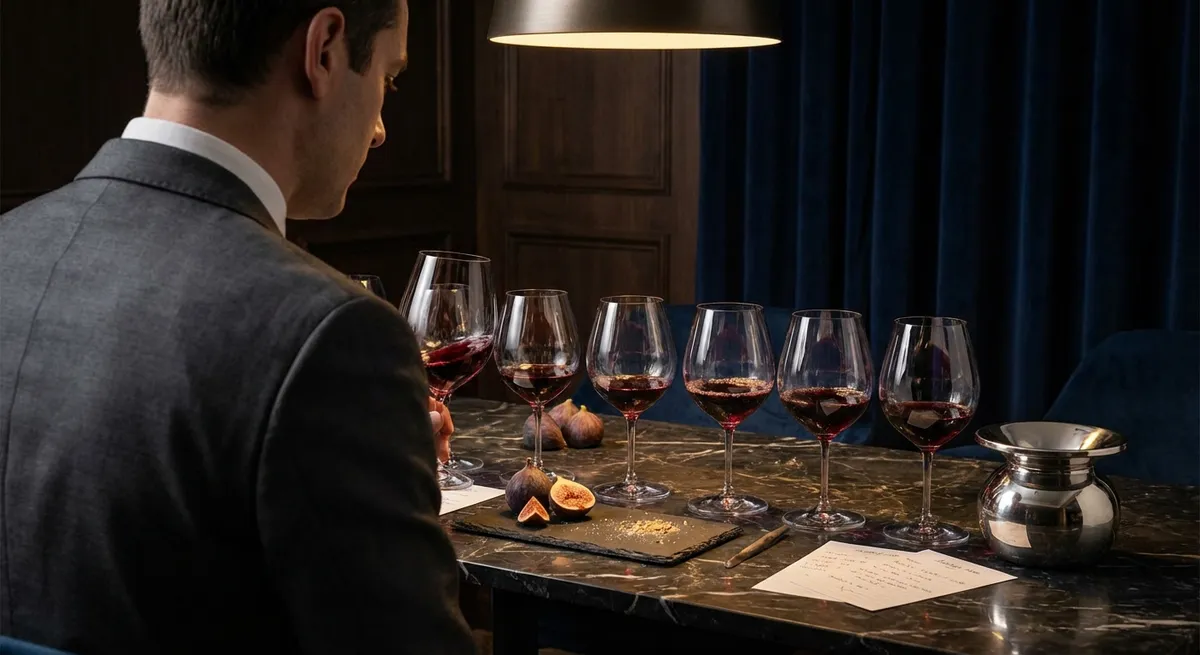
First, consider acidity as your guiding thread. Wines with higher, sharper acidity are best placed earlier in a flight, as they refresh and awaken the palate without overshadowing subtler, softer wines that follow. Reserve powerful, tannic reds or highly aromatic, opulent wines for the latter part of the progression; otherwise, their intensity can dull your perception of more delicate bottles.
Second, think in terms of texture and aromatic intensity. Move from linear, focused wines toward those with greater richness and complexity, so that each glass feels like a natural deepening of the conversation. Finally, be generous with pauses. A premium tasting experience includes moments of stillness—time to reflect, recalibrate, and perhaps cleanse the palate with water or a simple, neutral bite—so that every wine receives your full, unhurried attention.
Conclusion
Elevated wine tasting is not about chasing prestige labels or rare vintages alone; it is about cultivating a more attuned, more patient way of noticing. From preparing your palate with intention, to reading texture as a signature of craft, to tasting the passage of time within a single glass, each of these insights is an invitation to slow down and listen.
When you next raise a glass—whether in a quiet cellar, a sunlit vineyard, or your own home—consider how you might refine the experience just one step further. In that refinement lies the true luxury of wine: not in excess, but in the rare pleasure of paying exquisite attention.
Sources
- University of California, Davis – Wine Flavor 101 – Overview of how aroma, flavor, and texture are perceived in wine
- Wine & Spirit Education Trust (WSET) – How to Taste Wine – Professional framework for structured tasting, including aroma and palate analysis
- Institute of Masters of Wine – Tasting – Insight into advanced tasting approaches and evaluation used by wine professionals
- RIEDEL – The Importance of Glass Shape – Explanation of how glassware design influences wine perception
- Harvard T.H. Chan School of Public Health – Alcohol: Balancing Risks and Benefits – Evidence-based perspective on responsible wine and alcohol consumption
Key Takeaway
The most important thing to remember from this article is that this information can change how you think about Wine Tasting.