There is a moment, just after arrival and just before the first pour, when a vineyard reveals its true character. The light, the quiet, the pacing of the welcome—each signal speaks to how seriously a winery takes both its craft and its guests. For travelers who seek more than a casual tasting flight, a vineyard visit can become an exercise in discernment: reading the landscape, sensing the cellar, and understanding how philosophy, not just terroir, shapes the wine in your glass.
This guide was created for those who prefer depth to spectacle—wine enthusiasts who value precision, understatement, and the kind of hospitality that feels both discreet and deeply considered. Below are five exclusive insights to carry with you as you step onto the estate, designed to transform a pleasant visit into an exceptionally revealing one.
Reading the Vineyard Before the First Pour
Long before you reach the tasting bar, the vineyard itself begins the conversation. A practiced eye will notice the way vines are trained, how the soil presents itself, and the quiet clues of careful farming.
Observe row spacing and canopy management: tightly spaced vines with meticulously groomed foliage often indicate an emphasis on concentration and balance. Note ground cover—is there thoughtful use of cover crops, or bare, heavily tilled soil? The former suggests a winery intentionally managing soil health, erosion, and biodiversity, often aligning with more environmentally sensitive viticulture.
Pay attention to slope and exposure. Vines on well-chosen hillsides or carefully oriented terraces signal a focus on nuance rather than volume. Subtle markers—small weather stations, discreet sensors, or measured irrigation lines—hint at data-informed precision rather than generic agriculture.
As you walk, listen to how your host speaks about the land. Do they refer to specific parcels by name, describing their personality, or only to “our vineyard” in general terms? A vocabulary rich in detail—soil types, microclimates, rootstocks, and clonal selections—usually reflects a producer whose commitment begins in the dirt, not in the marketing department.
The Cellar as a Reflection of Philosophy
The cellar is where intent becomes practice. More than a backdrop for photos, it is the clearest window into how a winery interprets its fruit. For enthusiasts, this is where the most revealing questions can be asked—and answered.
Notice the diversity of vessels: barriques, larger-format oak, concrete eggs, amphorae, stainless steel. A cellar dominated by new, small oak barrels often signals a stylistic choice for power and texture; a more mixed environment suggests a nuanced approach, tailoring vessel to grape and vineyard origin. Look for how barrels are organized—by parcel, vintage, or experiment. Order and clarity here frequently translate to precision in the final blend.
Ask how fermentations are managed. Native yeast versus selected strains, cooler or warmer temperatures, gentle infusion versus vigorous extraction—each decision builds structure, aromatic profile, and longevity. Enquire whether the winery adjusts approach annually in response to vintage conditions, or adheres to a fixed template. Adaptive, vintage-sensitive winemaking generally yields more layered, expressive wines.
Listen for how they describe time: length of élevage, moments of racking, and the timing of bottling. A cellar philosophy that respects slow, measured development—rather than hurry for market release—often produces wines of greater poise, with textural finesse that only patience can achieve.
The Quiet Intelligence of the Tasting Flight
A carefully composed tasting flight is a silent curriculum, teaching you how to read the estate’s priorities. Moving beyond “light to full-bodied,” a connoisseur’s tasting examines structure, lineage, and intent.
First, observe the sequence. Are you guided through different parcels of a single grape variety, allowing you to sense terroir variation? Or across varieties and blends to showcase house style? A thoughtfully progressive flight should reveal a narrative: from freshness and clarity to depth and resonance, without overwhelming the palate.
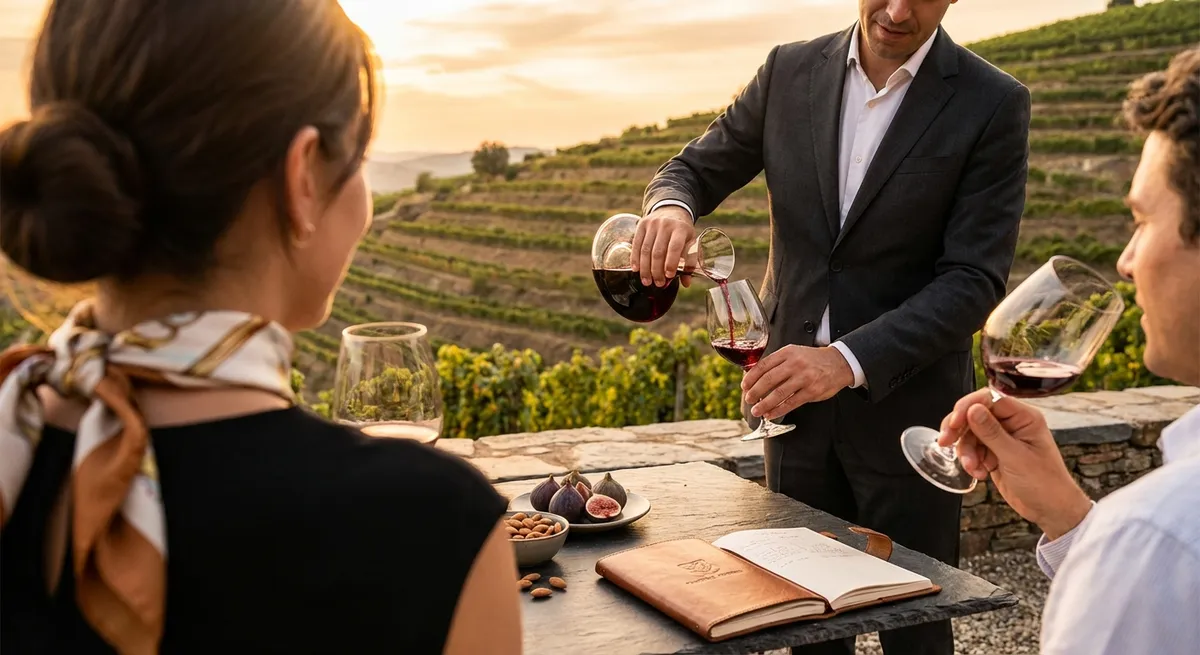
Take note of glassware. Premium wineries invest in stemware that amplifies aromatics and texture, often tailoring glass shape to style. Stemless tumblers or generic restaurant stems may be convenient, but they rarely honor the wine’s architecture. Glass choice speaks volumes about how seriously the estate regards your sensory experience.
As you taste, consider the relationship between nose and palate. Do aromatics carry through with coherence, or does the wine feel fragmented? Pay attention to texture—the “grain” of the tannin, the weight on the mid-palate, the persistence of the finish. Wines from estates deeply engaged with their vineyards and cellar craft often linger not with volume, but with a graceful, slowly fading echo of flavor and sensation.
Finally, listen not just to what your host says, but how they respond to your impressions. A winery truly confident in its wines will welcome precise, even challenging questions and will engage in a nuanced dialogue rather than reciting rehearsed descriptors.
Harvest, Vintage, and the Story Behind the Label
For many visitors, a label is a design; for those who look closer, it is a chapter heading in a much deeper story. Understanding the interplay of harvest decisions, vintage character, and labeling can transform how you experience each wine in your glass.
Ask about harvest timing and selection. Do they pick parcel by parcel based on phenolic ripeness, or schedule harvests primarily around logistics? Hand-harvesting with rigorous sorting often yields greater purity and fewer green or dried elements in the finished wine. Machine harvest, while not inherently inferior, demands careful follow-through to maintain quality.
Discuss the vintage. Serious producers won’t pretend every year is identical; rather, they’ll speak candidly about cooler seasons, heat spikes, or early rains, and how they adapted. When a winery embraces vintage transparency—bottling single-vineyard expressions in strong years and blending judiciously in more challenging ones—it demonstrates respect for both site and consumer.
Examine how much information is offered on the label or in accompanying materials: vineyard name, elevation, soil type, clone, and harvest dates where legally permitted. While local regulations vary, wineries that share detailed technical sheets (even privately during your visit) signal an openness that many enthusiasts value.
When possible, taste the same cuvée across multiple vintages. The comparison offers a rare opportunity to distinguish between house style and seasonal influence—an exercise that deepens your understanding of both the producer and the region.
Curating a Personal, Lasting Relationship with the Estate
An extraordinary vineyard visit does not end at the checkout counter. For the discerning traveler, it becomes the beginning of a long, quiet dialogue with a place and its people.
Consider how the winery approaches allocations and membership, if offered. Do they prioritize long-term patrons, offering access to small-production bottlings over time, or are they focused on rapid sign-ups and volume commitments? The most rewarding relationships are typically those rooted in mutual respect, not pressure.
Ask about library releases and cellaring philosophy. A producer willing to hold back vintages for later release is often deeply confident in the ageworthiness of their wines—and committed to showcasing how time refines their work. This is particularly illuminating when you can taste current and library vintages side by side.
Take notes during your visit—not only about flavors, but about people, parcels, and moments. When you open a bottle months or years later, these details reanimate the experience, turning a simple pour into a return journey. Some estates will keep your tasting profile on record, refining future recommendations based on your preferences and previous selections.
Finally, leave space for serendipity. Even at the most pedigreed estates, it is often the unscheduled barrel sample, the off-list bottling, or the quiet conversation with a vineyard manager that becomes the memory you treasure most. A premium experience is not defined by opulence alone, but by the rare feeling that your time, palate, and curiosity were genuinely honored.
Conclusion
A vineyard visit, at its highest expression, becomes less about passing through a picturesque landscape and more about entering a finely tuned ecosystem of decisions—agricultural, artistic, and human. When you learn to read the vineyard before the glass, to interpret the cellar, to decode the tasting flight, to understand vintage narratives, and to cultivate enduring relationships with estates, your travels evolve from tourism to true exploration.
The world’s most rewarding wineries are not always the loudest or the most publicized. They are often the ones that trust their work to speak softly but precisely—through the vines, the barrels, and, ultimately, the quietly compelling wine in your glass.
Sources
- [University of California, Davis – Viticulture and Enology](https://wineserver.ucdavis.edu) - Foundational research and education on grape growing and winemaking practices
- [Cornell College of Agriculture and Life Sciences – Grapes 101](https://cals.cornell.edu/cornell-agritech/our-expertise/specialty-crops/grapes) - Insight into vineyard management, varieties, and regional considerations
- [Wine Institute – California Sustainable Winegrowing Alliance](https://wineinstitute.org/our-work/sustainability) - Details on sustainable and environmentally responsible practices in vineyards and wineries
- [Decanter Magazine – Wine Regions and Vineyard Features](https://www.decanter.com/wine-learner/wine-regions) - In-depth coverage of global wine regions, terroir, and stylistic approaches
- [U.S. Alcohol and Tobacco Tax and Trade Bureau (TTB) – Wine Labeling Regulations](https://www.ttb.gov/wine) - Official information on label requirements, appellations, and vintage rules
Key Takeaway
The most important thing to remember from this article is that this information can change how you think about Vineyard Visits.