There is a particular kind of traveler who does not rush a journey, but composes it—who treats each glass as a chapter and each vineyard as a setting. For this traveler, a wine tour is not a checklist of tasting rooms; it is a curated progression of place, time, and palate. At Wine Tour Adventures, we craft experiences for those who understand that true luxury lies in nuance, in silence between sips, in the stories that never make it onto the label.
This guide is written for that traveler. Below, you’ll find five exclusive insights designed to transform a pleasant wine outing into an exquisitely orchestrated wine journey—with the kind of subtlety, depth, and refinement that serious wine enthusiasts quietly expect.
Designing a Journey Around Ripeness, Not Reservations
Most wine tours are built around what’s available: who has tasting slots, which regions are closest, which day is free. A more refined approach begins with ripeness, not reservations.
Understanding harvest windows allows you to align your journey with the most expressive moments in the vineyard. Early autumn in cool-climate regions can offer a thrilling tension in white wines and sparklers, while late-season visits to warmer appellations reveal the opulence of fully mature reds. Instead of booking first and hoping the wines will be “ready,” reverse the equation: look up typical harvest periods for the regions you’re considering, and time your visit to coincide with the post-harvest lull when wines are young in barrel and winemakers have a moment to talk.
The reward is twofold. First, you taste wines when their story is still being written—barrel samples, experimental lots, or pre-release cuvées that rarely appear in standard tastings. Second, you experience the landscape in its truest season, whether that’s the electric urgency of harvest or the contemplative stillness of winter blending period. A premium wine journey is not just where you go, but precisely when you choose to stand among the vines.
Reading a Cellar Like a Library
Most visitors walk through a cellar and see décor. A serious enthusiast sees an archive.
Barrel material, size, and age quietly reveal a producer’s philosophy. Large neutral casks suggest a desire to preserve varietal purity and terroir; new small-format oak often signals a pursuit of texture, spice, and structure. The proportion of stainless steel tanks to barrels hints at how the estate balances freshness with complexity. Even the arrangement of barrels—stacked high and efficient versus spaced with surgical order—can reflect the scale and ethos of the operation.
On your next tour, treat the cellar as a library of intent. Ask why a particular parcel is aged in concrete rather than oak; inquire which barrels are reserved for single-vineyard bottlings or late releases. When you understand how the wines live before they meet the bottle, every sip in the tasting room feels less like a product and more like the final movement of a carefully composed score. The sophistication of a wine tour resides not only in what you taste, but in what you notice.
Elevating Tastings with a Sensory “Anchor Point”
Refined wine travelers know that memory is a crucial part of pleasure. One advanced technique to deepen both is to build a “sensory anchor point” at each estate—an intentional, repeatable reference that ties your memory of the place to a specific sensory impression.
This might be a comparison wine (for example, tasting the same grape from a different region on the previous day), a consistent glass shape you bring along, or a single controlled variable such as tasting each estate’s flagship wine at a comparable serving temperature. By repeating one element throughout your journey, you create a quiet framework against which each estate’s character can be more precisely understood.
The effect is subtle but profound. Instead of a blur of “lovely wines in beautiful places,” the experiences separate into vivid, differentiated portraits: the saline precision of a coastal Chardonnay versus the mineral drive of a high-altitude one, or the velvet tannins of one producer’s Cabernet against the more architectural structure of another’s. Premium wine touring is not about the volume of wines tasted; it is about the clarity with which each one is remembered.
Seeking Out the Estate’s “Private Conversation” Wines
Every serious estate has what might be called its “public voice”: the widely distributed cuvées that introduce the brand to the world. But the most revealing wines are often those made in smaller quantities, primarily for the cellar, wine club, or local market—wines that feel less like a speech and more like a private conversation.
These might be single-parcel bottlings, experimental fermentations, or heritage-variety plantings in a corner of the vineyard that does not appear on tourist maps. They rarely occupy the first page of the tasting list. To uncover them, your questions matter: ask which wine the winemaker personally drinks most often, which bottling will age the longest, or which wine best expresses the estate’s identity but is hardest to explain commercially.
When you are offered one of these bottles—sometimes just a pour from a nearly hidden case behind the counter—you are being invited into the inner logic of the estate. Collecting such wines as you travel creates a cellar at home that is not only rare, but intimate: a sequence of quiet confidences from producers you’ve met in their own element.
Aligning Place, Table, and Glass for a Seamless Finale
The most sophisticated wine tour does not end at the last tasting room; it concludes at the table.
Far too often, travelers rush from a final appointment to a generic dinner, severing the connection between vineyard and plate. A more elevated approach is to design a closing meal that deliberately marries the day’s discoveries to local cuisine. This might involve arranging with a restaurant in advance to corkage your newly acquired bottles, asking the sommelier to build a progression of dishes around them, or booking a winemaker’s dinner where the estate’s wines and the kitchen are already in dialogue.
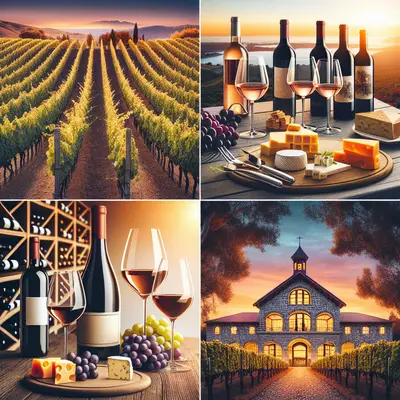
Consider geography as well as flavor: coastal whites with locally landed shellfish, mountain reds with slow-braised regional specialties, amphitheater vineyards’ rosés with sunset terraces overlooking the same slopes. When place, table, and glass are aligned, the experience acquires a narrative integrity that no single tasting can achieve. You are not merely drinking wine in a region; you are participating in its living culture.
In the end, a wine journey of real refinement is composed of such alignments—of time and ripeness, of cellar and philosophy, of memory and sensation, of private bottles and public stories, of vineyard and table.
Conclusion
For the discerning traveler, a wine tour is not a leisure activity but an art form. It is the art of listening to landscapes, noticing the small decisions behind great wines, and weaving each visit into a coherent story that lingers long after the last bottle is opened.
By designing your journey around ripeness, reading cellars with intention, creating sensory anchors, seeking out private-conversation wines, and orchestrating a considered finale at the table, you elevate your travels from pleasant to truly exceptional. These are the quiet refinements that separate a standard itinerary from a curated experience—one that reflects not only where you have been, but who you are as a wine lover.
Sources
- Wine Institute – World Wine Production & U.S. Wine Facts – Provides context on global and U.S. wine production, useful for understanding regional scale and diversity.
- UC Davis Department of Viticulture & Enology – Offers authoritative educational resources on winemaking and grape growing, informing cellar and vineyard insights.
- Oxford Companion to Wine (Oxford Reference) – Comprehensive reference on grape varieties, regions, and techniques referenced in advanced wine discussions.
- Decanter – Expert Wine Travel Guides – Curated wine travel content offering regional backgrounds and examples of high-level wine tourism experiences.
- Wine Folly – Wine Regions & Styles – Accessible yet well-researched overviews of global wine regions, harvest timing, and stylistic differences to help plan seasonally aligned visits.
Key Takeaway
The most important thing to remember from this article is that this information can change how you think about Wine Tours.