Wine touring, at its highest expression, is less about ticking off estates and more about orchestrating a sequence of moments—quietly opulent, precisely timed, and deeply sensory. The finest experiences feel almost weightless: a glass waiting at the perfect temperature, a winemaker suddenly unhurried, a hillside vineyard turning gold just as you arrive. These are not accidents. They are the result of careful curation, subtle timing, and an understanding that luxury in wine travel is often defined by what is not obvious.
In this guide, we explore how to shape wine tours that feel tailored rather than touristic, intimate rather than crowded. Woven into the narrative are five exclusive insights that serious wine enthusiasts will recognize as the difference between “going wine tasting” and inhabiting the world of wine at its most refined.
Designing a Tour Around the Vineyard, Not the Tasting Room
For the devoted enthusiast, the true stage of wine is the vineyard, not the tasting bar. Too many itineraries begin and end with glassware; the elevated journey begins with soil, aspect, and climate.
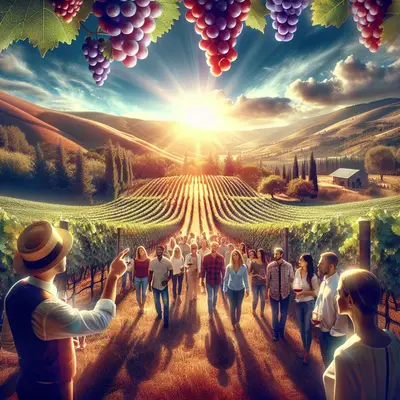
A sophisticated tour is choreographed to align with the vineyard’s natural rhythms. Morning visits to cooler, higher-elevation sites reveal the interplay of light, fog, and breeze—conditions that become legible in the glass later in the day. Walking the rows, noting canopy management, tasting berries in season, and observing slope and drainage transforms “fruit” into “origin.”
Tasting rooms become the coda, not the main act. Sitting down to taste wines grown in the specific blocks you’ve just walked changes the conversation with the estate team: now you are discussing phenolic ripeness, harvest timing, and parcel selection rather than only descriptors on the nose and palate. This alignment—vineyard first, glass second—anchors the entire tour in a sense of place.
Exclusive Insight #1: The most revealing tastings happen after you have walked the vineyard, not before. Plan your visits so the vineyard stroll precedes the formal pour.
The Art of Timing: Season, Time of Day, and Harvest Quiet
Tempo is an underappreciated luxury in wine travel. The time of year and time of day you visit create a dramatically different experience, even at the same estate.
Between late winter pruning and early spring budbreak, vineyards are serene and skeletal; this is the moment for those who wish to talk about long-term viticultural vision. Late spring and early summer, with fresh canopy growth and flowering, suit visitors who want to understand the growing cycle and its risks. Late summer offers a tactile richness: berries to taste, canopy decisions to observe, and the palpable tension of ripening.
Time of day is equally crucial. Morning visits accentuate freshness: cooler cellars, more alert palates, and less ambient heat influencing your perception of acidity. Late afternoon can be reserved for richer, more structured wines when the palate is warmed and the light slants across the vines in a way that makes even seasoned travelers pause.
If you’re tempted by harvest action, consider a subtle approach. Full harvest days can be frenetic; a curated visit just before or after the peak offers insight without chaos.
Exclusive Insight #2: For the most precise tastings, reserve age-worthy whites and cool-climate reds for mid-morning, when your palate is freshest and the cellar is naturally cool.
Reading Between the Barrels: Cellars, Methods, and Micro-Details
In a premium wine tour, the cellar becomes a library of decisions. Barrels, tanks, and small fermentation vessels reveal a philosophy more eloquently than any brochure.
Take note of barrel diversity: Are there different coopers, toast levels, and forest origins? Do you see a mix of barrique, demi-muid, and foudre? This suggests a nuanced approach to texture and oxygen management. Look for concrete eggs, amphorae, or other neutral vessels: their presence often signals a focus on purity of fruit and structural precision, especially in whites and lighter reds.
Temperature and humidity in the cellar are more than technicalities. Consistent coolness and moderated humidity preserve freshness and slow evolution, particularly important for estates whose wines are built to age. Ask to taste from barrel or tank when possible—comparing the same wine in different vessels can be more instructive than tasting different cuvées in bottle.
Exclusive Insight #3: An estate’s true style is often clearest in its “intermediate” wines tasted from barrel or tank, before final blending and polishing. Request a comparative barrel sample if the winery permits it.
Conversations that Matter: Asking Questions Like a Connoisseur
What distinguishes a refined wine tour from a pleasant afternoon is the level of conversation. Enthusiasts who ask better questions are often offered more nuanced wines, deeper pours of information, and occasionally, access to off-list bottles.
Move beyond conventional queries (“What grapes are in this blend?” or “How many cases do you produce?”) to questions that invite the estate to reveal its thinking. Inquire about picking decisions in tricky vintages, changes in farming practices over the last decade, or the rationale behind shifting oak regimes. Ask how they define ripeness for their flagship wine, or what they changed after a particularly challenging year.
Winemakers and estate teams are uniquely engaged when guests are genuinely curious about their evolution, not just their accolades. This level of discourse signals that you are there for more than a photo opportunity—and often prompts them to share experimental lots, back vintages, or single-block bottlings not typically poured.
Exclusive Insight #4: Ask, “Which recent vintage taught you the most, and how did it change your approach?” The answer often reveals more about the estate’s soul than any technical specification.
Curating the Glass: Sequencing, Spittoons, and Sensory Stamina
The most refined wine tours acknowledge that palate fatigue is the hidden enemy of discernment. Carefully sequencing tastings and using the spittoon deliberately preserves your ability to appreciate nuance across multiple estates.
A sophisticated itinerary limits the number of serious tastings per day—three thoughtfully chosen visits can be more revealing than six hurried ones. Within each tasting, begin with wines that highlight texture and structure rather than sheer power. This might mean starting with mineral-driven whites or lighter reds before moving into opulent, barrel-aged cuvées.
Spitting, far from being impolite, is an essential tool of the serious taster. It maintains clarity of judgment and ensures that the last estate of the day receives as much attention as the first. Small sips, focused note-taking, and occasional pauses between flights allow aromas to evolve in the glass and in your memory.
Finally, consider one “anchor wine” per day—an estate or specific cuvée that is your benchmark. Measuring all other wines against that anchor sharpens your senses and clarifies your preferences over time.
Exclusive Insight #5: At the start of each day, privately define one benchmark wine style you hope to understand better (e.g., cool-climate Pinot Noir, granitic Syrah). Let that quiet intention guide every comparative judgment you make.
Conclusion
A truly elevated wine tour is less an itinerary and more a finely tuned composition—timed to the vineyard’s cycles, aligned with the cellar’s quiet labor, and enriched by conversations that linger long after the last glass is rinsed. For the discerning traveler, luxury lies in the interstices: the early-morning stillness between the vines, the faint coolness of the cellar air, the unhurried explanation of a difficult vintage.
By prioritizing vineyard-first experiences, mindful timing, cellar literacy, substantive dialogue, and deliberate tasting practices, you move from “visiting wineries” to inhabiting the deeper narrative of wine. The reward is not only superior bottles in your luggage, but a more articulate understanding of why certain wines move you—and how to seek them out, again and again, with increasing precision.
Sources
- Wine Institute – World Wine Tour Tips - Practical guidance on planning wine country travel and understanding regional differences
- Napa Valley Vintners – Visit Napa Valley: Planning Your Trip - Insight into timing, appointment culture, and tasting expectations in a premier region
- GuildSomm – Understanding Vineyard Site - In-depth discussion of how site characteristics shape wine, useful for vineyard-focused touring
- UC Davis Viticulture & Enology - Technical but authoritative information on viticulture that enriches vineyard walks and cellar questions
- Wine & Spirit Education Trust (WSET) – How to Taste Wine - Professional guidelines on tasting, spitting, and evaluating wines systematically during tours
Key Takeaway
The most important thing to remember from this article is that this information can change how you think about Wine Tours.