There is a particular quiet that settles over a truly premium winery. It isn’t the silence of emptiness, but of assurance—of vineyards tended leaf by leaf, of cellars where time is not an enemy but a partner, of hospitality that feels less like service and more like anticipation. For the discerning traveler, understanding what sets these rare estates apart transforms a pleasant visit into a profound encounter. Beyond famous labels and picture-perfect vistas, the finest wineries share a set of understated, exacting practices that define their character long before the cork is pulled.
The Vineyard as Atelier, Not Factory
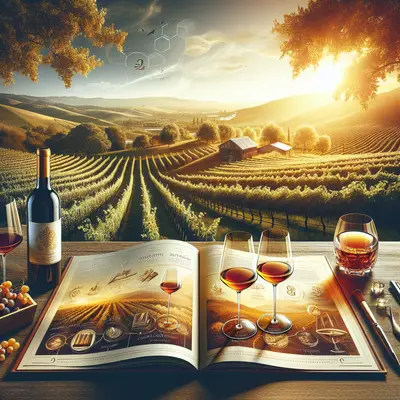
At the uppermost tier of wine, the vineyard is treated less like farmland and more like an atelier—a studio where every vine is a deliberate brushstroke. Premium estates often work with significantly lower yields than their peers, sacrificing volume to coax intensity and nuance from each cluster. This is not a marketing flourish; it is a fundamental economic choice. Every ton of grapes left unharvested is an investment in concentration, texture, and longevity.
You will notice it on a visit: narrower rows, precise canopy management, and workers moving with almost choreographic purpose during the growing season. Premium wineries frequently farm by individual parcel rather than by vineyard as a whole, tailoring pruning, leaf pulling, and irrigation (if used at all) to the micro-variations in soil and exposure. Many have embraced organic or biodynamic principles—not as a label to display, but as a pathway to healthier, more expressive fruit.
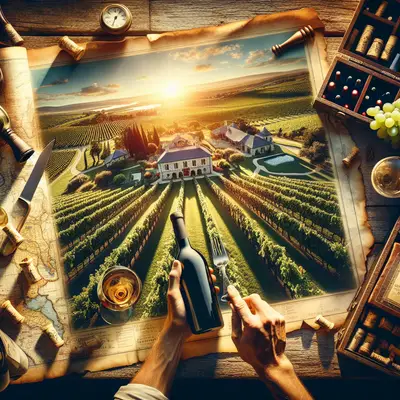
For the guest, this manifests in tours that linger in specific blocks rather than sweeping past the vines in a few cursory moments. Guides speak in terms of slope, wind patterns, and soil structure, not just grape varieties. When you taste a single-vineyard or single-parcel bottling after walking its rows, the wine ceases to be an abstract luxury good and becomes the direct expression of a meticulously curated landscape.
Precision of Time: Cellars Where Patience Is Policy
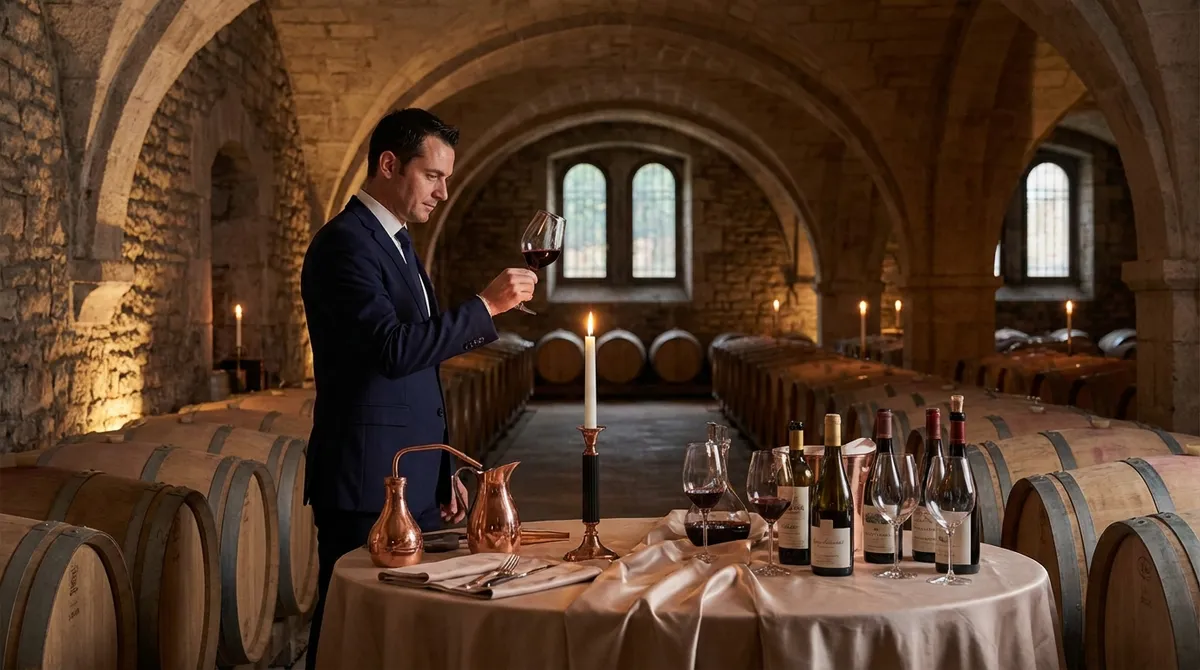
If the vineyard is the atelier, the cellar is the laboratory of patience. Premium wineries view time as an essential ingredient, not merely a cost center. Fermentations are monitored with a level of scrutiny that blends science and intuition—temperature controls, small-batch vinifications, and regular tastings to assess structure and balance rather than simply waiting for fermentation to “finish.”
Barrel programs at these estates are rarely improvised. Cooperage—the choice of barrel maker, grain tightness, toasting level, and wood origin—is selected with the specificity of a bespoke suit. Some producers use a nuanced mix of new and neutral oak, amphorae, or concrete to sculpt texture without overwhelming aroma. Elevage (the period between fermentation and bottling) is carefully calibrated for each cuvée. A flagship wine might rest for many months longer than its peers, followed by extended bottle aging before a single case is released.
This precision often extends to vintage strategy. In challenging years, the top estates are not afraid to declassify or skip a cuvée entirely, diverting fruit to second labels to preserve the integrity of their signature wines. Guests fortunate enough to taste library vintages in the cellar soon understand: at this level, “release date” is not set by a calendar, but by the wine’s readiness to speak fluently of its origin.
The Architecture of Hospitality: Curated, Not Performed
Truly premium wineries understand that hospitality is an extension of their philosophy in glass. Experiences are curated, not performed. Reservations are often limited to preserve a sense of calm, and visits unfold with the measured cadence of a well-structured tasting menu rather than a hurried retail encounter.
From the moment you arrive, the focus is on unhurried immersion. Interiors tend to favor restrained elegance—textural stone, warm wood, natural light—over ostentatious décor. The best estates have a spatial logic: views aligned to vineyard blocks you’ll later taste, quiet alcoves for reflective sipping, and tasting rooms designed as salons rather than sales counters. Staff are not simply reciting tasting notes; they are translating the estate’s decisions—agronomic, architectural, and philosophical—into a coherent narrative.
Exclusivity, in this context, is not about exclusion for its own sake. It is about preserving the conditions under which nuance can be perceived. By limiting group size and noise, premium wineries create space for detail: the shift in aromatics as a wine warms in the glass, the subtle difference between two barrels from different forests, the way a particular parcel expresses minerality. For the seasoned wine traveler, these are the elements that linger long after the visit ends.
Invisible Excellence: The Decisions You Never See
What distinguishes the finest wineries is often what is least visible to the casual visitor. These estates are defined as much by what they decline to do as by what they choose to showcase. Vineyard blocks may be rigorously sorted at harvest, with entire bins of fruit discarded if they fall short of the estate’s exacting standards. The cost of such triage is considerable, but it is non-negotiable in the pursuit of purity.
Behind the scenes, you will find intense scrutiny of data: soil analyses, microclimate mapping, phenolic ripeness indices, and long-term tracking of vine age and performance. Yet technology here is in service of refinement, not efficiency for its own sake. Optical sorters may be used to enhance selection, while manual checks ensure the machine’s judgment aligns with the winemaker’s palate.
You will also notice a certain restraint in marketing. The most serious premium wineries allow critics to taste, but do not build their identity on scores alone. Their allocation lists are often maintained quietly, rewarding long-term relationships rather than chasing trends. For visitors, this manifests in an understated confidence: wines poured not as trophies, but as evidence of an uncompromising internal standard that is applied vintage after vintage, whether or not anyone is watching.
When the Glass Becomes a Landscape: Tasting as Interpretation
For the attuned enthusiast, the greatest pleasure of visiting a premium winery lies in the moment where the abstract idea of “terroir” becomes sensorially clear. Tastings at this level are structured less around “good, better, best” and more around comparison and context: same variety from different parcels, same vineyard across multiple vintages, or different élevage choices applied to the same base wine.
Guides and winemakers will often speak in terms of structure—tannin grain, acid line, mid-palate weight—rather than simply flavor descriptors. The aim is to help you perceive architecture: where the wine begins on the palate, how it moves, and where it finally settles. When done well, a tasting becomes an exercise in interpretation. You begin to recognize which slopes favor tension over opulence, which soils yield perfume rather than power, which vintages deliver breadth versus linearity.
Exclusive insights emerge in these controlled comparisons. You may discover that the estate’s second wine is not merely a lesser sibling, but a different lens—designed for earlier pleasure, built from parcels that emphasize charm over gravitas. Or you might notice that the most age-worthy bottling does not shout in its youth; instead, it offers a measured, almost reserved intensity that suggests depth still coiled beneath the surface. These are the revelations that turn a premium winery visit from a luxury outing into an ongoing relationship with a place, a philosophy, and a style.
Conclusion
Premium wineries are not defined solely by their prices, architecture, or acclaim, but by a constellation of deliberate, often quiet choices—precision in the vineyard, patience in the cellar, curated hospitality, and an unwavering commitment to invisible standards. For the refined traveler, recognizing these signals transforms wine tourism from a series of scenic stops into a pursuit guided by discernment. When each visit becomes an exploration of silken standards rather than simple indulgence, the wines you encounter cease to be souvenirs and become, instead, enduring reference points in your own evolving palate.
Sources
- [Wine Institute – Facts & Figures on the California Wine Industry](https://wineinstitute.org/our-industry/facts-and-stats) - Provides industry context on production, acreage, and scale, highlighting how premium producers differ from mass-scale operations.
- [Institute of Masters of Wine – What Is Terroir?](https://www.mastersofwine.org/what-is-terroir) - An authoritative exploration of terroir and its role in shaping premium wine styles.
- [UC Davis Department of Viticulture and Enology](https://wineserver.ucdavis.edu/) - Research-based insights into vineyard management, winemaking practices, and quality factors at the highest levels.
- [Decanter – Guide to Fine Wine and Cellar Aging](https://www.decanter.com/learn/fine-wine-guide-cellar-aging-475322/) - Discusses aging, cellar practices, and what distinguishes fine and premium wines.
- [Bordeaux Wine Council (CIVB)](https://www.bordeaux.com/us/Our-territory/Our-terroir) - Offers a detailed look at terroir, classification, and quality frameworks in one of the world’s benchmark premium wine regions.
Key Takeaway
The most important thing to remember from this article is that this information can change how you think about Premium Wineries.