There is a moment—often just past the tasting bar, just before the cellar door closes softly behind you—when time seems to slow in a truly exceptional winery. The clink of glass fades, sunlight softens over the vines, and you sense that what separates a premium estate from a merely pleasant one is not spectacle, but intention. For the traveler who seeks more than a postcard-perfect view, premium wineries offer a quiet theater of craftsmanship, hospitality, and precision. Here, refinement is not announced; it is implied, discovered, and ultimately remembered.
When Architecture Becomes a Tasting Note
In the most considered premium wineries, the buildings themselves behave like an additional grape variety—subtle, but distinctly present in the final impression.
Architects and winemakers increasingly collaborate to shape how you experience aroma, light, and sound. A vaulted ceiling in the barrel hall is not simply dramatic; it moderates temperature, preserves humidity, and dampens echo so that even a whisper feels appropriate. Limestone-clad walls and earthen roofs insulate cellars to keep wines in a narrow, ideal band of temperature fluctuation, protecting the nuance that years of patient élevage can yield.
Thoughtful estates position tasting rooms to orchestrate your gaze: a low windowsill that forces your eye to the vines while you swirl; a shaded terrace that frames the oldest parcel of the property like a living painting. Materials are often chosen not for fashion but for function—porous stone that regulates indoor climate, reclaimed wood that softens acoustics, glass that filters glare so you can actually read the wine’s color without distortion.
For the observant guest, the building is an unspoken prelude to the wine: a study in restraint, proportion, and longevity that mirrors what is in the glass. You are not simply visiting a site; you are stepping into a three-dimensional expression of the estate’s philosophy.
The Hidden Choreography Behind a Seamless Visit
In premium wineries, the most memorable experiences often feel effortless. That ease is almost always the result of meticulous, invisible choreography.
A well-run estate will have mapped each visit as precisely as a harvest schedule. Arrival times are staggered so that each party can move through spaces without congestion, preserving the quiet luxury of feeling as though the property is temporarily yours. Hosts receive subtle cues—via internal messaging or shared calendars—about your arrival, preferences, and the wines already tasted, ensuring conversations never feel generic or repetitive.
Glassware is selected not only by shape, but by sequence. A slightly narrower bowl for the taut, high-acid white that opens the tasting; a more generous silhouette for the structured red that closes it. Between pours, glasses are whisked away and replaced in a way that never feels hurried, preserving the rhythm of the experience.
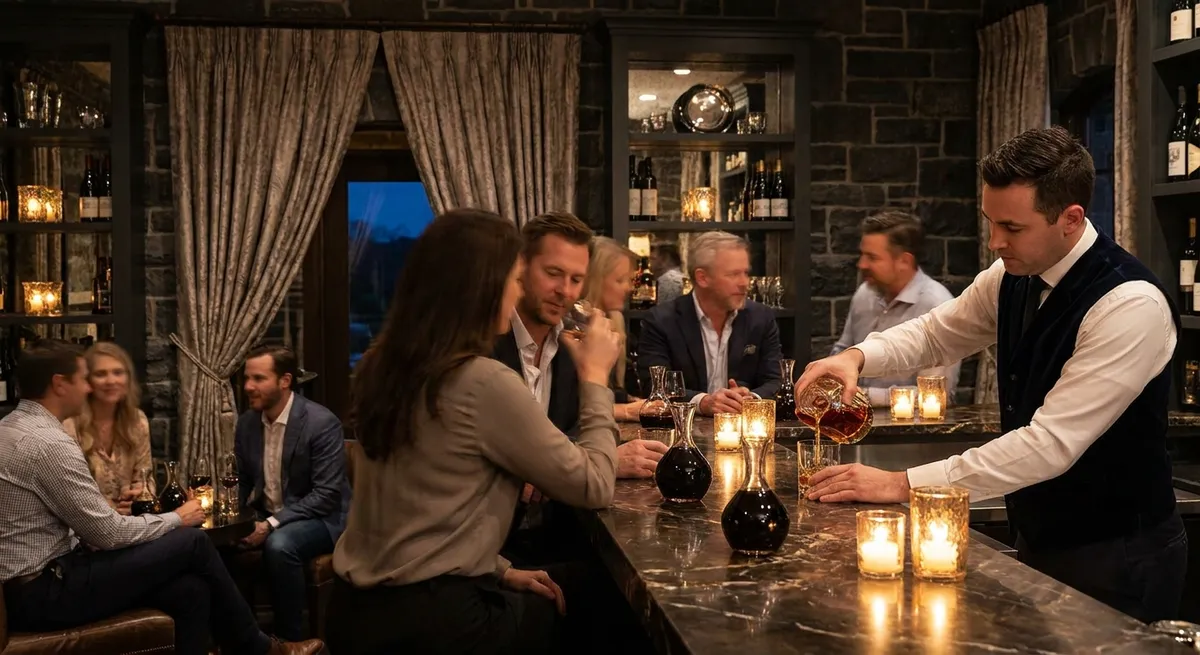
Temperature is managed with the same precision as service. Bottles to be poured later in the visit might rest in a dedicated wine refrigerator set half a degree warmer than the whites already in your glass, so they reach their ideal serving condition at the exact moment you taste them. Lighting shifts almost imperceptibly from bright upon arrival to softer, more candle-like tones as you move to barrel rooms or private salons.
To the guest, it feels like serendipity. To the estate, it is disciplined hospitality in motion.
Five Exclusive Insights for the Attentive Enthusiast
Within this world of polished calm, there are details that reveal an estate’s deeper commitments—subtleties that seasoned enthusiasts learn to notice and quietly value.
1. Vineyard Maps That Reveal More Than Marketing
A framed vineyard map in a tasting room can be a mere decorative flourish—or a precise, working document of terroir. In premium wineries, seek maps that show contour lines, soil types, and parcel names rather than only broad vineyard blocks. When a host can discuss how a subtle change in slope alters wind exposure, or why a particular soil demands a different rootstock, you are not just hearing a story; you are witnessing the intellectual architecture behind the wine.
If you are invited to walk the vines, notice whether these maps align with what you see: shifts in canopy height, row orientation, or ground cover. Consistency between what is mapped, what is said, and what is visible is a strong signal of serious intent.
2. Barrel Rooms as Quiet Declarations of Philosophy
Barrel halls are often staged theatrically, but a keen eye can read them like a manuscript. Look at the mix of cooperage: Are there diverse barrel makers and toast levels, or a deliberately narrow selection? An estate that uses primarily larger formats (such as 500L puncheons or foudres) may be signaling a desire to preserve fruit purity and terroir expression, rather than imprinting overt oak character.
Take note of how the barrels are stacked and labeled. Clearly tagged rows indicating parcel, vintage, and intended cuvée suggest a granular, vineyard-driven approach rather than simple batch production. The ambient feel of the room—cool but not cold, humid but not damp—often reflects impressive investments in insulation, geothermal systems, or subterranean design, all in service of stability rather than spectacle.
3. Precision in Glassware and Pour Sequence
Premium estates rarely leave glassware to chance. The choice of stem—the height, bowl shape, rim thinness—is a deliberate extension of the cellar’s decisions. Lighter-bodied reds may arrive in elegant, tulip-shaped glasses that heighten aromatic lift; structured, age-worthy wines often appear in wider bowls that encourage gradual unfolding.
Just as telling is the order in which wines are poured. It is not simply white before red, young before old. Thoughtful hosts compose a sequence like a story arc: beginning with a wine that introduces the house style, progressing through textures and regions of the estate, and culminating in a bottle that lingers in memory rather than dominates the moment. When each subsequent pour makes greater sense of the one before it, you are experiencing editorial skill, not coincidence.
4. Library Bottles and the Estate’s Confidence in Time
Access to older vintages is more than a luxury; it is a test of a winery’s courage and foresight. Maintaining a library of back vintages requires space, capital, and the conviction that your wines will reward patience. When an estate offers a carefully curated vertical tasting—even if informally, perhaps a current release alongside a bottle from a decade prior—it is inviting you to judge not just this year’s work, but an entire historical trajectory.
Examine how these older wines are presented. Are they decanted thoughtfully, or opened with a quiet ritual that respects their fragility? Are they stored under optimal conditions, with pristine labels and intact capsules, or merely retrieved as an afterthought? The way an estate treats its own past reveals how it understands its future.
5. The Texture of Silence: How a Winery Protects Its Own Atmosphere
Noise management is an underrated hallmark of premium wineries. The finest estates often engineer silence with as much care as they manage fermentation. Gravel paths soften footsteps; double doors and insulated thresholds dampen sound between busy reception areas and more contemplative tasting spaces. Outdoor terraces may be oriented away from roads, shielded by trees or stone walls, so that the only audible interruptions are birds, wind, and the faint murmur of distant work in the vines.
Pay attention to how staff move and speak. A team that communicates fluidly without intrusion—appearing when needed, retreating when not—protects an atmosphere that allows guests to focus on what matters most: aroma, texture, conversation, reflection. In such environments, silence becomes a kind of hospitality in itself.
Crafting Your Own Lexicon of Excellence
The more time you spend in premium wineries, the more you realize that true luxury is not a function of price or decor, but of coherence. The architecture, the vineyard maps, the barrel choices, the glassware, the pacing of a visit, even the curated quiet—all of it either harmonizes with the character of the wines or distracts from them.
For the dedicated wine traveler, the reward lies in cultivating a personal lexicon of excellence. Instead of asking only, “Do I like this wine?” you begin to ask, “Does this place make sense?” Are the vines, the cellar, and the hospitality aligned in purpose? Are the refinements in service of the wine, or simply in service of a photograph?
In the most accomplished estates, the answer reveals itself gently. You leave with the impression that nothing essential was rushed, nothing important was shouted, and nothing of value was accidental. The wines feel inevitable, the visit unforced, the memory indelible. And as you move on to your next destination, you carry with you not just bottles, but a sharpened awareness of what premium truly means when it is practiced, not merely proclaimed.
Sources
- [Wine Institute – Sustainable Winegrowing Overview](https://wineinstitute.org/our-work/sustainable-winegrowing) - Explains modern sustainability and vineyard practices that underpin many premium wineries’ philosophies.
- [UC Davis Department of Viticulture and Enology](https://wineserver.ucdavis.edu/) - Offers research-based insight into viticulture, fermentation, and cellar design relevant to high-end wine production.
- [Napa Valley Vintners – Napa Valley Appellation and Terroir](https://napavintners.com/napa_valley/terroir.asp) - Details how soil, climate, and topography inform vineyard mapping and wine style in a leading premium region.
- [Bordeaux Wine Council (CIVB) – Barrel Aging & Cellar Practices](https://www.bordeaux.com/us/Our-Terroir/Winemaking) - Describes barrel choices, cellar conditions, and aging philosophies common to top-tier châteaux.
- [Decanter – Guide to Wine Glassware](https://www.decanter.com/learn/wine-glasses-guide-54167/) - Explores how glass shape and quality influence tasting, echoing the glassware precision seen at premium wineries.
Key Takeaway
The most important thing to remember from this article is that this information can change how you think about Premium Wineries.