There is a particular quiet that falls over a truly premium winery—a stillness stitched with craftsmanship, patience, and intent. Beyond polished tasting rooms and perfectly choreographed tours lies a more elusive realm: the decisions, disciplines, and subtleties that separate a merely excellent producer from a genuinely rarefied estate. For travelers who design their itineraries around remarkable glasses rather than simple scenery, understanding what distinguishes these wineries transforms a pleasant visit into an unforgettable, deeply informed experience.
What “Premium” Really Means in the Vineyard
The story of a premium winery begins long before a cork is drawn, in parcels of land selected less for postcard beauty and more for demanding precision. Vine density, canopy management, and rootstock selection are not academic choices; they are intentional constraints that produce fewer clusters and more concentrated fruit. At the upper echelon, yields are often deliberately kept low, whether by green harvesting, meticulous pruning, or withholding irrigation in favor of vine resilience.
Soil studies might resemble architectural blueprints: electromagnetic mapping, micro-plot sampling, and meticulous tracking of water-holding capacity. Some estates vinify tiny sections of the same slope separately, learning over years how each responds to sun, wind, and vintage variation. For the visitor, walking the vineyard with a viticulturist becomes less a scenic stroll and more a masterclass in terroir—but one taught through textures, shading, and the feel of the ground beneath your shoes rather than through slogans on a brochure.
The Cellar as a Laboratory of Restraint
Inside a serious cellar, the most powerful tool is not a machine but restraint. Rather than relying on aggressive manipulation, premium wineries often pursue a philosophy of minimal, but highly informed, intervention. Fermentation vessels are selected with almost architectural intention: concrete eggs for gentle convection, large-format foudres to soften oak influence, or neutral barrels where the wood is a supporting actor, never the lead.
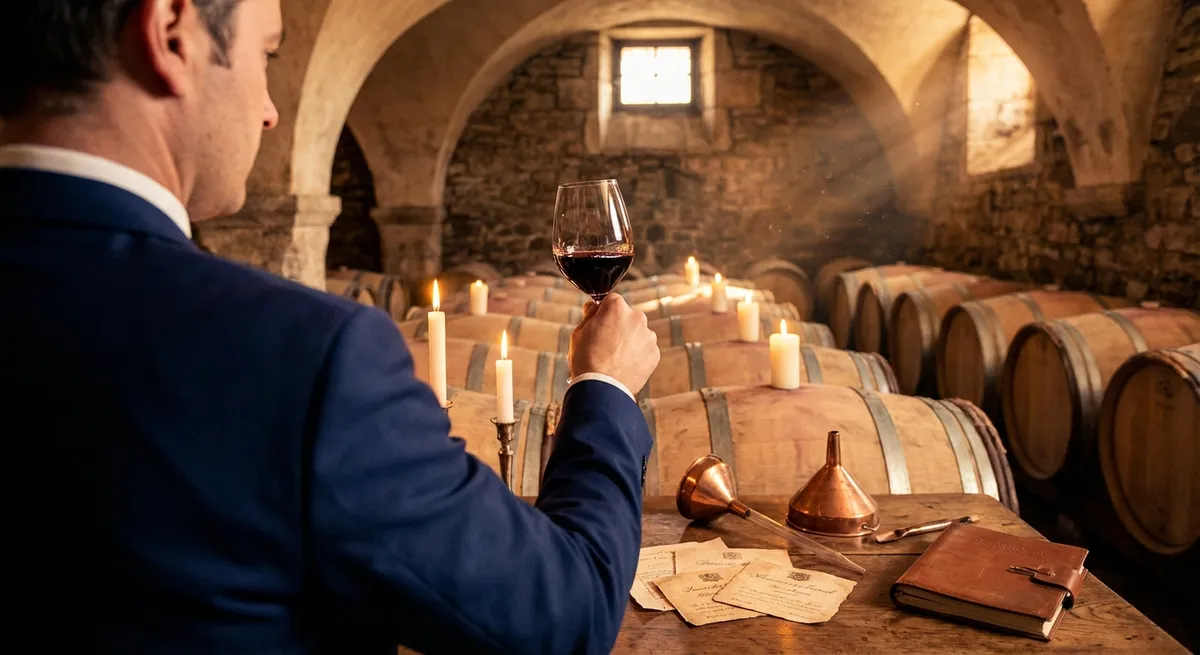
Temperature-controlled fermentations, gravity-flow designs, and painstaking hand-sorting of grapes are not there for spectacle; they serve a single purpose—to preserve clarity and detail in the wine. The decision of when to press, which parcels to blend, and how long to age each lot is guided by relentless tasting over many months. The most prestigious estates may quietly declassify entire lots in weaker years, sacrificing quantity and short-term revenue to protect a reputation built over decades. For the informed guest, a cellar tour becomes an invitation to witness this discipline, where every tank, barrel, and silence tells a story of choices not to overdo.
Five Exclusive Insights for the Devoted Enthusiast
Within this rarified space, a handful of less obvious truths reward the curious traveler—nuances that rarely make it onto public tasting notes but profoundly shape the wines.
1. The Most Important Vintage is the One in Barrel, Not on the Label
Insiders know that serious producers obsess over what is still evolving in the cellar, not what is already sold. When visiting, asking about the wine currently in barrel or concrete—how the vintage is showing, what surprised the team—often reveals more than a discussion of the estate’s most famous release. A thoughtful winemaker will speak as passionately about a challenging year as a celebrated one, outlining how they adapted: picking earlier parcels, adjusting maceration times, or selecting different coopers for the oak. The keen listener hears not marketing, but a philosophy in motion.
2. Great Estates Curate Their Barrels Like a Library, Not an Inventory
At the premium level, oak is not simply “French” or “American”; it’s a curated collection of forests, grain tightness, toast levels, and cooper styles. A single cuvée may rest in barrels from multiple coopers, each chosen to highlight a different facet—supple texture, floral lift, or structure on the mid-palate. What professionals quietly look for is the balance between new and seasoned oak, and how gracefully the wood recedes with time. When offered a barrel tasting, pay attention to how different lots express the same grape: this is where you glimpse the estate’s understanding of its own raw material.
3. The Best Tasting Rooms Are Designed Around Light, Not Luxury
While chandeliers and sculpted counters may impress at first glance, seasoned enthusiasts quickly notice something subtler: the quality of light. Premium wineries increasingly design tasting spaces with natural, neutral-toned illumination that allows the wine to be judged honestly—without color distortion or glare. Window orientation, reflective surfaces, and even the shade of the walls are chosen to respect the wine in the glass. A truly refined tasting environment feels calm, controlled, and quietly attentive to your senses rather than performative.
4. Benchmark Wines Are Often the Least Poured—and That’s a Good Sign
When a winery’s rarest cuvée or most coveted single-vineyard bottling is treated almost casually in the tasting lineup, it can be a red flag. At top-tier estates, the flagship wine is usually both cherished and protected. It may be poured sparingly, offered by prior arrangement, or reserved for guests who demonstrate a genuine curiosity about the estate’s history and farming. This scarcity is not arrogance but stewardship. For visitors, showing specific interest—by mentioning vintages you’ve enjoyed or styles you appreciate—often opens doors to these more guarded experiences.
5. The Finest Estates Age Their Reputation Slower Than Their Wine
Premium wineries understand that prestige is cumulative. They invest in decades-long vineyard replanting programs knowing they may never personally reap the full rewards. Old-vine parcels, carefully preserved and renewed, are treated like heirlooms. Research partnerships with universities, participation in climate-resilience trials, and long-term soil health initiatives matter as much as scores or awards. When visiting, asking about what the estate is planning 10 or 20 years ahead can be more revealing than hearing about last year’s accolades. The depth of the answer often mirrors the depth of the wines.
Designing a Premium Winery Visit with Intention
Approaching a premium estate as an informed guest reshapes the entire experience. Instead of racing through multiple wineries in a single day, dedicating ample time to one or two properties allows space for conversation, comparative tasting, and a walk among the vines. Arranging an appointment in advance—ideally with some background knowledge of the estate’s key wines and vineyards—signals that you are not simply passing through but arriving with intent.
Questions matter. Asking how they adapted to a recent difficult vintage, which parcel challenged them the most, or how their approach to oak has evolved over the past decade often leads to unexpectedly candid, technical, and rewarding discussions. Bring a notebook or dedicated tasting journal; premium wineries frequently pour limited, allocation-only wines that you may not encounter again, and recording these moments transforms them into a personal archive rather than a fleeting pleasure. Above all, taste slowly. Allow each wine time to open, return to earlier pours, and observe how they evolve in the glass—an echo of how they will age in your cellar.
The Art of Taking the Experience Home
The true measure of a premium winery visit is not how many bottles you acquire, but how fully those bottles continue the story once you return home. Consider selecting wines across vintages and tiers—an entry-level cuvée, a mid-tier blend, and a flagship or single-vineyard wine—so you can revisit the estate’s philosophy from multiple angles. Proper storage becomes part of the experience; cellaring a bottle for several years and opening it on a meaningful occasion extends the memory of your visit in a way that no photograph can.
Pairing these wines thoughtfully—whether with a multi-course meal or a single, impeccably chosen dish—creates a private conversation between place, time, and table. Sharing the wines with friends who care about nuance turns them into ambassadors for the estate, and for your journey. In this way, a premium winery visit transcends tourism. It becomes a thread woven into your own narrative of taste, curiosity, and the quiet pursuit of excellence.
Conclusion
Premium wineries are not defined solely by price, architecture, or scarcity, but by a patient, unshowy devotion to detail—from the geometry of vine rows to the angle of light over a tasting table. For the serious wine traveler, understanding these quieter markers unlocks an entirely different experience: one where every visit is an education, every glass an invitation to look more closely, and every bottle an enduring chapter in a much longer story. To step into this world with informed curiosity is to discover that true luxury in wine is less about what is displayed, and more about what is deliberately, expertly, and beautifully restrained.
Sources
- [Napa Valley Vintners – What Makes Napa Valley Unique](https://napavintners.com/napa_valley/about_napa_valley.aspx) - Overview of terroir, climate, and quality-focused practices in a leading premium region
- [Bordeaux Wine Council (CIVB) – Terroir & Appellations](https://www.bordeaux.com/us/Our-Terroir) - Insight into how top Bordeaux estates manage land, appellations, and quality
- [University of California, Davis – Wine Grape Growing & Winemaking](https://wineserver.ucdavis.edu/industry-info) - Research-based information on viticulture, enology, and cellar practices at a leading wine-education institution
- [Wine Institute – Sustainable Winegrowing Practices](https://www.wineinstitute.org/our-work/sustainability) - Details on sustainability and long-term vineyard stewardship among quality-focused wineries
- [Decanter – Guide to Oak and Barrel Choices](https://www.decanter.com/learn/wine-guide-to-oak-barrels-48039/) - Expert explanation of barrel selection, coopers, and oak impact in premium winemaking
Key Takeaway
The most important thing to remember from this article is that this information can change how you think about Premium Wineries.