Not all great wineries declare their stature on the label. The world’s most compelling premium estates tend to reveal themselves more quietly—through subtleties of craft, discipline, and detail that only become apparent when you look beyond the tasting room gloss. For the devoted wine traveler, understanding these nuances transforms a pleasant visit into a deeply informed, almost insider experience. This is where the journey shifts from mere admiration to true appreciation.
Below are five exclusive, under‑discussed dimensions of premium wineries—signals of seriousness and integrity that seasoned enthusiasts learn to recognize and seek out.
1. Precision in the Vineyard: Where Luxury Actually Begins
At authentically premium wineries, the luxury is not in the chandeliered tasting salon; it is in the vines. The most serious estates treat each block of the vineyard as a distinct, living entity rather than a uniform field. You will often find meticulous vine mapping, with parcels traced according to soil type, elevation, exposure, and even subtle wind patterns.
During a visit, pay attention to how specifically the team speaks about their plots. Do they refer to particular rows or micro‑parcels by name or number? Are picking dates decided on a block‑by‑block basis rather than on a generic harvest schedule? Many high‑end properties now employ soil scientists or viticultural consultants to guide rootstock choices, canopy management, and irrigation restraint.
A second hallmark is the visible restraint in yields. Premium producers often thin bunches mid‑season, sacrificing quantity to focus the vine’s energy on fewer, more concentrated clusters. It is an unglamorous, costly discipline that you might glimpse as dropped fruit on the ground in late summer. For the traveler, these details are powerful indicators: when the vineyard is treated as the primary luxury asset, the wines almost always follow.
2. Fermentation as Fine-Tuning: Beyond Stainless vs. Oak
Discussing fermentation vessels has become fashionable—stainless steel, oak, concrete eggs, clay amphorae—but at the highest level, the conversation is far more nuanced. Premium wineries are less concerned with the trendiness of a material and more with its interaction with a specific grape, parcel, or style.
You may notice a mosaic of small fermentation tanks rather than a few imposing giants. This allows micro‑vinification of individual blocks, sometimes even individual clones, so that each component expresses its character before blending. Indigenous (wild) yeast fermentations are often used not as a marketing slogan, but because the estate has the confidence and hygiene standards to manage the complexity they bring.
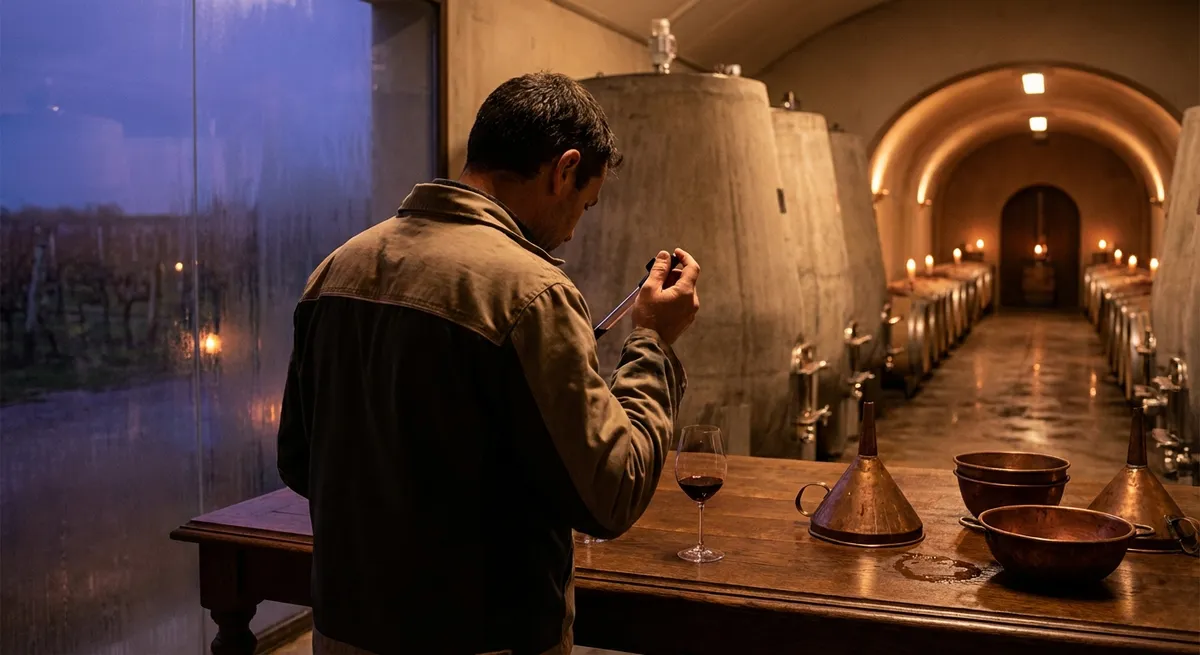
Temperature control is another quiet hallmark. Serious cellars are engineered so that fermentation temperatures can be tailored to each lot, modulating extraction and aromatic development. Long, unhurried fermentations—weeks rather than days—signal a philosophy that prioritizes texture and complexity over sheer ripeness and power. When you tour a premium facility, the choreography of these vessels and their varying regimes is the hidden stage on which style is defined.
3. Barrel Choices that Whisper, Not Shout
Oak is one of the most misunderstood markers of “premium” wine. In less serious contexts, new oak can be overused as a shortcut to the sensory signals many consumers associate with luxury: vanilla, toast, spice. Authentic high‑end producers, by contrast, use oak as punctuation, not as the entire sentence.
Listen carefully to how a winery describes its barrel program. The most thoughtful estates can tell you not only the percentage of new oak, but also the provenance and grain of their barrels—Allier, Tronçais, or Vosges forests in France, for example—and why those choices complement the fruit from a particular site. They may prefer longer, more delicate toasts to preserve freshness and aromatics, or a mix of barrel sizes to fine‑tune oxygen exposure.
You may also encounter a deliberate reduction in new oak as vines age and achieve greater natural complexity. This is counterintuitive for some visitors who equate more oak with more status. Yet the quiet confidence of a grand estate often lies in allowing the vineyard to speak clearly, with oak framing rather than dominating the conversation. For the enthusiast, recognizing this restraint is a key step in appreciating true refinement.
4. Time as the Ultimate Luxury: Elevage, Aging, and Release
Among all the choices a premium winery can make, the most costly is time. The decision to hold wines longer in barrel and bottle before release is a direct subtraction from cash flow—and an unmistakable sign of commitment to quality over immediate returns.
In the cellar, extended élevage (the French term for the “raising” of wine between fermentation and bottling) allows tannins to knit, textures to soften, and complex tertiary aromas to begin emerging. Some estates conduct multiple rackings (transfers from one vessel to another) with care to gently clarify the wine without aggressive filtration. This patient approach often yields wines that are more harmonious and composed upon release, with a far greater capacity to age gracefully.
For travelers, the age of library wines available to taste or purchase can be revealing. Premium wineries often curate verticals—multiple vintages of the same cuvée—to showcase evolution over time. Access to these older bottles is both a privilege and an education: you can observe how a terroir expresses itself across years, how vintages differ, and how the estate’s philosophy has matured. In an era of immediacy, any property that insists on time as a core ingredient is signaling a deeper level of seriousness.
5. The Signature of Place: How Premium Wineries Communicate Terroir
The most compelling premium wineries are guardians of a particular place. Their aim is not to produce a generic “great wine,” but to capture a distinct landscape and climate with fidelity. This concept of terroir—encompassing soil, topography, microclimate, and human stewardship—has become a buzzword, yet at its highest level it is treated more as responsibility than romance.
Notice how specifically the estate speaks about its site: the orientation of key blocks, the influence of nearby bodies of water or mountain ranges, the way morning fog retreats or afternoon winds arrive. Many premium producers conduct meticulous monitoring of soil moisture and temperature, not to industrialize the process, but to make more informed, minimal interventions. Sustainability and regenerative practices—such as cover cropping, composting, or biodiversity corridors—are often adopted not as marketing badges, but as long‑horizon commitments to preserving the character of their land.
On the label, you might see single‑vineyard bottlings or carefully delimited appellations that represent the winery’s most transparent expressions of place. During a tasting, compare these bottlings side by side, noting how texture, aromatics, and structure shift with subtle changes in site. The more precisely an estate can articulate and consistently render its terroir in the glass, the more you are likely standing in the realm of true premium wine.
Conclusion
Premium wineries reveal their caliber not through spectacle, but through a thousand disciplined decisions—many of which remain invisible to the casual visitor. The precision of vineyard work, the fine‑tuning of fermentation, the quiet sophistication of barrel choices, the investment in time, and the unwavering focus on terroir all contribute to an architecture of excellence that is felt rather than flaunted.
As you plan your next journey with Wine Tour Adventures, approach each estate with a more discerning lens. Ask the questions that uncover philosophy rather than just process, and pay attention to the details that do not need to shout. In those quiet, exacting choices, you will discover the true language of premium wine.
Sources
- UC Davis Viticulture and Enology – Vineyard Practices – Overview of advanced vineyard management techniques and their impact on wine quality
- Institut National de l’Origine et de la Qualité (INAO) – French regulatory body explaining appellations, terroir concepts, and quality standards
- Wine Institute – Sustainable Winegrowing – Details on sustainability practices commonly used by premium producers
- Decanter: The Role of Oak in Winemaking – In‑depth discussion of barrel choices, toasting, and their influence on style
- The New York Times – The Science of Terroir – Exploration of how place shapes wine character from a scientific and cultural perspective
Key Takeaway
The most important thing to remember from this article is that this information can change how you think about Premium Wineries.