There is a moment, just after the wine settles in the glass and before the first sip, when time seems to suspend. In that pause lies the real art of wine tasting—an intimate conversation between craftsmanship, terroir, and your own sensory memory. For travelers who plan their journeys around vineyards and cellars, tasting is no longer a casual activity; it is a curated ritual. This article explores five exclusive, less-discussed insights that can refine your approach to wine tasting and enrich every stop on your next Wine Tour Adventures itinerary.
The Architecture of the Glass: Designing Your Own Tasting Experience
The glass is not merely a vessel; it is a lens that focuses or diffuses a wine’s character. While many enthusiasts know that glass shape matters, few treat glassware as a dynamic tool to interpret a wine rather than a static accessory.
Subtle shifts in bowl width, rim diameter, and crystal thickness will emphasize different facets of the same wine. A Burgundian-style bowl amplifies aromatic complexity in Pinot Noir and Chardonnay, allowing more volatile esters to collect above the surface, while a narrower tulip enhances linearity and precision in Riesling or Champagne. Even the thickness of the rim affects perception: a fine, laser-cut rim allows wine to glide seamlessly, minimizing interference and making tannins feel more integrated.
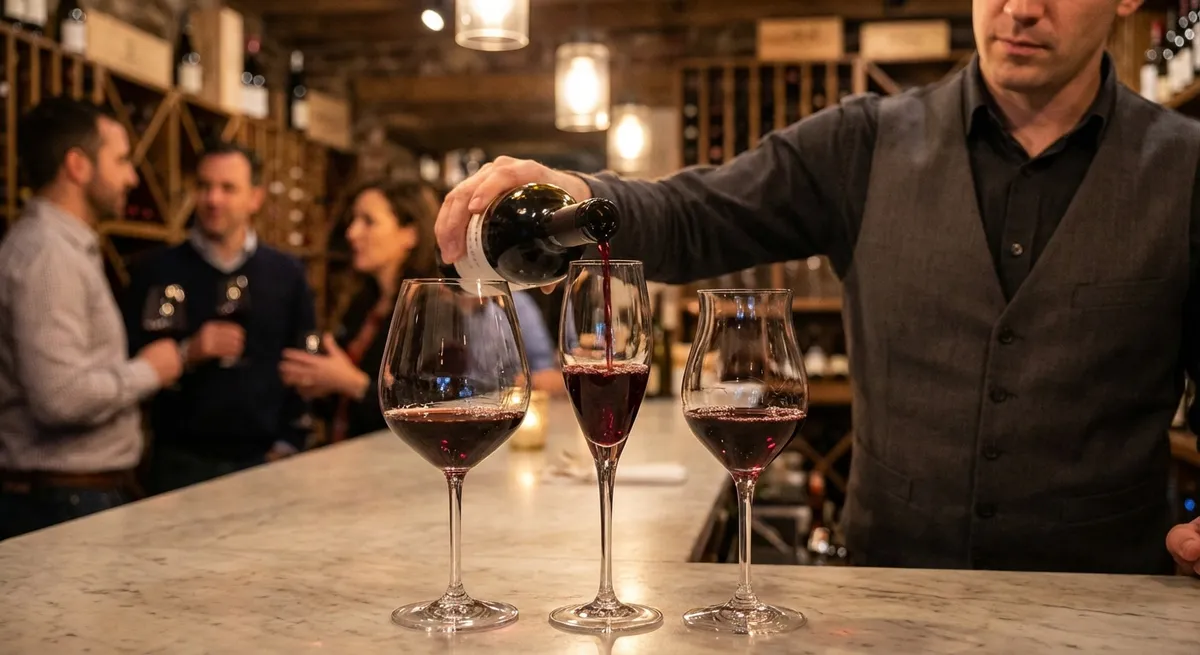
On a serious tasting journey, consider staging comparative pours—one wine, two glass shapes. This is a revealing exercise at top-tier wineries, where glassware is often carefully chosen to match the varietal. Ask your host why they selected a specific style; their answer often reveals how they want the wine to be “read.” Over time, you begin to understand glassware not as a symbol of luxury, but as a calibrated instrument—more akin to a Stradivarius than a simple cup.
Reading the Vineyard in the Glass: Terroir as a Sensory Map
Wine professionals often speak of “terroir” with a kind of reverence, yet the concept can sound abstract until you learn to translate it into sensory terms. On a well-curated wine tour, the most memorable tastings are those in which the landscape and the wine become inseparable.
Soil composition—limestone, granite, clay, volcanic ash—imprints itself through texture and structure as much as flavor. Limestone-based vineyards, such as many in Burgundy and parts of Champagne, frequently give wines a linear, chalky tension; volcanic soils, like those found in parts of Sicily or the Canary Islands, often yield wines with dark mineral tones and a smoky undercurrent. Elevation and exposure shape aromatic range: higher sites with cooler nights tend to preserve acidity and delicate aromatics, while sun-drenched slopes concentrate fruit and tannin.
During your visit, treat each glass as a topographical map. Note not only flavors but sensations: the way acidity traces a line along the sides of your tongue, how tannins sit—powdery, velvety, or angular. Ask to see vineyard maps, soil pits, or photos of specific parcels. When you later taste the same producer’s wines at home, those details return as vivid sensory memories, turning every bottle into a postcard from a particular slope, row, and harvest.
The Tempo of Tasting: Pacing Your Palate Like a Curated Concert
Many winery visits are rushed, compressing multiple wines into a brief slot. A more elevated approach treats tasting like a carefully sequenced performance, with tempo and progression chosen as thoughtfully as the wines themselves.
Begin with wines that are aromatically expressive but structurally gentle: sparkling or crisp whites awaken the palate without overwhelming it. Move into textural whites, then lighter-bodied reds, gradually ascending to fuller, more tannic wines. This progression is not merely tradition; it respects sensory fatigue and allows each wine to be appreciated at its proper point on the arc. Between flights, neutral palate cleansers—plain water, unsalted crackers—reset perception without introducing intrusive flavors.
Time is an essential ingredient. A fine wine often opens in movements, not moments. When you have the privilege of tasting at a high-caliber estate, ask if you can revisit a wine at the end of the flight. Observe what has changed: oxygen may have unfurled aromatics, softened edges, or revealed savory undertones. This “time travel” within a single tasting is one of the most rewarding exercises for serious enthusiasts, and it reinforces the idea that great wines are not static objects but evolving experiences.
Temperature as a Sculptor: Precision Serving for Refined Nuance
Serving temperature is one of the most underestimated tools for elevating a tasting. A difference of just a few degrees can sharpen acidity, mute aromatics, or exaggerate alcohol, effectively reshaping the wine’s entire profile.
Rather than relying on generic rules (“whites cold, reds room temperature”), think in terms of structure and style. High-acid whites and sparkling wines show their edge around 6–10°C (43–50°F), but overly chilled temperatures can suppress their aromatic detail. Textural whites and lighter reds often flourish at 10–14°C (50–57°F), while structured reds reveal their full complexity slightly warmer, in the 15–18°C (59–64°F) range. Many winery tasting rooms now calibrate serving temperatures carefully; asking about this not only signals your seriousness, it opens a rewarding conversation with the host.
For the traveling enthusiast, a compact digital thermometer is one of the most discreet yet powerful tools to carry. Use it as a guide, not a rulebook—if a red is served too warm, a brief rest in an ice bucket can restore balance; if a white is too cold, let it sit in the glass and track its evolution as it rises a few degrees. You will begin to recognize “peak expression” points, where fruit, acidity, and aromatics fall into precise alignment.
Personal Palate Cartography: Creating Your Own Sensory Lexicon
The most exclusive insight in wine tasting is not a secret technique but a discipline: cultivating a deeply personal, articulate palate. Instead of borrowing vocabulary from tasting notes, build your own lexicon linked to your experiences and memories.
When tasting, move beyond simply listing fruits or spices. Note texture—silk, suede, graphite, chalk. Observe the wine’s “shape” in your mouth: does it arrive broad and then narrow, or start quiet and then swell toward the finish? Identify emotional or situational echoes: a Loire Cabernet Franc might evoke the smell of a shaded forest path after rain; an aged Riesling might suggest linen closets and waxed wood. These are not fanciful embellishments; they are cognitive anchors that help you remember and distinguish wines with precision.
Keep a tasting journal during your wine travels, but refine it for elegance and utility. Record producer, vineyard, vintage, and key structural elements (acidity, tannin, body, alcohol), then add two or three highly specific associations unique to you. Over time, you will see patterns: regions that consistently resonate, textures you gravitate toward, vintages that align with your preferences. This becomes your private atlas, allowing you to navigate wine lists and future tours with increasing confidence and discernment.
Conclusion
Wine tasting, at its highest level, is less about collecting impressive labels and more about deepening a dialogue—between glass and terroir, time and temperature, technique and memory. By treating glassware as a precise instrument, terroir as a sensory map, pacing as an art form, temperature as a sculptor, and your own palate as a cartographic project, every visit to a winery transforms from a simple stop on an itinerary into a meticulously choreographed experience.
For travelers who curate their journeys with intention, these refined practices turn each tasting into a quietly luxurious ritual. The reward is not only a sharper, more articulate appreciation of fine wine, but a series of enduring, sense-rich memories that linger long after the last glass is poured.
Sources
- [University of California, Davis – Wine Flavor 101](https://wineserver.ucdavis.edu/industry-info/enology/wine-flavor-101) – Overview of how aroma, taste, and mouthfeel interact in wine
- [Wine & Spirit Education Trust (WSET) – Systematic Approach to Tasting Wine](https://www.wsetglobal.com/knowledge-centre/wset-systematic-approach-to-tasting-sat/) – Professional framework for evaluating wine structure and style
- [American Chemical Society – The Chemistry of Wine](https://www.acs.org/education/whatischemistry/landmarks/wine.html) – Scientific background on compounds influencing wine aroma and flavor
- [Riedel Official Site – Wine Glass Shapes & Their Influence](https://www.riedel.com/en-us/wine-glasses-dec-anters/wine-glass-shapes) – Detailed guidance on how glass design affects sensory perception
- [Harvard T.H. Chan School of Public Health – Alcohol: Balancing Risks and Benefits](https://www.hsph.harvard.edu/nutritionsource/alcohol/) – Evidence-based perspective on alcohol consumption and health considerations
Key Takeaway
The most important thing to remember from this article is that this information can change how you think about Wine Tasting.