There is a moment, just before the glass reaches your lips, when time seems to lengthen. The room softens, the conversation thins, and what remains is the quiet anticipation of flavor, texture, and memory. This is the true promise of wine tasting: not spectacle, but calibrated attention. For travelers who seek more than a pour and a postcard, tasting becomes a finely tuned experience—an exercise in presence, discernment, and understated luxury.
Below, we explore a more elevated mode of tasting, with five exclusive insights that serious wine enthusiasts will recognize—and that can subtly transform every future encounter with the glass.
The Architecture of the First Sip
The most revealing moment in a wine is often the first structured sip—not a casual taste, but a deliberate exploration of how the wine moves.
Begin by taking a modest amount of wine, just enough to coat the interior of your mouth. Instead of focusing on “flavor” immediately, pay attention to architecture: where does the wine land first on your palate, and how does it travel? Fine wines rarely present as a single, flat impression; they unfurl.
Notice the initial attack—often a flash of acidity, fruit brightness, or savory tension. Then follow the mid-palate: this is where texture announces itself. Is it sleek and linear, or broad and enveloping? Finally, linger on the finish, not simply for length, but for shape. Some wines taper gradually, like a receding chord; others snap shut with minerality or fine tannins.
Approaching the first sip as mapping a structure, rather than just “tasting a flavor,” is one of the distinctions between casual drinking and cultivated tasting. It positions you not as a passive observer, but as an attentive collaborator with the wine in the glass.
Texture as the Quiet Language of Luxury
For advanced tasters, texture often becomes more compelling than aroma. Oak, fruit, and floral notes may charm, but texture is where craftsmanship whispers.
Think in terms of “tactile vocabulary.” Silky, chalky, powder-fine, glassy, pliant, nervy, gossamer—these are not poetic flourishes; they are practical descriptors. Great white Burgundy, for instance, may feel satin-lined, with a slight grain that suggests stone rather than cream. A finely made Cabernet may be structurally firm yet texturally velvety, its tannins present but perfectly stitched.
During your next tasting, commit one pour entirely to texture. Close your eyes and mute the reflex to identify aromas. Instead, concentrate on how the wine occupies space: Is it weightless but insistent? Does it feel suspended, as though held by acidity rather than alcohol? Is there a point at which the texture changes mid-palate—perhaps from supple to more architectural?
This textural awareness is often what separates an “enjoyable” wine from one that feels genuinely luxurious. The most memorable bottles often impress less by their aromatic fireworks and more by the nuance and precision of how they feel.
Reading Silence: What the Wine Is Not Saying
As palates mature, nuance is found as much in what is absent as in what is present. In refined tasting, you are not only noting flavors—you are reading the spaces between them.
Consider what the wine doesn’t display. Is there a welcome restraint in alcohol, where richness is achieved without warmth or heaviness? Does the oak remain invisible, offering dimension rather than flavor? Is the fruit expression poised rather than exuberant, suggesting longevity rather than immediate gratification?
In high-caliber wines, excess is usually replaced with intention. The absence of obvious sweetness, overt vanilla, or exaggerated fruit is not a lack—it is a choice. Your task as a discerning taster is to notice these choices, to recognize elegance in understatement, and to value the calibrated balance that allows terroir and structure to speak more clearly than adornment.
This practice of “reading silence” transforms a tasting from a checklist into a dialogue. The wine is no longer just performing for you; it is confiding in you.
Time in the Glass: Curating a Micro-Evolution
Many guests rush through a flight, taking quick comparative sips as if scoring candidates in a competition. A more refined approach treats each glass as a brief aging experiment—a controlled study of how oxygen, temperature, and patience reveal layers.
Instead of tasting each wine once and moving on, return to the same glass over 20–40 minutes. Observe the progression: does a tight, mineral-driven white gradually reveal savory, nutty depths as it warms? Does a seemingly exuberant red become more composed, its fruit tempering into spice, earth, or graphite?
A professional habit worth adopting is to form an initial impression, then intentionally challenge it later. You might think, “structured, yet slightly closed” on the first pass; twenty minutes later, that same wine may have opened to show detail that was previously obscured.
The most compelling bottles reward this kind of temporal attention. When you allow time to be an active ingredient in your tasting, the experience becomes less about immediate gratification and more about witnessing a living thing evolve.
Aligning Wine With Setting: The Art of Contextual Pairing
Seasoned enthusiasts know that the finest wine, in the wrong context, can feel muted; a more modest bottle, in perfect alignment with mood and setting, can become unforgettable. Contextual pairing goes beyond food; it considers architecture, light, company, and even tempo.
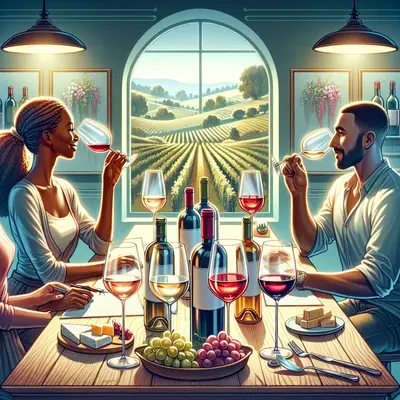
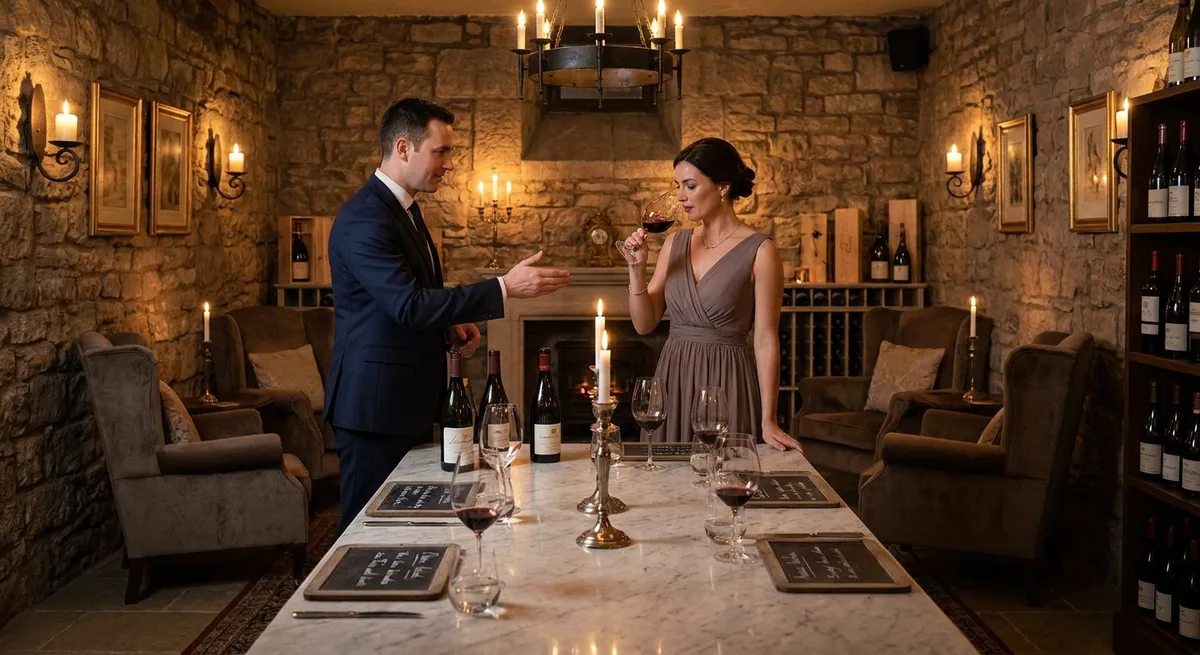
In a high-ceilinged tasting room with expansive vineyard views, a linear, high-acid white can feel almost orchestral—its clarity mirroring the clean horizon. In a candlelit cellar, a mature red with tertiary notes of leather, forest floor, and dried flowers gains resonance from the surrounding stone, wood, and shadows. The environment becomes an extension of the wine’s character.
When booking or designing wine tours, think in terms of curated settings rather than just itineraries. Morning tastings often favor precision whites and sparkling wines, when the palate is freshest. Late afternoon can be ideal for structured reds, when your sensory rhythm has slowed enough to appreciate depth and length.
The discreet art here is intentionality: choosing not just what you drink, but where, when, and with whom—so the wine is in harmony with the moment rather than merely present within it.
Five Exclusive Insights for the Attentive Enthusiast
For those seeking to refine their tasting practice beyond the obvious, these five insights can quietly elevate every experience:
- Prioritize structure before aroma.
Train yourself to assess balance—acidity, tannin, alcohol, and body—before cataloging flavors. This mirrors how professionals evaluate quality and aging potential.
- Listen for the “mid-palate conversation.”
Many wines impress on the attack and finish, but the mid-palate is where refinement shows. A hollow center often indicates simplicity, regardless of a compelling nose.
- Use one glass as your “control wine.”
During a tasting, choose a single wine to revisit repeatedly as your anchor. Observing how your perception of that wine changes over time sharpens your overall sensitivity.
- Practice comparative glassware trials.
When possible, taste the same wine in two different high-quality glasses. Subtle shifts in rim diameter and bowl shape can reveal or mute aromatics and texture, teaching you how profoundly presentation matters.
- Note emotional resonance, not just technical merit.
As palates mature, a key distinction emerges: some technically excellent wines leave you unmoved, while others quietly linger in memory. Record not only what you tasted, but how the wine made you feel—calmed, energized, contemplative, nostalgic. This emotional register often guides the most meaningful future selections.
Conclusion
Refined wine tasting is less a performance than a discipline of attention—an exercise in noticing structure, texture, silence, time, and context with increasing subtlety. For the discerning traveler, this approach turns every tour into more than a sequence of stops; it becomes a curated progression of experiences, each glass a study in craftsmanship and place.
When you approach wine not as a checklist of flavors but as an evolving, textured conversation, the world’s great vineyards reveal themselves with greater clarity—and a quiet, enduring sense of luxury.
Sources
- [UC Davis Viticulture and Enology – Wine Tasting Basics](https://wineserver.ucdavis.edu/industry-info/winemaking-basics/how-wine-tasting-works) – Overview of sensory evaluation and structural components in wine
- [Harvard T.H. Chan School of Public Health – Alcohol: Balancing Risks and Benefits](https://www.hsph.harvard.edu/nutritionsource/alcohol) – Evidence-based discussion of alcohol and health, useful for responsible wine enjoyment
- [Wine & Spirit Education Trust (WSET) – How to Taste Wine](https://www.wsetglobal.com/knowledge-centre/how-to-taste-wine) – Professional framework for assessing appearance, nose, palate, and quality
- [Decanter – Understanding Wine Texture](https://www.decanter.com/learn/understanding-wine-texture-485325) – Detailed exploration of how texture shapes wine quality and perception
- [BBC Travel – The Art of Wine Tourism](https://www.bbc.com/travel/article/20200927-the-future-of-wine-tourism) – Context on evolving wine tourism experiences and the importance of setting and ambiance
Key Takeaway
The most important thing to remember from this article is that this information can change how you think about Wine Tasting.