Wine tasting, at its most elevated, is less about performance and more about precision. It is a series of quiet decisions, each one sharpening your perception of what is in the glass. For travelers who seek vineyards not merely as backdrops but as laboratories of pleasure and place, refinement lies in the details: how you prepare, how you pace yourself, and how you listen—to the wine, to the winemaker, and to your own senses.
Below are five exclusive, often-overlooked insights that transform tasting from a pleasant diversion into a deeply informed, yet effortlessly elegant, ritual.
Preparing the Senses: Curating Your Tasting Environment
An elevated tasting experience begins long before the first pour. The most seasoned enthusiasts treat their senses as instruments that must be tuned. Avoid heavily perfumed products, strong coffee, or spicy meals in the hours leading up to a visit; each can mute or distort aromatics, particularly in delicate whites and mature reds. Hydration matters as well—water stabilizes your perception and helps you focus on structure rather than alcohol or heat.
Glassware, too, is an unspoken determinant of quality. A thin-rimmed, clear, tulip-shaped glass with sufficient bowl volume allows aromas to collect and evolve, revealing nuance as the wine warms subtly in your hand. On a curated wine tour, note which producers invest in serious stemware and which do not; this small detail often mirrors their broader philosophy of precision or practicality.
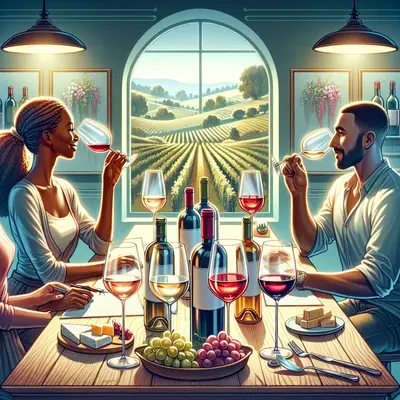
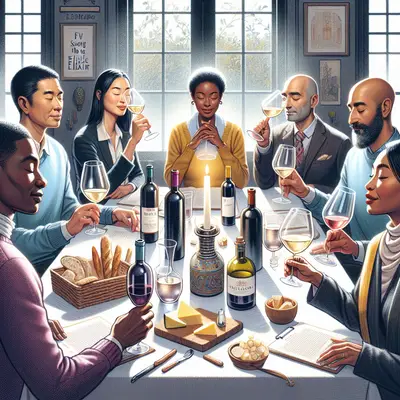
Consider the room itself: natural light, neutral colors, minimal background noise. These subtleties influence your interpretation more than most guests realize. When you have the opportunity, choose a position at a tasting counter or table where you are away from door drafts and kitchen aromas, and where the light allows you to actually see the wine’s color and rim variation. The result is an environment that quietly amplifies everything in the glass.
Reading the First Pour: What the Wine Reveals Before You Taste
Experienced tasters learn to “listen” to the wine before the first sip. The visual assessment is not a formality; it is a preliminary conversation. Tilt the glass over a white surface and observe clarity, color intensity, and the gradation at the rim. A pale lemon hue suggests something entirely different from a deep gold; a garnet core with brickish edges can hint at maturity, while a vibrant purple suggests youthful exuberance.
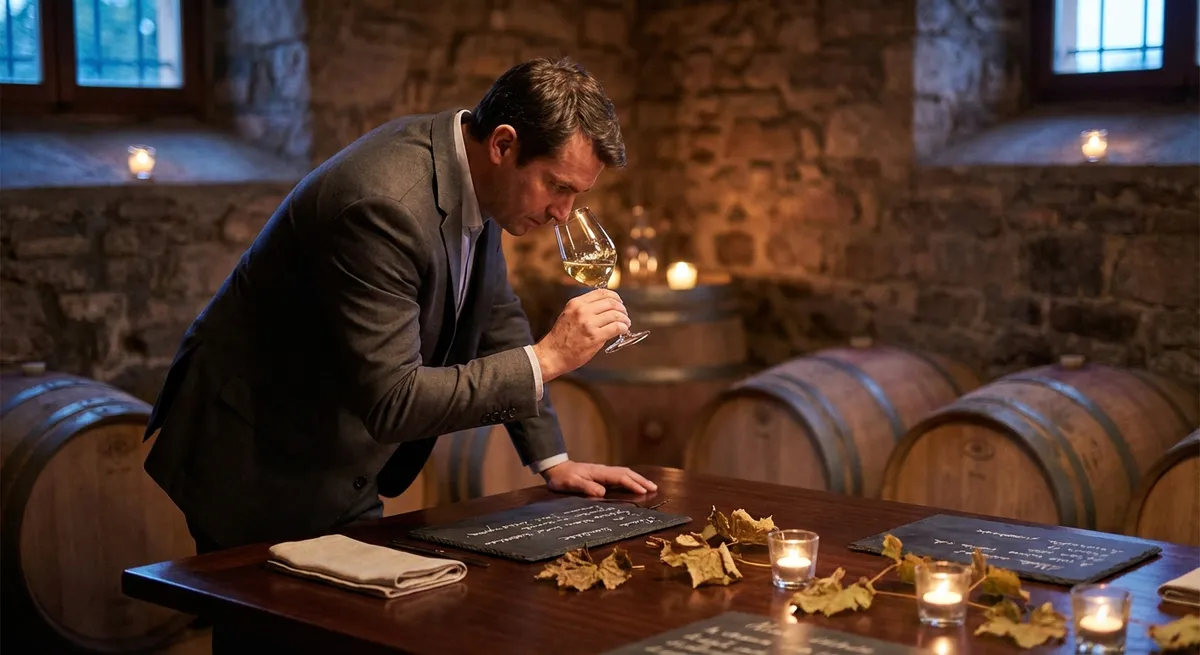
Next comes the first nosing, and here restraint is crucial. Instead of aggressively swirling from the start, take a gentle, still-glass sniff. This often reveals the most fragile and fleeting aromatics—fresh herbs, white flowers, subtle stone fruit, or delicate tertiary notes in older wines—that can be overwhelmed once you agitate the wine. Only then should you give the glass a measured swirl, allowing oxygen to wake up deeper layers of fruit, spice, and earth.
Pay attention not just to “what” you smell but “how” it presents itself. Are the aromas sharp and linear, or broad and diffuse? Focused aromatics often signal well-managed fruit and careful winemaking. More blurred or indistinct profiles may suggest overripe fruit, excessive extraction, or less precise handling. This doesn’t determine quality on its own, but it guides your expectations even before the first taste.
Precision Tasting: Texture, Cadence, and the Architecture of a Sip
Most casual tasters focus on flavor. Serious enthusiasts concentrate on architecture—how a wine is built on the palate. When you take your first sip, avoid an immediate verdict. Instead, think in three movements: entry, mid-palate, and finish.
On the entry, attend to temperature and attack. Does the wine glide in softly, or does it arrive with a bright, almost electric snap of acidity? As the wine moves across your tongue, assess texture: is it silky, chalky, waxy, powder-fine, or almost tannic and angular? These tactile impressions often reveal more about the wine’s origin and craftsmanship than flavor descriptors alone.
The mid-palate is where true quality tends to separate itself. In finer wines, the flavors seem to expand and gain dimension rather than collapsing or fading. Look for a sense of internal tension: the balance between fruit, acidity, tannin, and, in some cases, oak. This equilibrium is the hallmark of thoughtful viticulture and winemaking.
Finally, the finish is your most reliable benchmark. Count the seconds after you swallow or spit, noting how long flavors, texture, and even a sense of shape linger. Premium wines are often less about intensity and more about persistence—subtle notes that echo gracefully rather than shouting and then vanishing. In a well-paced tasting, give each pour enough time to “resolve” on your palate before moving to the next; rushing erases the very qualities you traveled to experience.
Context in the Glass: Linking Wine to Place, Season, and Story
What distinguishes a merely enjoyable visit from a truly memorable one is your ability to link the glass to the landscape and the season around you. When you stand among vines and later taste the wine they produced, you are afforded a rare alignment of context and content. Use it.
Ask where the grapes were grown, but go deeper: Which slope? What soil composition? How does wind, elevation, and diurnal shift influence ripening? A cool, windswept site can express itself as higher acidity and more restrained fruit; warmer exposures might yield plush, generous textures. When you revisit wines from that estate years later, these mental images of soil underfoot and light on the leaves will reappear with remarkable clarity.
Timing also matters. Visiting a region in different seasons offers contrasting narratives: pre-harvest tension, winter dormancy, spring budbreak, or summer canopy management. Each stage reveals a different facet of the wine’s eventual character. As you taste, recall the work you’ve observed in the vineyard—the pruning decisions, cluster thinning, soil management—and consider how those choices manifest as structure, concentration, or freshness in your glass.
The finest wine tours feel less like a series of stops and more like chapters in a story about place. You are not collecting labels; you are gathering perspectives on how different estates interpret the same climate, grapes, and culture. Over time, this comparative framework deepens your palate more effectively than any single “spectacular” bottle.
Conversing with the Cellar: Elevating Questions Beyond the Obvious
One of the most underused luxuries in a premium tasting is access to the people behind the wine. Winemakers, estate managers, and cellar hands are rarely interested in rehearsing marketing copy; they respond best to thoughtful, precise questions that reflect genuine curiosity.
Rather than asking, “What’s your best wine?” consider questions that reveal philosophy and intent:
- “How has your approach to oak or aging changed over the past decade?”
- “Which vineyard blocks do you find personally most challenging, and why?”
- “What recent vintage taught you the most, and what did it change about your decisions in the cellar?”
These prompts shift the conversation from simple description to insight. You begin to understand not just what is in the glass, but why it is that way.
Pay particular attention when a producer speaks about compromises—climate pressures, yield decisions, or changes in farming practices. The most compelling estates often demonstrate a willingness to adapt with integrity, rather than chase trends. As you taste through their range, try to connect their stated philosophy with tangible sensory evidence: is their pursuit of freshness truly echoed in acidity and alcohol levels? Does their emphasis on vineyard expression appear as less overt oak and more transparent fruit?
By approaching the tasting as a collaborative conversation rather than a one-way service, you not only gain richer knowledge, you often find doors quietly opening—to library releases, barrel samples, or limited cuvées rarely poured for the public.
Conclusion
Refined wine tasting is not about theatrical swirling or an endless vocabulary of tasting notes. It is about attention—directed, disciplined, and quietly curious. When you prepare your senses with intention, study the wine’s visual and aromatic cues, analyze structure as carefully as flavor, integrate context from vineyard to cellar, and engage your hosts with meaningful questions, each glass becomes more than a momentary pleasure. It becomes an encounter with craft, place, and time.
On your next journey with Wine Tour Adventures, carry these insights with you. They do not demand more effort—only more awareness. In exchange, the wines you meet will reveal themselves with greater clarity, and the memories you collect will be as layered and enduring as the finest, most gracefully aging bottles in any cellar.
Sources
- [UC Davis Department of Viticulture and Enology – Wine Tasting Basics](https://wineserver.ucdavis.edu/industry-info/wine-tasting) - Academic overview of sensory evaluation, tasting steps, and structure
- [Wine & Spirit Education Trust (WSET) – Systematic Approach to Tasting](https://www.wsetglobal.com/knowledge-centre/wset-systematic-approach-to-tasting-sat/) - Professional framework for visual, nose, and palate assessment
- [Institute of Masters of Wine – Understanding Terroir](https://www.mastersofwine.org/what-is-wine/terroir) - In-depth discussion of how place, climate, and soil shape wine character
- [Robert Mondavi Winery – Guide to Wine Glassware](https://www.robertmondaviwinery.com/blog/wine-glass-guide/) - Explanation of how different glasses influence aroma and taste
- [Cornell University – Wine Aroma: Science and Perception](https://grapesandwine.cals.cornell.edu/research-topic/wine-flavor-aroma/) - Research-based insight into how we perceive wine aromas and the factors that affect them
Key Takeaway
The most important thing to remember from this article is that this information can change how you think about Wine Tasting.