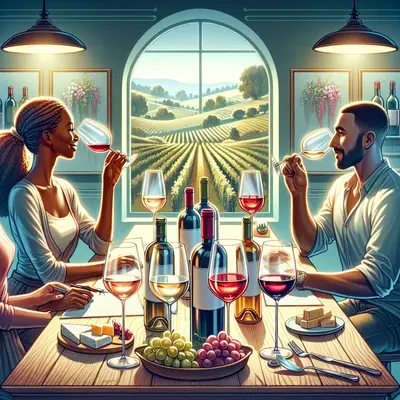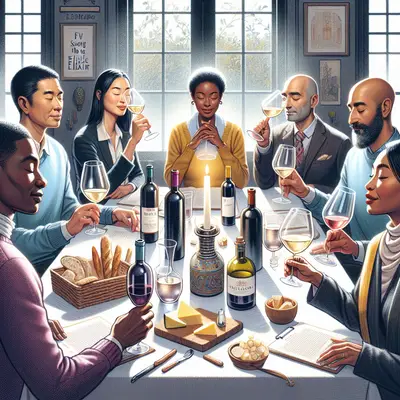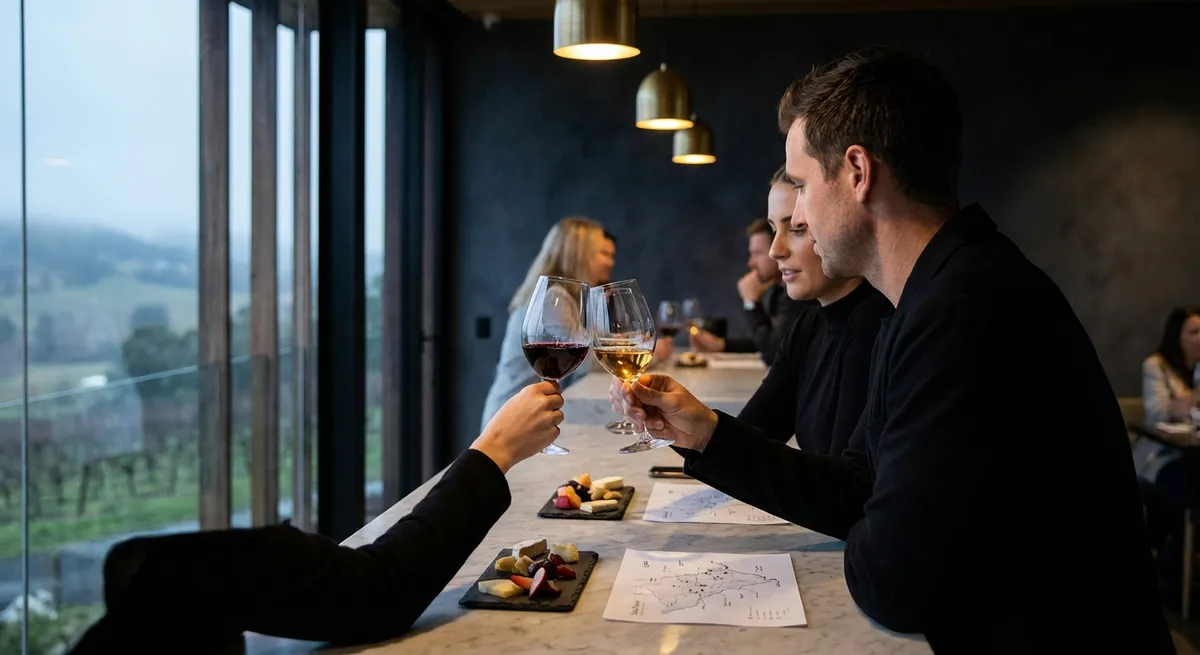
Wine tasting, at its most rewarding, is less a performance and more a private dialogue between you, the glass, and the place it comes from. For the discerning enthusiast, refinement lies not in ostentation but in an attuned, almost architectural understanding of how aroma, texture, and time interlock. This is where tasting becomes a cultivated ritual—quietly luxurious, deeply personal, and endlessly revealing.
Below, you’ll find five exclusive insights that move beyond the familiar swirl-and-sip, designed for those who wish to extract every nuance from a glass and every moment from a tasting experience.
Sensing the Wine Before You See It
Most tastings begin with the eye, but the most revealing begin with the air. As your glass rests on the table, pause before lifting it—breathe in the ambient space. Is the room scented with oak, stone, citrus, or lingering perfume? These surrounding aromas shape your first impression of the wine before it reaches your nose.
When you finally bring the glass closer, do so gradually, pausing at different distances: at arm’s length, nose-level without tilting, then finally with a gentle swirl. Notice how the aromatic intensity builds in layers—volatile esters (floral, fruity notes) appear first, followed by the deeper, slower-releasing tones of spice, earth, and wood. Tuning into this progression not only heightens your perception but trains your palate to associate aromatic tempo with grape variety, age, and winemaking style.
By the time you actually look at the wine, you’ve already built a sensory hypothesis that its color and clarity can confirm or challenge. This subtle inversion—smelling before seeing—sharpens your perception and makes each glass an unfolding narrative rather than a static object.
Reading Texture as a Signature of Place
Enthusiasts often focus on flavor vocabulary, yet true distinction lies in the ability to read texture—how the wine moves, clings, and finally recedes. Texture is the signature that often reveals climate, soil, and cellar decisions more honestly than aroma alone.
When you take a sip, let the wine travel deliberately: tip of the tongue, mid-palate, sides, then the back. Is the sensation powdery, silken, chalky, glossy, or almost saline? High-quality whites from limestone soils often carry a fine, chalk-dust grip; cool-climate reds can show tension like a taut string rather than broad, plush tannin; meticulously crafted sparkling wines feel creamy and persistent rather than aggressively fizzy.
Consider the architecture of the wine’s texture: does it rise, plateau, then fade, or does it unfurl slowly in a long, tapering line? Precision in describing this internal structure—“linear,” “spherical,” “layered,” “filigreed”—is the language of serious tasters. With practice, you will begin to recognize that a wine’s textural poise is frequently a clearer marker of quality than sheer intensity of flavor.
Calibrating Your Palate with Time, Not Just Glassware
Crystal stemware and properly shaped bowls unquestionably elevate a tasting, but one of the most underused tools of the serious enthusiast is time. How a wine evolves over minutes and hours is a quiet test of its integrity and its craftsmanship.
Instead of racing through a flight, choose one wine to revisit methodically. Take a small, measured taste at the first pour, mentally noting its initial profile. Then set the glass aside and return at 5, 15, and 30 minutes. In that span, does the wine close down, bloom, or become disjointed? Wines of depth often move through distinct “windows”: a shy beginning, an aromatic expansion, then a phase of calm, integrated harmony.
When visiting wineries, politely ask to compare a freshly opened bottle with one that has been open for a while, if available. The comparison is revelatory. A wine that gains complexity and grace with oxygen and time signals both thoughtful winemaking and aging potential. In contrast, wines that become coarse, hollow, or fatigued too quickly are often less structured than their initial charm suggests.
By consciously weaving time into your tasting, you shift from snapshots to a moving portrait of the wine, aligning your ritual more closely with the long arc of its life from cellar to glass.
Using Silence to Detect the Wine’s “Final Gesture”
The most sophisticated tasters listen to what happens after the sip is over. The finish—the lingering echo of flavor, texture, and sensation—is not just a measure of length; it is the wine’s final gesture, its last statement of character.
Once you swallow (or discreetly spit, in a professional setting), resist the temptation to speak immediately. Count silently to ten. What remains? Perhaps a fine, almost tactile chalkiness, a resonant line of citrus, a whisper of smoke, or a subtle, mouthwatering salinity. The longer and more precise this afterimage, the more likely you are in the presence of a carefully constructed wine.
Pay attention to the type, not just the duration, of the finish. A long but monotonously sweet finish is less intriguing than a medium-length finish that shifts—from fruit to spice to mineral. Wines of true refinement tend to leave a finish that feels composed rather than loud: clear, persistent, and calmly confident.
In a curated tasting, this quiet ten-second interlude between sips becomes a discipline. It not only deepens your reading of each wine but also slows the experience into a luxurious tempo, where every pour has room to make its full, unhurried impression.
Curating Your Own “Reference Library” of Tastes
Professionals rely on reference wines—benchmarks that define a particular style, region, or grape at its most articulate. Enthusiasts can borrow this approach, privately and elegantly, to train and refine their own tasting instincts.
Begin by selecting a handful of foundational categories: a classic cool-climate Chardonnay, a benchmark Cabernet Sauvignon from a respected region, an archetypal Pinot Noir, a traditional-method sparkling wine, and a reference-level Riesling or Chenin Blanc. For each, choose producers known for transparency of style rather than heavy-handed oak or showmanship.
Revisit these wines periodically over months or years, ideally in identical or comparable glassware and under similar conditions. They become your sensory anchors—allowing you to say, “This new wine is more linear than my reference Chardonnay,” or “These tannins are more polished than my usual Cabernet benchmark.” Over time, your internal library becomes as valuable as any expert’s tasting note.
When you travel on wine tours, seek one bottle per region that you feel best expresses the place with clarity and restraint. These “reference souvenirs” transform your cellar into a global atlas of taste—a quietly luxurious resource you can return to whenever you wish to recalibrate your palate or share a profoundly instructive tasting with like-minded companions.
Conclusion
The most memorable wine tastings are not defined by the number of labels or the prestige of the setting, but by the precision of your attention. By sensing the wine before you see it, learning to read texture as a signature of place, inviting time into each glass, listening to the wine’s final gesture, and cultivating your own reference library, you transform each tasting from a casual pastime into a refined, deeply personal exploration.
This is the quiet privilege of the devoted enthusiast: to find, in every thoughtfully poured glass, a composed experience of place, craft, and time—experienced not in haste, but in measured, discerning pleasure.
Sources
- UC Davis Department of Viticulture and Enology - Technical insights into wine components, structure, and sensory evaluation from a leading wine research institution.
- Institute of Masters of Wine – The Art of Tasting - Professional perspective on structured wine tasting and the role of time, texture, and finish.
- Wine & Spirit Education Trust (WSET) – Systematic Approach to Tasting - Detailed framework for evaluating sight, nose, palate, and conclusion in a disciplined way.
- Decanter – How to Taste Wine Like a Professional - Practical guidance and advanced tips on refining wine tasting technique.
- Cornell University – Wine Flavor Chemistry - Research-based overview of aroma, flavor, and texture compounds that shape sensory perception in wine.
Key Takeaway
The most important thing to remember from this article is that this information can change how you think about Wine Tasting.