Wine travel is no longer about simply “going tasting.” For discerning enthusiasts, it has become a quietly luxurious pursuit—an exploration of landscape, time, and craft that reveals itself only to those willing to look beyond the tasting bar. The most memorable wine tours are curated with intention: every appointment, every vineyard walk, every glass poured serves a purpose. This is where nuance matters, where a single vineyard row at dusk or a conversation in the barrel hall can define an entire journey.
Below are five exclusive insights designed for those who wish to elevate a wine tour from pleasant to truly distinguished—details that serious enthusiasts will recognize, and that transform a visit into an experience worth savoring long after the last bottle is opened.
Designing Your Day Around the Vineyard, Not the Tasting Room
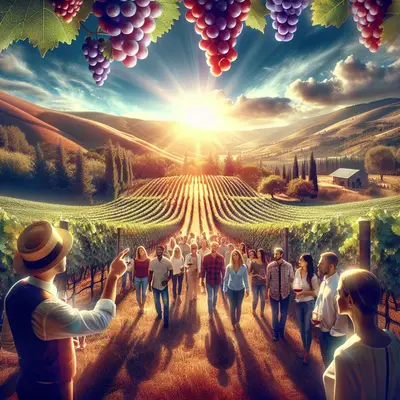
A refined wine tour begins with an understanding that the vineyard is the true heart of the estate. Tasting rooms, however elegant, are interpretations; the vines are the original text. When planning your visit, prioritize wineries that offer vineyard access—whether that’s an escorted walk through estate blocks, a drive into higher-elevation parcels, or a focused exploration of specific sites that define their top wines.
Timing is a subtle but powerful tool. Request morning or late-afternoon visits when light and temperature are gentler; you will perceive aromas differently in a cool barrel room at 10 a.m. than in a crowded tasting room at 3 p.m. Ask to see contrasts: older vs. younger vines, slope vs. valley floor, irrigated vs. dry-farmed parcels where relevant. These contextual details will later echo in the glass, allowing you to map flavors back to place. For the enthusiast, the most valuable souvenir of a wine tour is not only the bottles, but the mental “atlas” of terroir you carry home.
Reading a Cellar Like a Library of Intent
A thoughtful visitor treats the cellar as one might a private library: each vessel, barrel, and lot reveals the winemaker’s priorities. When offered a cellar tour, approach it not as a backdrop for photographs but as a living archive of decisions. Notice the proportion of new to used oak, the presence (or absence) of alternative vessels such as concrete eggs, amphorae, or large-format foudres, and how meticulously lots are separated or blended.
Ask targeted, technical yet respectful questions: Why this coopers’ selection? Why this toast level? How long on lees? Listen for the philosophy underpinning the choices—whether the goal is structure, texture, purity of fruit, or longevity. Enthusiasts will recognize that understanding élevage (the “raising” of a wine from fermentation to bottling) is essential to assessing age-worthiness and style. The cellar is where you glimpse the future of the wines you are tasting; reading it well allows you to anticipate how your purchased bottles will evolve over the next decade.
Curating Vertical Tastings to Trace Time, Not Just Vintage
Most visitors are content to taste a current release lineup; the serious enthusiast seeks something more revealing: a vertical. A well-designed vertical tasting—multiple vintages of the same cuvée—offers a rare opportunity to study how time, climate variation, and evolving winemaking decisions shape a single expression of terroir.
When arranging your tour, inquire in advance whether the estate can present older vintages of a key wine. Even three carefully chosen years can be transformative. Observe how primary fruit yields to secondary and tertiary notes—how a youthful, tightly coiled structure loosens into texture and aromatic complexity. Notice which vintages shine: cooler years may produce more tension and precision; warmer years more generosity and breadth. Enthusiasts will appreciate that a vertical tasting is as much about understanding a producer’s consistency and resilience across conditions as it is about deciding which vintage to acquire. It also refines your own calibration of age-worthiness for similar styles in your cellar.
Using Food Pairings as a Precision Tool, Not a Novelty
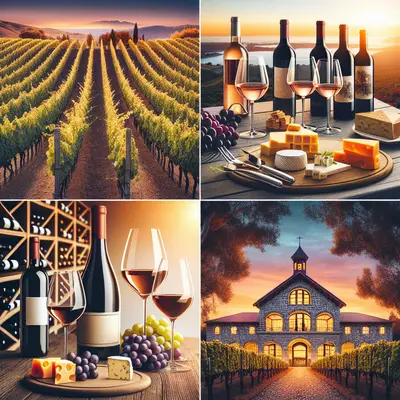
Food pairings are often treated as entertainment—charming, but secondary. For the devoted enthusiast, they become a precision instrument. A well-conceived pairing reveals a wine’s architecture: acidity, tannin, body, and aromatic profile all respond dynamically to salt, fat, umami, and spice. When a winery offers culinary pairings, view them as a structured tasting within a tasting.
Pay close attention to how each component changes the wine. How does a high-acid white respond to a rich cheese? Does a structured red become more polished with protein and salt? If a wine collapses beside a thoughtfully chosen dish, that tells you as much as when it elevates. Ask the culinary and hospitality teams about their methodology: did they build the dish around the wine, or select the wine for the dish? Enthusiasts will value these insights when planning their own dinners at home; a wine tour then becomes a masterclass in applied pairing rather than a series of pleasant bites.
Letting Geography Shape Your Itinerary Like a Fine Blending Trial
Most wine tours are planned around famous names or picturesque towns; the connoisseur takes a more architectural approach. Think of your day as a blending trial: each stop should add a distinct dimension—altitude, soil type, grape variety, or stylistic philosophy—resulting in a balanced “blend” of experiences by day’s end.
Begin by mapping the region not just in terms of distance, but of geology and microclimate. Combine, for example, a coastal, wind-swept site with an inland, heat-influenced appellation; juxtapose a historic benchmark producer with a small, experimental estate; include at least one visit focused on a grape or style you do not usually collect. This curated contrast sharpens your palate and frames the region as a mosaic rather than a monolith. Enthusiasts will recognize that the true luxury lies not in visiting the most wineries, but in experiencing a deliberate progression—one that leaves you with a coherent narrative of place, rather than disconnected highlights.
Conclusion
A sophisticated wine tour is not defined by the number of tastings or the prestige of the labels poured, but by the clarity of intention behind every appointment and every question you ask. By elevating your focus—from tasting room to vineyard, from label to cellar, from single vintages to verticals, from casual snacks to analytical pairings, and from random stops to a thoughtfully layered itinerary—you transform travel into study, and study into pleasure.
For the devoted enthusiast, this is the quiet apex of wine touring: the ability to step into any region and, with a few well-placed experiences, understand not only what you are drinking, but precisely why it matters.
Sources
- Wine Institute – California Wine Country Facts - Provides authoritative background on wine regions, climates, and appellations, useful for structuring geographically coherent itineraries.
- University of California, Davis – Viticulture and Enology - Offers scientific context on vineyard practices, terroir, and cellar techniques that inform deeper questions during winery visits.
- GuildSomm – Understanding Elevage - An in-depth exploration of élevage and cellar decisions, supporting insights on reading a cellar and assessing age-worthiness.
- Decanter – How to Organise a Vertical Wine Tasting - Explains the value and structure of vertical tastings, aligning with the article’s focus on tracing time through multiple vintages.
- Harvard T.H. Chan School of Public Health – The Nutrition Source: Wine - Provides evidence-based background on wine and health, relevant when considering responsible, extended tasting days and food pairings.
Key Takeaway
The most important thing to remember from this article is that this information can change how you think about Wine Tours.