Wine tasting, at its highest expression, is less about memorizing flavors and more about cultivating presence. The most rewarding experiences unfold not in hurried checklists of aromas, but in quiet, attentive moments when the glass, the setting, and the taster align. For the devoted enthusiast, refinement comes from nuance—those small, deliberate choices that transform a pleasant sip into a vividly memorable encounter. What follows is an exploration of wine tasting as an elegant ritual, with five exclusive insights designed for those who wish to approach each glass with intention, grace, and a connoisseur’s quiet confidence.
Reframing Tasting as a Sequence of Moments, Not Steps
Many guides treat wine tasting as a rigid series of tasks—see, swirl, sniff, sip—performed with mechanical precision. A more elevated approach is to view each wine as a sequence of unfolding moments, each deserving its own tempo and attention.
Begin not with the glass, but with the setting. Notice the light, the ambient sounds, the company. These are not distractions; they are the frame of the experience. When the wine is poured, allow a brief pause before engagement—observe how the color first appears at a glance rather than under scrutiny. Then, instead of a perfunctory swirl, consider two distinct movements: a gentle rotation to awaken the surface and a slightly firmer swirl if the wine seems reticent. Smelling, too, can be layered: a quick first impression, followed by a deeper, second inhale after a moment’s rest, and finally a third, focused perception once the wine has warmed slightly in the glass.
By breaking the ritual into moments rather than steps, you grant yourself permission to linger. This slower, more deliberate cadence not only enhances your sensory accuracy, it also conveys a quiet assurance—an elegance of manner that feels entirely at home in the most refined tasting rooms.
The Architecture of Aromas: Reading a Wine in Three Dimensions
For many enthusiasts, aromas become a crowded vocabulary—berries, stone fruits, herbs—until the experience collapses into a mental checklist. A more sophisticated approach is to think of a wine’s nose as a kind of aromatic architecture, with layers, height, and depth.
Imagine the first wave of aroma as the “facade”—the immediate, showier notes that present themselves at the rim of the glass. These are often fruit-driven and accessible. Just beneath that lies the “structure”: secondary notes of winemaking—oak, lees, malolactic character, or the subtle imprint of aging—that give the wine its composure and proportion. Finally, there is the “foundation”: those faint, often earthy or mineral tones that appear only after several minutes in the glass, or after a gentle warming in the hand.
Approach each aroma in three passes, asking: What captures my attention first? What sustains it? What lingers in the shadows? A cool-climate Pinot Noir, for instance, may open with red cherries and rose petals (facade), settle into tea leaf, faint clove, and fine-grained oak (structure), and eventually reveal forest floor, dried leaves, and a whisper of iron or stone (foundation).
This architectural mindset liberates you from searching for “the right answer” and instead invites you to sense proportion, balance, and harmony—qualities that separate a merely pleasant wine from a truly compelling one.
Exclusive Insight #1:
The most refined tasters are not those who identify the most descriptors, but those who can sense the architecture of a wine’s aromas: what is superficial, what provides structure, and what quietly anchors the experience.
Texture as a Language: Reading the Wine With Your Palate
While aroma often steals the spotlight, texture is where many truly great wines distinguish themselves. The tactile dimension—how the wine moves, settles, and fades—is arguably the most underappreciated frontier for enthusiasts pursuing deeper understanding.
Begin by separating the concept of body from the idea of shape. Two wines can share a similar body yet feel entirely different on the tongue. Notice whether the wine arrives softly and then builds, or whether it makes an immediate impact and tapers away. Does it feel spherical and enveloping, linear and precise, or angular with defined edges? Does the acidity run along the sides of the tongue in a focused line, or does it fan out more broadly?
Tannins, especially in red wines, offer their own subtle vocabulary. Rather than simply “firm” or “soft,” consider variations: powdery, chalky, silken, grainy, or suede-like. Where on the palate do they settle—front, mid, or back? In exceptional wines, tannins can feel almost architectural: supportive, never intrusive, shaping the wine’s profile without shouting.
A refined taster uses texture not just to judge quality, but to infer origin and winemaking choices. A razor-edged, linear Chablis speaks a different tactile language from a broad-shouldered, creamy Napa Chardonnay—even before specific flavors are named.
Exclusive Insight #2:
When evaluating a wine, silently describe its shape on your palate—linear, spherical, cascading, or angular. This private vocabulary of texture often reveals more about the wine’s pedigree and precision than its fruit profile alone.
Curating Your Own Tasting Atmosphere: Light, Glass, and Tempo
The most memorable tastings are rarely accidental. Behind them lies an invisible choreography of light, glassware, and pacing that subtly enhances perception. Enthusiasts who wish to elevate their home or private tastings can borrow this refined intentionality.
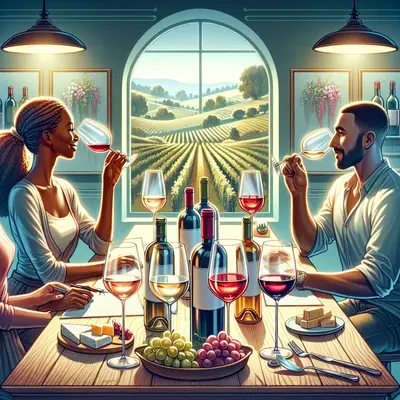
Light should be soft but revealing. Avoid harsh overhead glare; instead, favor indirect natural light or warm, diffused illumination that allows you to discern color gradients—from rim to core—without straining. Glassware need not be ostentatious, but it should be chosen with purpose: a slightly narrower bowl for aromatic whites, a more voluminous shape for complex reds, and perhaps a dedicated stem for sparkling wines with fine, persistent mousse.
Tempo matters just as much. Resist the urge to open multiple bottles in rapid succession. Instead, allow each wine a measured arc: initial impressions, a mid-glass reassessment, and a final evaluation as the last sips approach room temperature. You may find that the most intriguing transformations occur not in the first minutes, but in the quiet interim as conversation unfolds around the glasses.
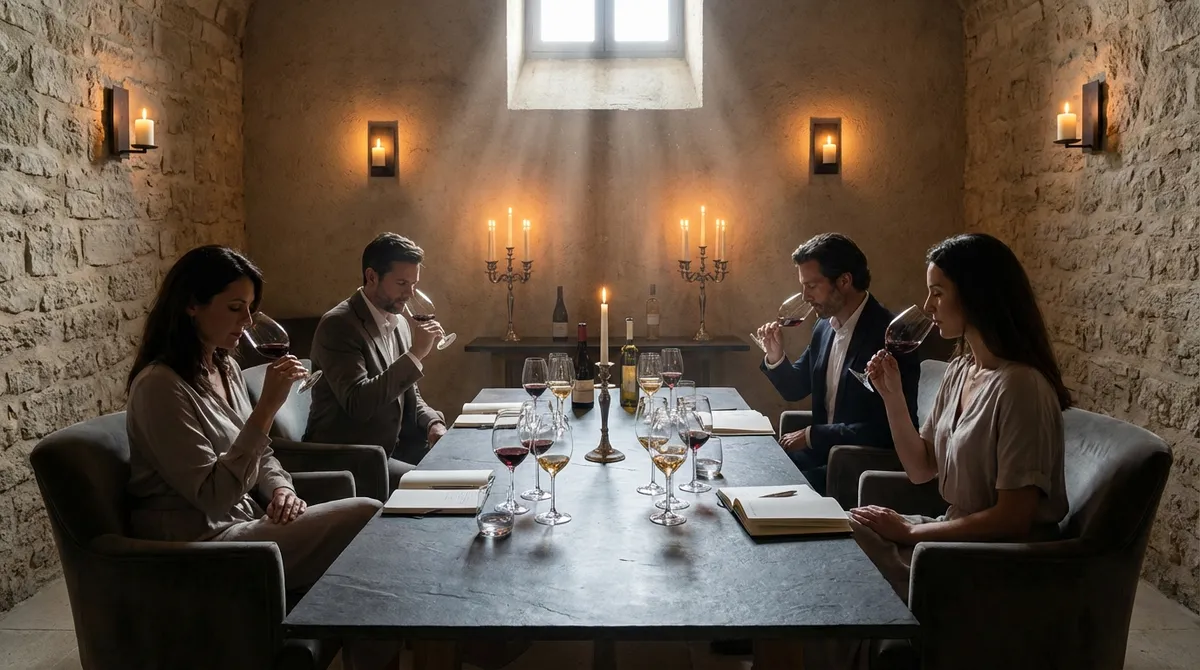
Even details such as table surfaces, background music, and the neutrality of scents in the room (no scented candles, minimal strong perfumes) influence perception. The goal is not clinical sterility, but curated neutrality—a setting in which the wine can speak clearly, without competition.
Exclusive Insight #3:
For an intimate, elevated tasting, set a deliberate “tasting window” for each wine—at least 20–30 minutes per bottle—so you experience not just what the wine is, but how it evolves in your glass.
Pairing Beyond the Plate: Matching Wine With Mood, Company, and Place
Classical pairings focus on food and wine, but discerning enthusiasts understand that the most powerful alignments are often intangible. The mood of the moment, the composition of the group, even the season can be as influential as any menu.
A contemplative evening with one or two close companions calls for wines with quiet complexity—bottles that reward slow conversation and attentive sipping: mature reds, old-vine white blends, or vintage Champagne that reveals new layers as it warms. A sunlit terrace lunch, by contrast, may be better served by high-acid, mineral-driven whites or graceful rosés that refresh rather than dominate.
Place matters, too. Tasting a coastal white while seated near the ocean, or a mountain-grown red in a cool, high-altitude setting, forges a subtle resonance between glass and surroundings. Even in urban environments, you can evoke a sense of place—pairing a structured, Old World red with a candlelit dinner in a historic building, or enjoying a sleek, modern blend in a contemporary, minimalist space.
When planning a wine tour or a private tasting, consider these elements as part of the selection process. The most exquisite experiences are those in which the wine seems almost inevitable—exactly the right companion for that particular room, that particular group, that particular evening.
Exclusive Insight #4:
Before choosing a bottle, ask not “What are we eating?” but “What kind of evening is this?” Let mood, pace, and place quietly guide your selection; food is only one part of a far broader pairing.
Building a Personal Memory Library: Turning Tastings Into Stories
Refinement in wine tasting is not about amassing trophies; it is about cultivating a private constellation of memories—moments when a glass, a setting, and a feeling aligned so precisely that they became unforgettable. The most seasoned enthusiasts keep not just lists of bottles, but narratives of experiences.
After each notable tasting, take a moment to record more than technical notes. Capture the context: Where were you? Who were you with? What was the weather like? How did the wine change from the first sip to the last? Did it surprise you, challenge you, comfort you? Over time, these details become more valuable than any single score or descriptor.
This narrative approach also sharpens your palate. When you revisit a region or grape, you are not starting fresh; you are calling upon a series of lived encounters—how a particular producer’s style resonated with you, how a certain vintage behaved with time, how your own preferences subtly shifted. It is this continuity of experience that gives your tasting life its depth.
In the context of wine tours, this memory library becomes a compass. It guides you toward producers whose elegance matches your sensibilities, and regions whose character you feel drawn to explore more deeply. Each new visit becomes less about checking off destinations and more about weaving a richer, more coherent story.
Exclusive Insight #5:
Treat every remarkable wine as a chapter, not an isolated event: record the setting, the company, the evolution in the glass, and your emotional response. Over years, this becomes your most valuable cellar—the one you carry entirely in memory.
Conclusion
Elevated wine tasting is not a performance, but a cultivated presence—a way of moving through each experience with considered attention and quiet curiosity. When you regard tasting as a series of moments rather than steps, perceive aromas as architecture, listen carefully to texture, choreograph your environment, and weave each bottle into your personal narrative, you step into a far more refined relationship with wine.
The true luxury lies not in rarity alone, but in how completely you allow yourself to be immersed in the glass before you. With each thoughtfully chosen bottle and each unhurried sip, you are not merely consuming wine—you are composing a life of nuanced, enduring, and exquisitely remembered experiences.
Sources
- UC Davis Department of Viticulture and Enology - Research-based insights into wine sensory evaluation, structure, and winemaking techniques
- Wine & Spirit Education Trust (WSET) – Systematic Approach to Tasting - Professional framework for analyzing appearance, nose, and palate
- GuildSomm – Tasting Method - Advanced perspectives on tasting, structure, and evaluation used by sommeliers
- Harvard T.H. Chan School of Public Health – Alcohol and Health - Evidence-based discussion of wine and alcohol consumption in a health context
- Napa Valley Vintners – Wine Service & Tasting Tips - Practical guidance on glassware, serving, and tasting etiquette from a leading regional organization
Key Takeaway
The most important thing to remember from this article is that this information can change how you think about Wine Tasting.