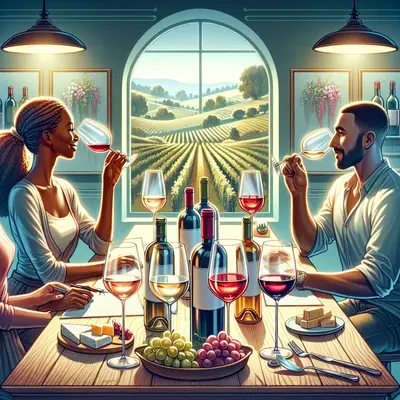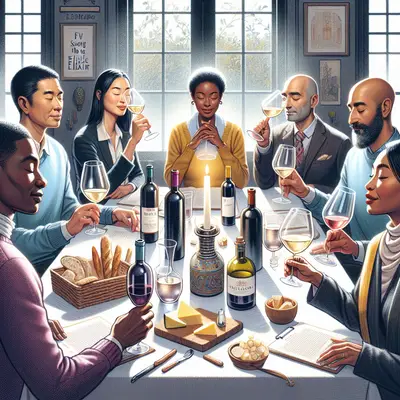
There is a moment, just before the first sip, when the glass hovers between anticipation and revelation. For discerning travelers and seasoned collectors alike, that moment is where wine tasting ceases to be a casual pleasure and becomes a finely tuned craft. Beyond the familiar swirl-sniff-sip routine lies a quieter, more intricate world—one defined by precision, patience, and a deep respect for what’s in the glass. This is where wine stops being something you simply drink and becomes something you truly understand.
Tasting in Tempo: Why Pacing Changes the Wine Itself
The most refined tastings are orchestrated experiences, not a rapid procession of pours. Time, as much as terroir, transforms what you perceive in the glass.
Professional tasters understand that wine unfolds in distinct chapters: the immediate impression, the mid-palate evolution, and the lingering finish. Rushing compresses these stages into a blur. Letting each sip sit in the mouth for a moment—moving it gently across the palate—allows structure and nuance to emerge: the exact shape of acidity, the grain of the tannins, the quiet shift from fruit to minerality.
Pacing also reveals how a wine behaves with oxygen. The first nose might be reticent; five minutes later, the same wine can express new aromatics: graphite where there was only dark fruit, jasmine rising out of a formerly closed white. In a curated tasting, repeating the same wine at 10–15 minute intervals can be more enlightening than moving on too quickly. The intent is not to taste more wines, but to understand each one more deeply.
This calibrated tempo is particularly crucial when visiting premium wineries, where allocations can be limited and vintages precious. Thoughtful pacing turns a brief tasting into a layered exploration, capturing a wine’s full narrative rather than a single snapshot.
Temperature as a Precision Tool, Not a Rough Guideline
Most advice on serving temperature is generic; refined tasting treats it as a precise instrument. A difference of just a few degrees can recast a wine’s entire personality.
Structured whites—Burgundian Chardonnay, fine Riesling, barrel-fermented blends—often show best just cool, not cold. Over-chilling suppresses complexity, muting texture and aromatics in favor of a blunt impression of acidity. Allowing the glass to warm slightly in your hand, and deliberately returning to it after several minutes, can reveal a subtle creaminess, a deeper stone-fruit core, or a more articulate mineral line.
Serious reds suffer in the opposite direction. “Room temperature” was coined in cooler European interiors, not modern heated spaces. When poured too warm, alcohol looms large, the nose feels diffuse, and the wine seems heavier than it is. At a slightly cooler serving temperature, tannins feel tighter and more finely woven, spice tones are better defined, and the finish more focused.
The most attentive wineries build temperature transitions into their tastings: beginning with vivacious whites served cooler, then moving to textural whites and lighter reds at slightly higher temperatures, before finally unveiling structured reds at a curated “sweet spot.” The enthusiast who pays attention to these small degrees of difference begins to perceive wine not as static, but as a living, temperature-sensitive composition.
The Architecture of a Flight: Reading a Winery’s Intent
To the casual visitor, a tasting flight is a list. To the experienced enthusiast, it is a map of the estate’s vision.
The order of wines is rarely accidental. Beginning with a precise, terroir-driven white may signal that the winery views place as the core of its identity. Opening with a non-vintage sparkling can highlight a philosophy of craftsmanship over single-year expression. Positioning a single-vineyard bottling between an estate blend and a flagship cuvée can reveal how the winemaker conceives hierarchy: not simply “good, better, best,” but a progression from breadth to focus to depth.
Paying attention to vintage order within a flight is equally revealing. When an estate presents multiple vintages side by side, you are effectively invited into the winemaker’s archives. Cooler, more restrained years may be shown next to riper, more opulent ones to illustrate how house style persists—or evolves—across climatic variation.
A refined tasting experience is heightened by asking questions that go beyond “What grapes are in this?”: Why was this particular wine chosen to follow the previous one? What do you want guests to notice in this sequence? These questions often uncover the intellectual backbone of the estate—its philosophy of blending, aging, and what it chooses to showcase (or omit) in a limited tasting.
Texture as the Quiet Luxury: Training Attention Beyond Flavor
Most tasting notes default to fruit, spice, and floral descriptors. Yet the most memorable wines at premium estates are often defined less by aroma and more by texture—the tactile experience of the wine on the palate.
A finely crafted white might move from a feather-light, almost saline entry to a gently gliding mid-palate that feels like cool silk. A high-elevation red may carry a distinct, powdery tannin profile—firm yet exceptionally fine—that sets it apart from denser, more muscular wines. Texture is where viticulture, picking decisions, and élevage converge: canopy management influences phenolic ripeness; harvesting windows affect acidity and tannin; vessel choice—concrete, amphora, neutral oak, or new barrique—sculpts how all of this feels in the mouth.
In a thoughtfully led tasting, great hosts will sometimes invite you to focus on texture separately from flavor. Taking a sip, closing your eyes, and briefly ignoring aroma can reveal whether the wine feels linear or spherical, weightless or ample, polished or intentionally rustic. This is often where premium craftsmanship justifies its quiet premium: two wines with similar flavors may differ drastically in finesse.
For the practiced enthusiast, noting texture alongside aromatic profile turns casual impressions into a more sophisticated internal library. Over time, these tactile memories become as evocative as any list of descriptors.
The Art of Returning: Re-Tasting as the Mark of a Serious Enthusiast
One of the most exclusive, yet least discussed, habits of seasoned tasters is the deliberate act of returning—re-tasting the same wine at carefully chosen intervals.
On a well-planned visit, this might mean keeping a small measure in the first glass while you move through the rest of the flight, then revisiting it after you’ve tasted everything else. Context reshapes perception: what once seemed delicate may read as vividly precise after a powerful red; a wine that felt opulent at first might later appear remarkably balanced.
Re-tasting also highlights a crucial dimension of collectable wines: their ability to hold and evolve in the glass. A wine that opens awkwardly but resolves into harmony with air often suggests aging potential. Conversely, a wine that starts exuberant but quickly fades may be at its peak—wonderful now, but not for long-term cellaring.
For truly exceptional bottles, this practice can extend across an entire evening: tasting upon opening, then after 30 minutes, an hour, and beyond. Premium wineries sometimes emulate this on-site, discreetly decanting important wines in advance so that guests encounter them at their most articulate. Embracing the art of returning transforms tasting from a single moment of judgment into an ongoing conversation with the wine.
Conclusion
Wine tasting at its highest level is not about chasing superlatives or accumulating scores. It is the refined practice of paying attention—of honoring the details that separate the merely excellent from the quietly extraordinary. When you taste in tempo, treat temperature as a precision tool, read the architecture of a flight, attune yourself to texture, and cultivate the art of returning, you enter a more intimate dialogue with every glass.
For travelers who seek more than a pleasant afternoon among the vines, this is where Wine Tour Adventures truly begins: in the cultivation of a palate that is not only discerning, but deeply curious—one that understands that the most profound wines rarely shout. They reveal themselves, deliberately, to those who know how to look.
Sources
- [University of California, Davis – Wine Tasting: A Professional Handbook (publisher page)](https://www.ucpress.edu/book/9780123743819/wine-tasting) - Overview of professional tasting methodology and palate evaluation
- [Wine & Spirit Education Trust (WSET) – How to Taste Wine](https://www.wsetglobal.com/knowledge-centre/wine/how-to-taste-wine/) - Structured approach to tasting, including appearance, nose, and palate assessment
- [Wine Spectator – The Right Temperature to Serve Every Wine](https://www.winespectator.com/articles/what-is-the-right-temperature-to-serve-wines) - Detailed guidance on serving temperatures and their impact on wine perception
- [Decanter – How to Serve Wine: Temperature, Glassware and Decanting](https://www.decanter.com/learn/how-to-serve-wine-329719/) - Practical insights into temperature control, decanting, and presentation
- [Harvard T.H. Chan School of Public Health – Alcohol: Balancing Risks and Benefits](https://www.hsph.harvard.edu/nutritionsource/alcohol-full-story/) - Evidence-based discussion of alcohol consumption to inform responsible enjoyment
Key Takeaway
The most important thing to remember from this article is that this information can change how you think about Wine Tasting.