Wine tasting, at its most rewarding, is less a performance than a cultivated conversation—between vineyard and vintage, glass and guest. For the discerning traveler and devoted enthusiast, the true pleasure lies not in grand gestures, but in the quiet precision of perception: how texture unfurls, how aroma evolves, how time itself leaves its signature on a single sip. This is where wine moves beyond pastime and becomes a discipline of attention, a refined lens through which to experience place, craft, and culture.
Below, we explore a more intricate vocabulary of taste—five exclusive insights designed for those who seek not just to drink, but to understand.
The Architecture of Time: Reading a Wine’s “Trajectory” in the Glass
A serious taster does not judge a wine at one static moment. Instead, they attend to its trajectory—from the first contact on the palate to the final, fading echo.
Begin by noting the sequence rather than the sum: How does the wine arrive? Does it come in quietly, then expand? Or does it offer an immediate burst of flavor that quickly narrows? Mid-palate, pay attention to shape: some wines feel spherical and harmonious, others linear, arrow-like, or even layered in tiers of flavor. Finally, listen to the finish—not just how long it lasts, but how it resolves. A great wine does not simply disappear; it tapers with intention, often leaving a final, whispering note of salinity, spice, or floral lift.
Over a tasting flight, compare these trajectories. You’ll begin to perceive what separates a merely pleasant wine from one that is structurally composed—architected, even—for complexity and longevity.
Texture as a Signature: Beyond “Smooth” and “Full-Bodied”
Advanced tasters treat texture as meticulously as chefs treat knife work. Body is only the beginning; the true intrigue lies in the micro-textures that give wine its tactile identity.
Notice the grain of the tannins: are they powder-fine like cocoa, chalky like limestone, or firm and angular like black tea? In white wines, feel for a quiet oiliness, a satin sheen, or an almost crystalline crispness. Acidity is best understood not only as “high” or “low,” but as a line of energy: sharp and vertical, or wide and gliding. Some wines feel almost architectural on the tongue, with vertical lift and horizontal breadth in tension.
Allow yourself several seconds with each sip. Instead of chasing more flavor, focus on how the wine moves and settles. With practice, you will begin to associate certain textures with particular regions, soils, and climates—texture becomes the winemaker’s and vineyard’s handwritten signature.
The Quiet Role of Temperature: Calibrating the Ideal Window
For refined tasting, “serve red at room temperature” and “chill whites” are imprecise to the point of misleading. Truly attentive wine service treats temperature as a finely tuned instrument, not a blunt instruction.
Slightly cooler service for reds—often in the 15–18°C (59–64°F) range—can sculpt structure, highlight freshness, and refine the perception of alcohol. Whites and sparkling wines show their complexity not when ice-cold, but in the 8–12°C (46–54°F) window, where aromatics unfurl and texture emerges from the chill. As wine warms in the glass, observe how its personality shifts: fruit may feel riper, tannins soften, florals appear or recede.
When touring wine regions, note how the most meticulous producers handle service: subtle chilling sleeves on reds in warmer climates, different glass sizes to regulate temperature, quiet decanting for structured whites. Temperature, properly respected, is one of the most elegant tools for revealing a wine’s full dimension.
Silence as a Tasting Tool: Training the Inner Archive
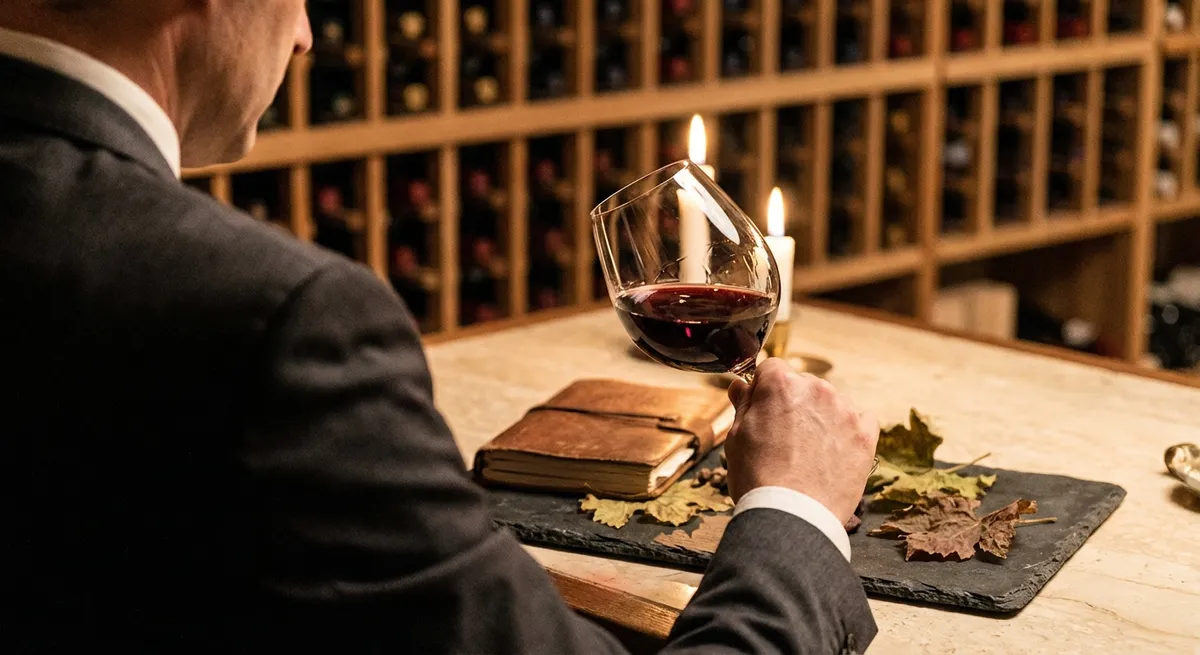
The most insightful tasters cultivate not just a sharp palate, but a disciplined kind of silence—an internal archive where impressions are registered and compared before they are spoken.
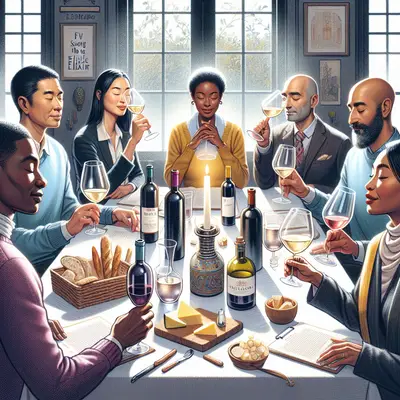
In a tasting setting, take your first moments in deliberate quiet. Rather than immediately naming fruits or spices, first register broader sensations: tension versus ease, density versus lift, brightness versus shadow. Only once the emotional contour of the wine is clear do you refine into specifics—citrus or stone fruit, red or black berries, fresh herbs or dried.
Over time, these quiet impressions accumulate into a private library of reference points: the steeliness of a northern European Riesling, the textural plushness of a sun-drenched Mediterranean red, the restrained perfume of high-altitude Pinot Noir. This internal archive becomes invaluable when touring wineries; you will recognize kinships across vintages and producers, allowing you to perceive not just a wine, but a lineage.
The Art of Comparative Tasting: Elevating Context Over Novelty
Exclusive experiences are not necessarily about rare labels or unreachable price points; they are often about the precision of context. Comparative tasting, done thoughtfully, is one of the most refined ways to cultivate depth rather than mere breadth.
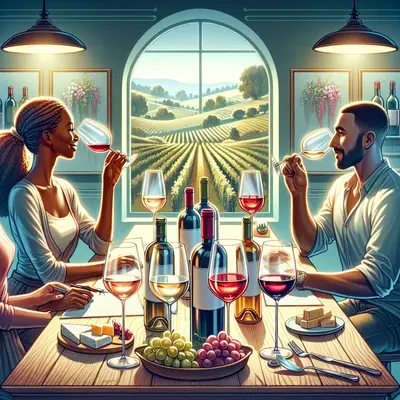
Instead of sampling an endless assortment, select a focused comparison: the same grape from two different regions; two vintages from the same estate; an oak-aged versus unoaked expression of the same wine; or wines grown on contrasting soils (limestone versus granite, clay versus sand). Arrange them so you can move back and forth in silence, allowing the differences to reveal themselves slowly.
As you do this, you begin to understand not just “what” you like, but “why” you like it: are you drawn to tension or generosity, chalkiness or silk, savory restraint or opulent fruit? This clarity transforms the way you travel, taste, and collect, turning each future visit into a curated exploration rather than a series of disconnected impressions.
Conclusion
For the refined wine traveler, true luxury lies less in extravagance than in precision—of context, of perception, of time given generously to a single glass. By attending to trajectory, texture, temperature, silence, and comparative nuance, you elevate wine tasting from a pleasant diversion into an artful practice. Each bottle becomes not just a beverage, but a carefully crafted experience: an encounter with place, season, and human intent, distilled.
In that attentive space, wine reveals what it has always promised the patient drinker: not spectacle, but quiet, enduring depth.
Sources
- [University of California, Davis – Wine Flavor 101](https://winestudies.ucdavis.edu/news/wine-flavor-101) – Overview of structural elements of wine (acidity, tannin, body) and how they shape flavor and texture
- [Cornell University – The Science of Wine Tasting](https://grapesandwine.cals.cornell.edu/news/the-science-of-wine-tasting/) – Explores sensory evaluation, perception, and how we interpret wine aromas and flavors
- [Wine & Spirit Education Trust (WSET) – How to Taste Wine](https://www.wsetglobal.com/knowledge-centre/wine/how-to-taste-wine/) – Professional framework for systematic wine tasting and evaluation
- [Decanter – Ideal Serving Temperatures for Wine](https://www.decanter.com/learn/serve-wine-temperature-329546/) – Detailed guidance on temperature ranges for different wine styles and their effect on aroma and structure
- [National Institutes of Health – Sensory Perception of Flavor](https://www.ncbi.nlm.nih.gov/pmc/articles/PMC4014460/) – Scientific perspective on how the brain processes aroma, taste, and mouthfeel
Key Takeaway
The most important thing to remember from this article is that this information can change how you think about Wine Tasting.