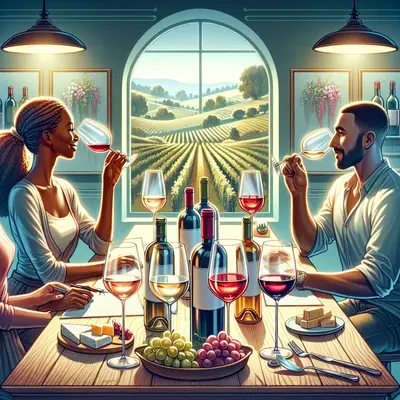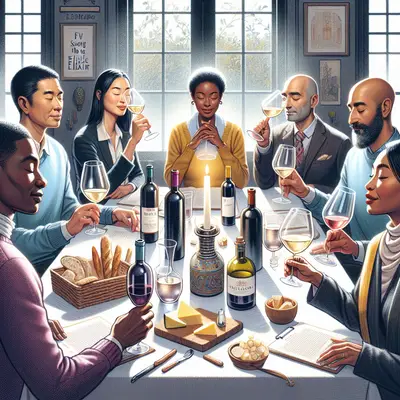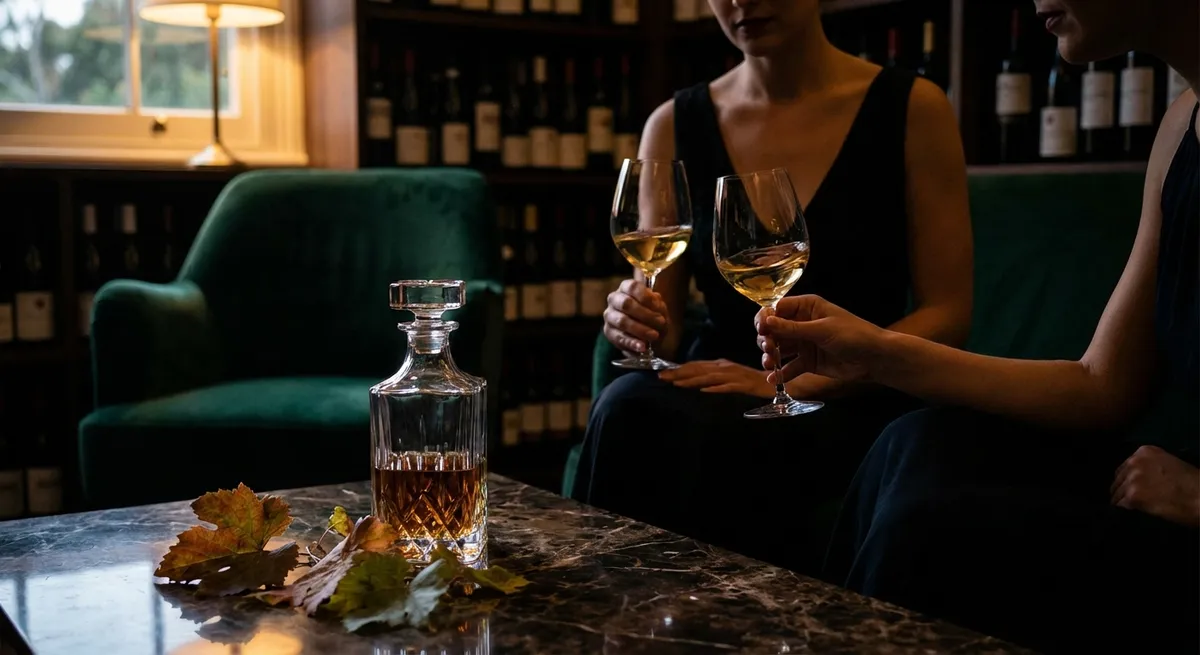
Wine tasting, at its highest expression, is less about performance and more about precision. The most rewarding moments often happen in quiet: a shift in texture on the mid-palate, a fleeting floral note that appears only once the wine warms slightly in the glass, the way a particular vintage holds its line from first sip to final echo. For the dedicated enthusiast, the true luxury lies not in spectacle, but in the depth of attention brought to each pour. This is where tasting becomes a craft in its own right—measured, meticulous, and quietly indulgent.
Below are five exclusive, nuanced insights designed for those who have moved beyond the basics. They are not rules, but finely tuned instruments to deepen your experience, whether in a grand château, a tucked-away estate, or your own living room.
The Temperature Window: Tasting in Degrees, Not Generalities
Many enthusiasts know the broad strokes—reds at room temperature, whites chilled—but refined tasting demands a narrower lens. The ideal window is often a span of just a few degrees, and the difference can be transformative.
Serve a structured white Burgundy at 6°C (43°F), and its minerality may feel sharp, its oak tight, its fruit reticent. Allow it to rise slowly to 11–13°C (52–55°F), and layers of hazelnut, baked apple, and subtle toast begin to unfold. Likewise, a finely tuned Pinot Noir served at a typical “room temperature” of 22°C (72°F) can feel loose, overly alcoholic, and indistinct. Drop it to 15–17°C (59–63°F), and suddenly the wine regains definition—red fruits sharpen, florals lift, and the tannins refine into silk.
For a premium tasting, approach temperature as you would lighting in a gallery: adjustable and purposeful. Use a simple wine thermometer or an instant-read probe and note not just the wine’s flavor, but the exact degree at which it feels most complete to you. Over time, you build your own personal temperature map—a quietly powerful advantage when evaluating cellar potential, restaurant lists, or older vintages that open slowly.
Glass Architecture: How Shape Directs Texture, Not Just Aroma
Much is said about glassware and aromatics, but for seasoned tasters, the real intrigue lies in how glass shape choreographs texture. Rim width, bowl height, and the angle of the glass all influence where the wine lands on the palate and how it moves.
A tall, tulip-shaped glass with a narrow opening subtly directs wine toward the center of the tongue, emphasizing linearity, freshness, and vertical structure—often ideal for high-acid whites and sparkling wines. A broader-bowled glass with a wider rim allows wine to fan out more quickly across the palate, highlighting volume, suppleness, and breadth—well suited to generous, textural reds or richly styled whites.
The most telling exercise for an experienced enthusiast is comparative: taste the same wine in two radically different glasses and pay attention not to aroma first, but to the sensation of shape in your mouth. How quickly does the wine spread? Where do you feel the tannins—front of the gums, sides, or deeper in the cheeks? Does the finish narrow elegantly or dissipate abruptly?
Over time, you’ll stop thinking of glasses merely by grape or brand and start pairing them by architecture and intent: a precise glass for wines of detail and tension, a more expansive glass for wines of opulence and weight. It is a subtle, almost invisible upgrade that quietly elevates every serious tasting.
The Temporal Curve: Reading a Wine Over 60 Meaningful Minutes
Truly premium wine tasting is not a snapshot; it is a slow unfolding. Rather than judging a wine in a few hurried sips, consider the pleasure of tracking its evolution over an entire hour—or longer.
Begin with a first assessment immediately after pouring: aromatics, structure, energy. Then, simply let time work. Swirl gently every ten minutes, taking small, focused sips. Notice which aspects of the wine move and which remain constant. Does a young Bordeaux, initially dominated by oak and tannin, gradually reveal graphite, cassis, and refined floral tones? Does an aged Riesling oscillate between petrol, citrus oil, and honeyed depth as it takes on air?
This temporal approach offers two distinct advantages. First, it reveals the wine’s internal coherence—whether its fruit, tannin, acidity, and alcohol stay in harmony as the minutes pass. Second, it trains your palate to sense potential: a wine that gains precision, clarity, and detail over time often has the architecture to age gracefully.
For a heightened experience, keep brief notes at 0, 15, 30, 45, and 60 minutes—a few words each time. Over multiple tastings, patterns emerge: the regions and producers whose wines unfurl slowly and gracefully, and those whose impact is front-loaded but fleeting. In a world of quick impressions, this is a quietly luxurious way to taste.
Texture as a Primary Lens: Tasting With Your Mouth, Not Just Your Nose
Aromas often steal the spotlight, but for the seasoned taster, texture is where true distinction lies. Two wines may share similar flavor profiles—red berry, violet, spice—yet feel entirely different in the mouth. It is that tactile difference, more than familiar descriptors, that separates the exquisite from the merely pleasant.
Approach your next tasting as a study in touch. After the initial aromas, close your eyes and focus on the physical experience: Is the entry gentle, immediate, or almost imperceptible? Do tannins feel powdered, chalky, velvety, or granular? Does the acidity present as a fine, vertical line of freshness or as a broad, mouthwatering wash?
Notice, too, the cadence. Some wines glide in a single, seamless motion; others unfold in stages—silky entry, then a rising firmness, then a final, lingering echo. With white wines, pay attention to creaminess versus tension, the interplay between weight and lift. With sparkling wines, observe whether the mousse is coarse and aggressive or ultra-fine and cushioning.
By elevating texture to a primary lens, you move beyond generic labels like “smooth” or “full-bodied” and begin to build a more nuanced, personal vocabulary: feather-light yet persistent, tensile but gracious, gossamer on entry with a firm spine. This is the language of truly refined tasting.
Contextual Pairing: Matching Wines to Moments, Not Just Menus
Classic food-and-wine pairing is foundational, but the most memorable tastings often arise when the wine is harmonized not only with the dish, but with the moment itself: time of day, setting, company, even the emotional tenor of the occasion.
A structured, contemplative red with intricate tannins may be best appreciated in a quieter, more focused environment—an unhurried evening, soft light, perhaps a single course served slowly. A luminous, high-acid Champagne or mineral-driven white can be perfect for late-afternoon tastings when the palate is still alert, the mind bright, and conversation lively.
For an elevated experience, consider designing an entire tasting around mood and pacing. Begin with something precise and invigorating to sharpen the senses, then progress toward wines with increasing depth, texture, and complexity as the evening deepens. Align the music, lighting, and glassware accordingly, so that each pour feels intentional, not incidental.
This level of curation is where wine tasting becomes an art of hospitality. It respects the wine, certainly, but also honors the people gathered and the moment they are inhabiting. In that synergy, even a modest bottle can feel quietly luxurious, and a great bottle can become unforgettable.
Conclusion
Refined wine tasting is not about reciting encyclopedic knowledge or amassing rare labels; it is about cultivating a heightened sensitivity to the small, decisive details that separate the memorable from the ordinary. Temperature tuned by degree, glassware chosen for architecture rather than fashion, time treated as an ingredient, texture elevated to center stage, and context curated with intent—these are the quiet disciplines that transform tasting from habit into art.
For the devoted enthusiast, the reward is twofold: a deeper understanding of the wines themselves, and a richer appreciation of the occasions they grace. In this subtle pursuit, every bottle becomes an opportunity not merely to drink, but to truly experience.
Sources
- University of California, Davis – Wine Storage and Serving Temperature – Technical guidance on ideal storage and serving temperatures for different wine styles
- RIEDEL Official Site – Wine Glass Shapes & Function – Detailed discussion on how glass shape influences aroma and palate perception
- Wine & Spirit Education Trust (WSET) – Systematic Approach to Tasting – Professional framework for assessing appearance, nose, palate, and development over time
- Harvard T.H. Chan School of Public Health – Alcohol: Balancing Risks and Benefits – Evidence-based overview on alcohol consumption and health considerations
- Decanter Magazine – How Long Can Wine Sit Open? – Insight into how wines evolve with oxygen and time after opening
Key Takeaway
The most important thing to remember from this article is that this information can change how you think about Wine Tasting.