Wine tasting at its finest is less a pastime than a private ritual—an interplay of attention, memory, and quiet revelation. For the traveler who seeks more than a passing sip at the bar, the glass becomes a lens: onto landscape, time, and the choices of a winemaker who will likely never be in the room. This is where Wine Tour Adventures lives—at the intersection of journey and discernment—curating experiences in which each pour feels intentional, not incidental.
Below, you’ll find five exclusive insights designed for the enthusiast who already knows the basics and is ready to deepen both palate and pleasure.
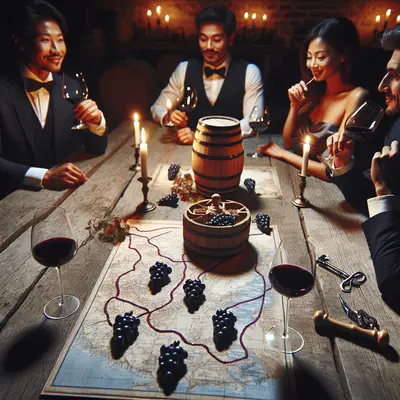
Tasting as Cartography: Reading a Wine Like a Landscape
Advanced tasters often describe great wines as “three-dimensional.” What they are really describing is a kind of internal mapping: the way a wine unfolds from entry to finish, and how each stage sketches its own geography on the palate.
Begin by noting shape rather than flavor. Does the wine arrive broad and enveloping, then taper into a narrow, precise finish? Or does it glide in quietly, gather momentum at mid-palate, and then linger in a long echo of minerality or spice?
Pay attention to:
- Verticality vs. horizontality: High-acid, mineral-driven wines often feel “vertical,” pulling the palate upward, while plush, fruit-driven wines spread horizontally across the tongue.
- Texture transitions: An Old World Chardonnay might enter with a crystalline, almost saline tension that slowly gives way to creamier textures; a finely made Syrah might shift from velvet to powdery tannin as it moves back across the palate.
- Temporal length: Count the finish not in seconds, but in layers. How many distinct impressions can you identify after you’ve swallowed—or politely spat? Citrus giving way to almond, then chalk, then the faintest bitter herbs? Length in nuance can be more compelling than mere persistence.
Treat each wine as a topographical map. Over time, you will learn to “read” a region, a grape, or even a producer in the way a certain arc of flavor and structure traces itself across your senses.
The Architecture of Silence: Crafting the Ideal Tasting Environment
Most tasting notes are written in the glass; the most revealing ones are written in the room. Environment shapes perception so profoundly that even seasoned professionals obsess over small details of lighting, sound, and scent.
For elevated tasting—at home or on tour—curate:
- Auditory minimalism: Background noise blurs subtlety. Soft ambient music is acceptable, but serious comparative tasting benefits from near-silence. You will discern texture and aromatic detail more clearly when your brain is not parsing lyrics or chatter.
- Neutral lighting: Natural, indirect daylight is ideal. Harsh overheads distort color and fatigue the eye; overly warm light can make whites look richer and reds denser than they are.
- Aroma neutrality: Scented candles, perfume, hand lotion, even freshly ground coffee will interfere with your perception. A discreet luxury is a fragrance-free space; the true “perfume” should be in the glass.
- Temperature discipline: Whites poured just cooler than cellar temperature (around 8–12°C / 46–54°F) and reds slightly chilled (around 14–18°C / 57–64°F) will reveal more nuance than wines served very cold or warm. Bring a small, elegant thermometer on tour; it signals serious intent and pays constant dividends.
What distinguishes the refined taster is not only what is in the glass, but the rigor—and quiet luxury—of the conditions in which it is experienced.
Texture as the Hidden Luxury: Beyond Fruit, Oak, and Tannin
Many enthusiasts stop at fruit descriptors and oak notes; those are the overt gestures of a wine. Texture, by contrast, is the subtle luxury that separates the merely enjoyable from the truly memorable.
Consider a few textural signatures:
- Tannins as fabric: In great reds, tannin can feel like cashmere, raw silk, suede, or fine-grained sand. Napa Cabernet may present a plush, cushiony density; Barolo might feel more architectural—firm, finely etched, like finely tailored wool.
- Acidity as architecture: Instead of asking “Is it acidic?” ask “How does the acidity move?” A fine Riesling can feel like a slender, tensile line drawn from front to back; a great Champagne might show acidity that fans out delicately, supporting the mousse like a scaffold.
- Minerality as texture, not taste: “Mineral” is not a flavor of rocks, but an impression of tension, salinity, or chalky grip. Think of Chablis with its flinty, almost tactile edge, or a high-altitude Malbec whose stony undertone gives a faintly dry, powdery finish.
When traveling, ask winemakers not only about barrel regime or grape variety, but about mouthfeel targets. The most revealing conversations often begin with a question like: “What texture were you pursuing in this vintage?” Their answers can fundamentally reframe how you taste.
Vintage, Time, and the Art of Catching a Wine Mid-Sentence
Enthusiasts often obsess over “peak drinking windows,” yet the most engaging bottles are sometimes those tasted mid-sentence—caught in the act of becoming.
This is where tour-based tasting becomes uniquely instructive:
- Young vs. mature side-by-side: In many premium regions, you can taste current-release wines next to library vintages from the same parcel. This is not just a novelty; it teaches you to recognize structural cues of age-worthiness (acidity, tannin quality, balance) in a young wine.
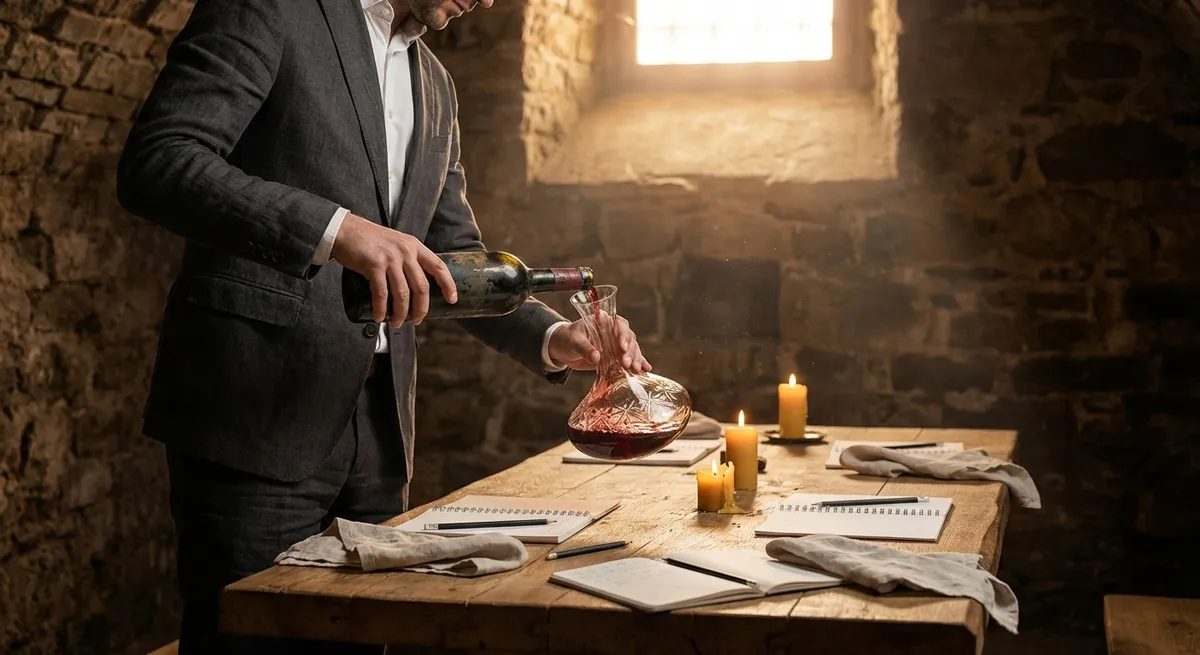
- Decanting as editing: Time in a decanter doesn’t simply “open” a wine; it edits the narrative. Highly structured reds may soften, but sometimes the most fascinating evolution occurs in aromatic complexity rather than in tannin: forest floor emerging from pure fruit, savory notes appearing where there was once only sweetness.
- Tracking a bottle over an evening: On a high-end tour or at a serious tasting room, ask to revisit the same wine later in your visit. Compare your first impression with your last. A wine with true depth will not simply fade; it will rearrange itself, revealing new facets.
The advanced pleasure lies not only in determining when a wine is “ready,” but in learning to appreciate the poise, volatility, and tension of all its in-between moments.
The Conversational Glass: Asking Winemakers the Questions That Matter
Access is one of the great luxuries of a thoughtful wine journey. The most meaningful tastings are not performed for you; they are shared with you—especially when you ask questions that invite candor instead of rehearsed narratives.
Move beyond the predictable (“What’s the blend?” “How many months in oak?”) and explore:
- Constraint and choice: “What do you choose not to do here?” This can reveal decisions about yields, irrigation, new oak, or intervention. Often, what a winemaker avoids says more than what they embrace.
- Sacrifices for quality: “Which quality decision costs you the most?” Whether it is discarding fruit, extended aging before release, or meticulous hand-sorting, their answer illuminates where their priorities truly lie.
- Identity across vintages: “If I tasted your wines blind across ten years, what would you hope I’d recognize as yours?” This can open a discussion of stylistic intent—finesse vs. power, freshness vs. opulence.
- Invisible labor: “What part of your process is least understood by visitors?” You may hear about nighttime harvests, soil management, or micro-adjustments in the cellar that never appear on a label but define the wine’s character.
These conversations do more than elevate a single tasting; they refine your internal benchmark for excellence. With each thoughtfully asked question, you become not only a better taster, but a more discerning traveler in the world of wine.
Conclusion
To elevate wine tasting from pleasant pastime to cultivated ritual, focus less on accumulating flavor descriptors and more on deepening attention: to environment, texture, time, and the human choices behind every bottle. The most rewarding experiences on a wine journey are rarely the loudest or most ostentatious; they are the moments when a wine, a place, and a conversation align into something quietly unforgettable.
For those who travel with intention, each glass becomes not just a taste, but a learned nuance—another refinement in the ongoing education of the palate. At that level, wine is no longer simply consumed; it is contemplated, understood, and, above all, remembered.
Sources
- Wine Tasting 101: How to Taste Wine Like a Pro – Wine Spectator – Overview of professional tasting structure and key sensory steps
- How Our Sense of Smell Works – Monell Chemical Senses Center – Scientific background on aroma perception relevant to wine tasting
- Serving Temperature and Wine – Wine & Spirit Education Trust (WSET) – Detailed discussion of temperature’s impact on wine expression
- Wine Aging and Maturation – Institute of Masters of Wine – Insight into aging, maturity, and development in bottle
- Tannins and Mouthfeel in Red Wine – UC Davis Viticulture & Enology – Technical explanation of tannins and texture in red wines
Key Takeaway
The most important thing to remember from this article is that this information can change how you think about Wine Tasting.