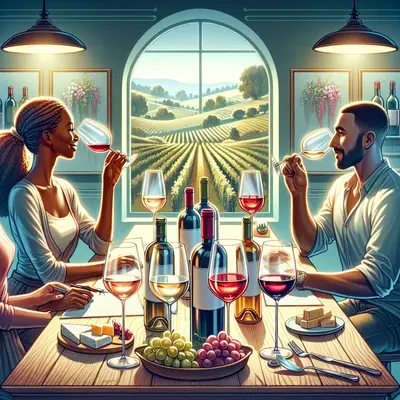
Wine tasting, at its most rewarding, is less a performance than a quiet conversation—between taster and glass, vineyard and vintage, patience and time. For those who have moved beyond the swirl-and-sip basics, the true luxury lies in deepening perception, refining attention, and discovering subtleties most people rush past.
This guide explores five exclusive, practitioner-level insights that seasoned enthusiasts and serious travelers can apply on their next tasting room visit, private winery appointment, or curated wine tour.
The Architecture of Aroma: Reading a Wine in Two Movements
Most tasters know to “smell the wine” before they drink it, but few take advantage of a critical nuance: aroma unfolds in layers, and those layers are not static. Professionals treat the nose of a wine almost like a two-movement piece of music.
First, there is the initial, undisturbed impression—what the wine offers when it is poured and given a brief, gentle swirl. At this stage, you are meeting the primary fruit and floral tones: citrus and stone fruit in white Burgundy, blackcurrant leaf and graphite in Left Bank Bordeaux, violet and dark cherry in serious Syrah. Take note of what appears immediately and, equally importantly, what does not. An exceptional wine rarely shouts.
The second movement appears as the wine interacts with oxygen and temperature. Give it time—two to three minutes can be transformative. Swirl again, a little more assertively, and reassess: do savory elements emerge (dried herbs, tea leaf, cocoa powder, wet slate)? Does the oak move from overt to integrated? Does a faint reduction (smoke, struck match) resolve into complexity rather than a flaw?
Recording these aromatic shifts—mentally or in a tasting journal—reveals how well the wine is built. Wines with genuine pedigree often become more articulate with air; lesser wines simply lose fruit. Treat the glass as a living architecture rather than a static object, and you will start to recognize structure, style, and aging potential with far greater accuracy.
Texture as a Signature: Feeling the Wine Instead of Chasing Flavors
Enthusiasts often fixate on “tasting notes” as lists of fruit and spice descriptors. The most advanced tasters, however, frequently prioritize texture: how the wine moves across the palate and how it exits. Texture, more than flavor alone, separates competent wines from truly distinguished ones.
Begin with the attack—the first sensation when the wine enters your mouth. Is it gliding, angular, or almost weightless? In a serious Riesling, you might feel a tensile line of acidity that arrives swiftly, like a plucked string. In a grand cru Burgundy, you may perceive silk before flavor: a quiet, seamless spread across the tongue.
Focus next on the mid-palate, the often-overlooked heart of the experience. A wine with depth feels three-dimensional here; flavors seem to unfurl rather than sit on the surface. You might sense layers of density in a fine Barolo or a great Napa Cabernet, with tannin and fruit interwoven rather than stacked.
Finally, examine the finish—not simply its length, but its shape. Does it taper slowly, leaving a subtle imprint of minerality or savory complexity? Or does it drop abruptly, as though a curtain has fallen mid-scene? Exceptional wines often leave a trailing resonance: a saline whisper, a touch of fine bitterness, a delicately persistent echo of spice.
The more you train your attention on tactile impressions—grain of tannin, precision of acidity, volume and weight—the more you will discern craftsmanship, terroir, and age-worthiness without needing a single “tasting note” cliché.
Silence as a Tool: Why Your Best Tasting Partner Is Quiet
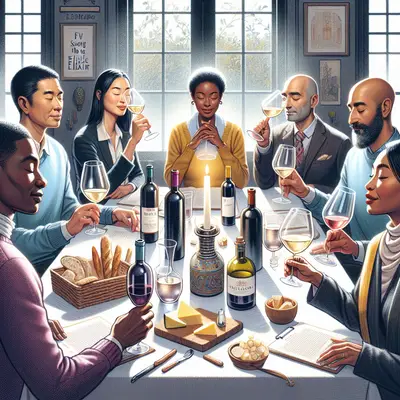
In premium tasting rooms and private cellars, you will sometimes notice a particular kind of hush—not the forced quiet of formality, but the calm of concentrated listening. This is not affectation; it is a deliberate tool.
Most of us taste socially, speaking as we sip: “Do you get black cherry?” “Is that vanilla?” While convivial, this habit subtly steers perception. Suggestion is powerful; a single comment can overwrite your own, more personal discovery. Advanced tasters often employ a short interval of silent tasting before sharing impressions.
On your next wine tour, consider this simple ritual: for the first 30–60 seconds with each wine, refrain from comment. Notice your unprompted reactions: a small intake of breath, a sudden association with a place or memory, a fleeting sense of proportion or balance. Only after you have mentally registered these should discussion begin.
You may find that in this intentional quiet, subtler elements step forward—salinity in a coastal Chardonnay, a ferrous edge in a Syrah grown on decomposed granite, a faint herbal accent suggesting whole-cluster fermentation. You will also become more aware of emotional tenor: some wines feel meditative, others energetic, almost vertical in their attack.
In a premium context—an estate library tasting, a vertical of older vintages—this practice can transform the experience from a pleasant social outing into an exercise in true sensory and intellectual engagement.
Vintage as Mood, Not Just Year: Calibrating Expectations Before You Sip
Vintage charts and scores are ubiquitous, but they tend to flatten nuance into numbers. Serious enthusiasts benefit more from thinking of vintage as “mood”—a climatic personality that interacts with variety and place.
Before tasting, acquaint yourself with the broad outline of the vintage in question: was it unusually warm, leading to riper fruit and softer structure? Was it cool or rain-affected, producing higher acidity and leaner profiles? Regions with detailed vintage reports—Bordeaux, Burgundy, Napa, Barolo—offer especially rich context.
Instead of asking “Is this a good vintage?”, ask “What kind of year was this, and does this wine express that year with clarity and grace?” A cooler year Burgundy that feels chiseled, red-fruited, and aromatic might be profoundly satisfying, even if some critics prefer the richer wines of warmer seasons. A restrained, lower-alcohol Napa Cabernet from a marginal year may offer remarkable elegance and aging potential.
On a well-curated tour, you might taste the same producer’s wines across several vintages. Approach them as portraits of different seasons rather than a ranking of better or worse. Notice how tannin ripeness, acid profile, and aromatic spectrum move with the climate narrative.
Calibrating your expectations in this way allows you to appreciate fidelity to vintage—one of the true marks of authenticity—rather than chasing a uniform, “perfect” style across all years.
The Context of the Glass: Aligning Setting, Stemware, and Service
At the highest level of wine hospitality, nothing surrounding the glass is accidental. The shape and volume of the stemware, the precise serving temperature, the sequence of wines, even the light in the room—each detail subtly frames your perception.
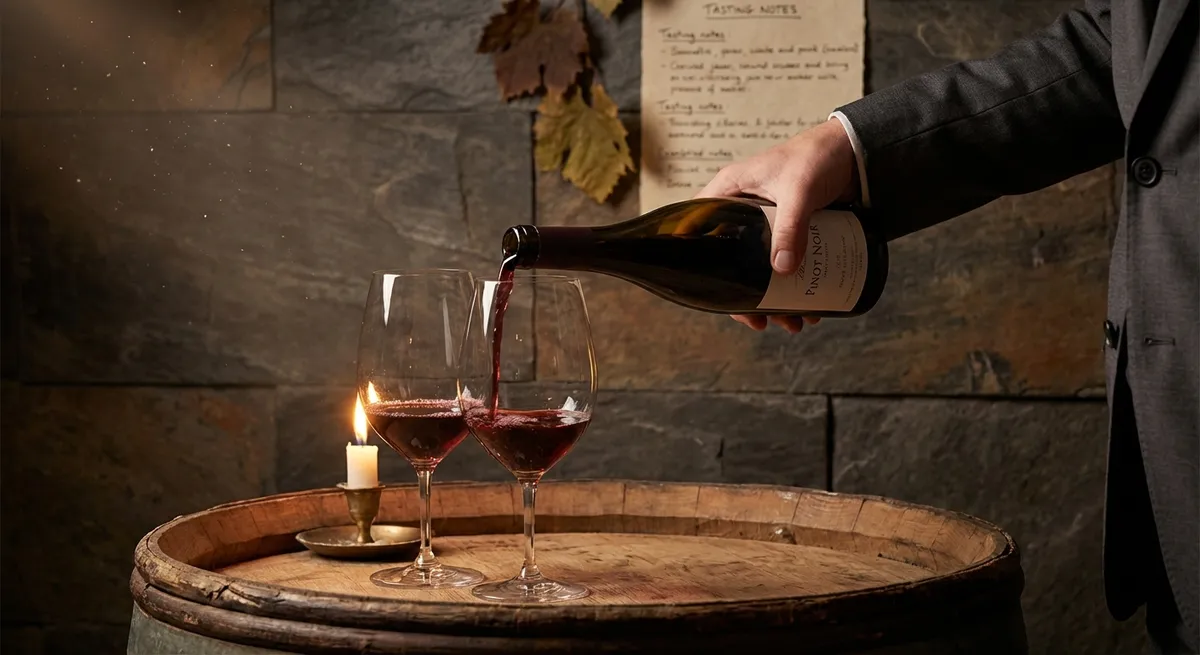
Stemware is a powerful, often underappreciated variable. A well-designed Burgundy bowl will open a Pinot Noir’s aromatic range, allowing volatile compounds room to diffuse and organize. Pour the same wine into a narrow, upright glass and it may feel muted, its texture constricted. On serious tours and in premium tasting rooms, you will often see different glasses used across flights; rather than dismissing this as theater, pay attention to what changes.
Service temperature is equally critical. White wines served too cold seem simpler than they are; reds poured too warm can taste alcoholic and unfocused. High-end wineries calibrate temperatures carefully, and you can use this as a learning opportunity: as a Chardonnay in your glass slowly warms from cellar-cool to ambient, track how its structure and aroma evolve.
Finally, consider sequence. Properly curated flights are composed to lead the palate—from lighter to more concentrated, from simpler to more complex, from youthful energy to aged nuance. Reflect on how each wine prepares you for the next, and how the earlier glasses shape your perception of what follows. This awareness will not only enhance your enjoyment; it will also sharpen your understanding of how professional tasters evaluate wine comparatively.
Treat context as an integral part of tasting, not a backdrop. The most memorable experiences in wine tourism often result from the quiet rigor behind these “invisible” decisions.
Conclusion
For the devoted wine traveler, refinement is not about performing expertise; it is about cultivating a more exacting, private pleasure. By approaching aroma as evolving architecture, privileging texture over flavor lists, embracing deliberate silence, reading vintages as moods, and attuning yourself to the orchestration of glass and service, you move past superficial appreciation into something more enduring.
On your next journey with Wine Tour Adventures—whether you find yourself in a sunlit Napa valley, a misted Burgundian slope, or a cool coastal cellar—consider these five insights as quiet instruments. Use them not to impress a room, but to deepen your own understanding of what is truly in the glass.
Sources
- UC Davis Viticulture and Enology Department – Technical resources on wine aroma, structure, and winemaking practices from a leading academic institution
- Wine & Spirit Education Trust (WSET) – Systematic Approach to Tasting – Professional tasting framework emphasizing structure, balance, and evaluation
- Oxford Companion to Wine – “Vintage” (Oxford Reference) – Authoritative overview of vintage variation and its impact on wine quality
- Riedel – The Wine Glass Company – Discussion of how stemware shape affects aroma and palate perception
- Decanter Magazine – Wine Serving Temperatures Guide – Detailed guidance on optimal serving temperatures and their effect on wine expression
Key Takeaway
The most important thing to remember from this article is that this information can change how you think about Wine Tasting.