There is a quiet moment—often just after the first walk among the rows—when a vineyard ceases to be scenery and becomes a story. The sunlight sharpens, the soil underfoot gains character, and each trellis line suggests intention rather than chance. Vineyard visits, when thoughtfully chosen and attentively experienced, are not simply tastings with views; they are immersive encounters with craftsmanship, climate, and time. For the devoted wine traveler, the question is no longer where to go, but how to visit in a way that reveals what most guests never see.
Reframing the Vineyard Visit as a Conversation, Not a Tour
Most itineraries treat the vineyard as a backdrop—something to admire between the tasting room and the cellar. An elevated visit begins by reversing that order: consider the vineyard itself as the central experience, and the glass a lens through which to interpret it.
Ask to walk the vines before any tasting. Notice the cadence of the rows, the spacing of the plants, the orientation to sun and wind. Is the canopy tightly managed or slightly wild? Are cover crops flourishing between the rows, or is the soil bare and austere? These visual details are not merely aesthetic; they reveal farming philosophy, water management, and the level of handwork versus mechanization.
Approach your guide—whether winemaker, viticulturist, or host—as a collaborator in discovery. Pose open questions: What decision this season felt riskiest? Which block is most challenging? Where do you see the biggest change in the next decade? You’re no longer a passenger on a scripted route; you’re engaging in a real-time conversation about place, choice, and consequence. In this framing, the vineyard visit becomes a dialogue that follows you back into the glass, making every sip feel more articulate.
Exclusive Insight 1: The Vineyard’s “Quiet Corners” Tell the Truth
Most guests see the photogenic parcels—the sweeping views, the manicured blocks, the easy slopes. The most revealing sites, however, are usually the vineyard’s quiet corners: the awkward hill, the cooler hollow, the parcel with tough, stony soils that never produces much fruit but commands fierce respect.
Ask, gently but directly: Is there a block you love that rarely appears on labels? Or: Where do you walk when you need to make a difficult decision? Often, the answer leads you away from the postcard view into a part of the property that is far more intimate.
In these corners, pay attention to:
- Subtle shifts in soil color and texture
- Differences in vigor from one row to the next
- Small experimental plantings, alternate trellising, or unusual varieties
- Signs of stress that the producer intentionally embraces (smaller canopies, lower yields, sparse clusters)
These less-trafficked spaces usually bear the imprint of the winemaker’s curiosity and restraint. They may produce the blending components that give a flagship cuvée its spine, or the micro-parcels that form members-only bottlings. To the attentive visitor, they are the vineyard’s confidences—shared quietly, away from the crowd.
Exclusive Insight 2: Reading the Canopy Like a Season’s Diary
The trained eye can read a vine’s canopy as easily as a vintage report. For the enthusiast, learning to “read” the canopy transforms a vineyard stroll from a pleasant walk into a study of the season in progress.
Observe the following:
- Density and openness: A well-managed canopy admits dappled light rather than full shade or brutal exposure. Dense, heavy foliage may indicate vigorous soils or higher water availability, but also the risk of disease if not expertly managed.
- Leaf color and texture: Healthy leaves show nuanced greens, not stark uniformity. Subtle yellowing or bronzing at particular points in the canopy may reveal stress, sun exposure, or nutrient imbalances—elements that can shape ripening.
- Shoot positioning and tying: Meticulous shoot placement signals significant handwork and labor investment. When shoots are carefully aligned and secured, it not only looks refined; it ensures even light exposure and more precise ripening.
- Cluster visibility: Clusters that are gently visible but not fully exposed suggest careful balancing of phenolic ripeness with preservation of aromatics—essential for varieties sensitive to heat or sunburn.
Ask your host to walk you through the canopy management decisions for the current year: Did you leaf-pull early or late? Are you hedging less to preserve shade in hotter summers? Their answers reveal how the vineyard is adapting to climate shifts and how stylistic goals translate into the handling of each shoot and leaf.
Exclusive Insight 3: Micro-Tastings Among the Rows Elevate Understanding
A tasting flight indoors is informative; a tasting flight aligned with specific parcels of vines is transformative. Many wineries rarely extend this privilege beyond trade or collectors’ circles, but a thoughtful request can open doors.
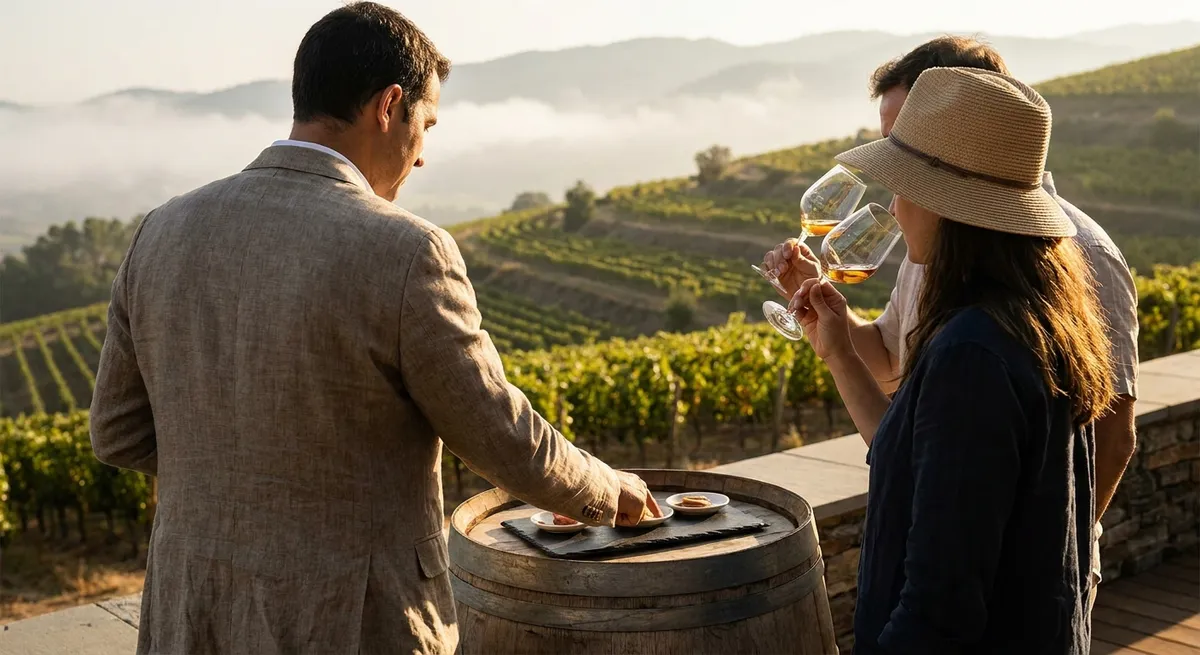
When booking, inquire whether a parcel-specific tasting is possible—ideally, wines tasted either adjacent to their originating blocks or with a direct line of sight. This alignment creates a sensory feedback loop: you see the slope, feel the wind, notice the soil, then experience how those factors translate into the glass.
If a full in-vineyard tasting is not feasible, even a brief comparison—two wines from different blocks, tasted while overlooking the entire property—can be revealing. Focus on:
- Texture and tannin shape (fine, chalky, silken, rugged) relative to slope and soil
- Aromatic lift or restraint in parcels with differing exposures or altitudes
- The way acidity feels in wines from cooler or windier blocks
- Subtle bitterness or savory notes in wines from more marginal, low-yield sites
Rather than asking, Which wine is your best? invite nuance: Which parcel surprises you the most when you taste it on its own? Answers to questions like this often introduce small-production, allocation-only wines that rarely appear on standard tasting menus.
Exclusive Insight 4: The Rhythm of the Vineyard Day Matters More Than the Weather
Many visitors obsess over choosing “perfect” weather for vineyard travel and overlook a more important factor: timing your visit to the working rhythm of the estate. A clear, quiet morning during a crucial vineyard task will tell you more than a sunny afternoon when the property is at rest.
Ask in advance: When during the season is the vineyard most alive with activity? If possible, plan your visit:
- During early-season pruning, when the team is shaping yields and future structure
- At flowering, if the winery allows access—this stage can be fragile but offers a rare look at how potential crops are set
- Around veraison, when color change makes differences in ripening patterns dramatically visible
- Near harvest, provided you can step carefully around busy crews and equipment
Arriving early in the day often reveals details that disappear later: bins being prepared, sample clusters picked for lab analysis, quiet conversations among vineyard workers about block-by-block decisions. Instead of focusing only on stunning vistas, attune yourself to pace: How many people are in the vines? How are tasks distributed? Is the work mechanized or almost entirely by hand?
These observations give texture to terms like “hand-harvested” or “selective picking.” You begin to see not only the romance of winegrowing, but the choreography of labor that underpins each bottle.
Exclusive Insight 5: Observing the Edges—Where Vineyard Philosophy Is Most Visible
Edges—where vines meet forest, stone walls, waterways, or wild vegetation—often hold the clearest expressions of a winery’s long-term thinking. While postcard images frame the vineyard as a uniform sea of green, the borders tell a more intricate story of ecology and intention.
During your walk, deliberately seek out:
- Buffer zones and biodiversity: Are there wildflowers, grasses, hedgerows, or insect hotels? These signal a considered approach to balance and pest management beyond chemistry alone.
- Water management features: Terraces, drainage channels, or retention ponds reveal how the estate responds to heavier rains and drier summers—critical in an era of climate volatility.
- Tree lines and natural habitat: The presence (or absence) of trees and native vegetation around the vineyard indicates whether the estate sees itself as an island of cultivation or a participant in a broader ecosystem.
- Experimental plots: Small sections with alternative rootstocks, new clones, or different training systems hint at how the winery is future-proofing its vineyards.
These edges are, in effect, the vineyard’s margins of thought—the places where practicality, sustainability, and aesthetics intersect. When you notice them, you are no longer just admiring the success of the current vintage; you are reading the estate’s intentions for decades to come.
Curating Your Own Elevated Vineyard Journey
Transforming vineyard visits from sightseeing to true discovery requires only two elements: selectivity and presence. Choose estates that openly share their viticultural philosophy and are willing to host visitors beyond the tasting bar. Then, commit to being fully present—observing details others step past, asking questions that invite honesty rather than marketing.
Before your next journey, refine your approach:
- Research producers whose farming choices align with your values—whether regenerative agriculture, precision viticulture, or heritage preservation.
- Arrange visits that prioritize vineyard walks, even if it means fewer stops in a day.
- Keep a small notebook or digital journal dedicated purely to vineyards: soils, slopes, canopy impressions, labor patterns, and how the wines felt in relation to what you saw.
Over time, patterns will emerge. You’ll recognize similarities between far-flung regions—an exposed ridge in Sonoma echoing a stony slope in the Rhône, or a wind-cooled site in coastal Chile recalling an Atlantic-influenced corner of Bordeaux. These are the connections that turn the seasoned visitor into a true student of place.
Ultimately, the most memorable vineyard visits are not the most extravagant; they are the most revealing. They leave you with more than photographs and bottles—they leave you with a sharper palate, a deeper respect for the land, and a lingering sense that each vine, each parcel, is part of a conversation you are now equipped to continue.
Conclusion
The vineyard is the quiet heart of every great wine, yet its secrets are often left unexplored by even the most enthusiastic travelers. By seeking out hidden parcels, learning to read the canopy, aligning tastings with specific blocks, moving with the rhythm of the working day, and studying the edges where philosophy lives, you gain access to a more intimate, enduring understanding of place.
When approached with intention, vineyard visits become more than stops on an itinerary; they become a series of finely observed encounters that draw a direct line from soil to glass. For the discerning wine enthusiast, this is where the true luxury lies: not in excess, but in depth.
Sources
- [University of California, Davis – Viticulture and Enology](https://wineserver.ucdavis.edu) – Academic resources on vineyard management, canopy practices, and the science behind grape growing
- [Cornell University – Integrated Grape Production and Climate Resources](https://grapesandwine.cals.cornell.edu) – Research-based insights into vineyard ecology, climate impacts, and sustainable practices
- [OIV (International Organisation of Vine and Wine)](https://www.oiv.int/en) – International guidelines and reports on viticulture, wine production, and global trends
- [Decanter – Vineyard Management and Terroir Articles](https://www.decanter.com/learn/vineyard-management-2-66936) – Expert commentary on how vineyard decisions shape wine style and quality
- [Harvard T.H. Chan School of Public Health – Climate Change and Wine Production](https://www.hsph.harvard.edu/news/features/climate-change-and-wine-production/) – Analysis of how shifting climates influence vineyard strategies and regional character
Key Takeaway
The most important thing to remember from this article is that this information can change how you think about Vineyard Visits.