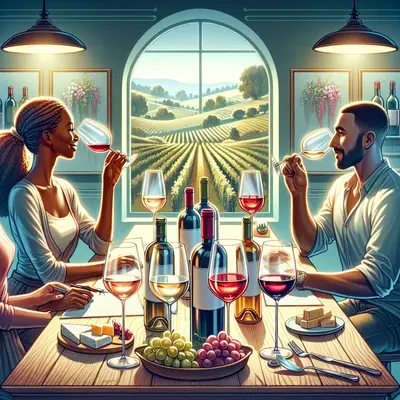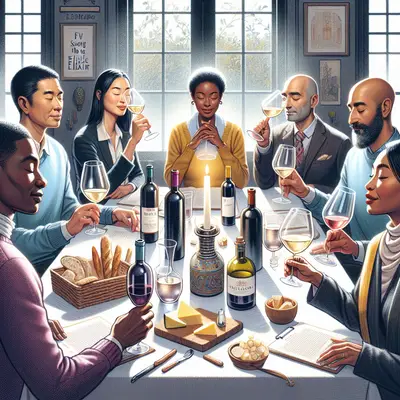
Wine tasting, at its most refined, is less a performance and more a private conversation between the taster and the glass. It is where time slows, details sharpen, and a simple sip becomes an occasion. For the devoted enthusiast, the true luxury is not ostentatious labels or grand gestures, but the discovery of subtle layers that most palates never quite reach. In this world, elegance resides in nuance, restraint, and the pleasure of knowing just a little more than the menu reveals.
The Architecture of Time in the Glass
Every great wine carries a sense of time: the instant it is poured, the minutes it breathes, the hours since it was opened, and the years or decades since harvest. Instead of approaching a wine as a fixed experience, treat it as a slow unfurling. Notice the first impression on the nose immediately after pouring, then again after a gentle swirl, and once more five, ten, and twenty minutes later.
Premium wines, in particular, often reveal their pedigree not in power but in the way they evolve. A structured red may open with tightened, linear aromas—dark fruit, graphite, perhaps a whisper of oak—before relaxing into secondary notes of tobacco, cedar, or dried flowers. A fine Riesling may shift from citrus zest and white blossoms toward petrol, honey, and stone. Training your attention on this quiet progression is one of the most rewarding disciplines in tasting.
Exclusive Insight #1: Treat each glass as a timeline, not a snapshot.
When tasting, mentally “bookmark” the wine at distinct intervals—at pour, at five minutes, at fifteen minutes. You are not simply judging the wine; you are observing its capacity to change with grace, a hallmark of genuinely ageworthy bottles.
The Silence Between Aromas
Aromatics are often discussed in exuberant lists—cherries, plums, violets, vanilla—but the true connoisseur begins to perceive what lies between the obvious notes. The most refined wines present not just individual scents but the space and integration between them: how fruit, floral, spice, and earth intertwine without any single element shouting for attention.
Rather than hunting for every possible descriptor, allow the aromas to arrive in waves. Breathe in calmly, pause, then return. Notice the texture of the bouquet: is it airy and lifted, like a fine Burgundy, or dense and compact, like a young, powerful Cabernet? Are the oak-derived notes (toast, clove, baking spices) woven into the fruit, or do they sit on top like a separate layer?
Exclusive Insight #2: Evaluate the “weave” of the nose, not just its ingredients.
Refinement is revealed when no aroma feels isolated or artificial. The most elegant wines smell cohesive—like a well-composed chord rather than a series of individual notes.
Texture as the True Signature of Quality
While flavor often dominates conversation, seasoned tasters quietly prioritize texture. How a wine moves across the palate—its weight, shape, and grip—often tells you more about its quality than the list of flavors you can identify. Consider whether the wine glides, clings, fans out, or narrows; whether the acidity feels like a precise, fine line or a broad, energetic sweep; whether tannins are powder-fine, chalky, or firm and architectural.
In white wines, texture may reveal itself as a delicate waxiness, a saline snap, or a creamy mid-palate supported by crystalline acidity. In reds, tannins act as the wine’s skeleton: not to be feared, but to be studied. The most refined bottles offer structure that is undeniable yet never aggressive, like a perfectly tailored jacket that supports without constricting.
Exclusive Insight #3: Map the shape of the wine in your mind.
As you taste, imagine drawing the wine’s journey from entry to finish as a line or silhouette—narrow to broad, light to weighted, crisp to velvety. Over time, this mental “architecture” becomes a more precise tool than descriptors alone.
The Unspoken Role of Temperature and Glass
Even experienced enthusiasts underestimate the degree to which temperature and glassware can elevate or flatten a wine. A premium Chardonnay served too cold will mute its generosity and texture, reducing it to little more than acid and oak. A complex red served too warm may taste blurred and alcoholic, losing its fine detail and tension.
For structured reds, a large-bowled glass with a slightly narrowed rim allows aromatics to concentrate while giving the wine room to breathe. For delicate whites and sparkling wines, a slightly tulip-shaped glass often preserves aromatics and focus far better than an ultra-flared or overly narrow flute. Rather than following one rigid rule, let the wine itself guide the choice: more delicate, aromatic wines typically reward narrower bowls; broader, more structured wines often need greater surface area to express themselves fully.
Exclusive Insight #4: Fine-tune temperature within a narrow “luxury band.”
Instead of relying on broad categories like “room temperature” or “well chilled,” experiment within a 2–3°C range for a specific wine. A top-tier Pinot Noir might reveal its inner detail at 15–16°C rather than 18–20°C; a fine Champagne may sing at 9–10°C instead of being numbed at 5–6°C.
Context, Season, and the Subtle Art of Pairing
The most refined wine experiences acknowledge that no bottle exists in isolation. The surrounding context—season, time of day, lighting, cuisine, even the pace of the meal—will discreetly shape how a wine performs. A crisp, mineral-driven white that feels austere in winter can become transcendent with summer seafood on a terrace. A structured Barolo that seems stern on its own can soften and blossom against slow-cooked game or truffle-inflected dishes.
Advanced pairing is less about strict rules and more about aligning energy and intention. Delicate dishes can be overpowered by wines that are too concentrated; conversely, subtle but deeply complex wines may be lost alongside strongly spiced food. The most luxurious pairings allow both plate and glass to retain their identities while quietly amplifying one another.
Exclusive Insight #5: Pair “mood before menu.”
Before choosing a wine, define the tone of the occasion—contemplative, celebratory, exploratory, intimate. Select the bottle to match this emotional texture first, then refine by cuisine. Enthusiasts who think in this way often find their pairings feel mysteriously “right,” even when they defy conventional rules.
Conclusion
Refined wine tasting is not about theatrics or exhaustive note-taking; it is about cultivating an awareness that catches the quiet details others overlook. The gentle evolution of a wine over time, the integration of its aromas, the architecture of its texture, the precision of temperature and glass, and the thoughtful alignment of context—these are the elements that transform a simple tasting into an understated luxury.
For those who seek more than a passing impression, each bottle becomes an intimate study in balance, patience, and subtlety. In this realm, true indulgence is not about drinking more wine, but about experiencing each glass more completely.
Sources
- [University of California, Davis – Wine Tasting: Sensory Evaluation](https://wineserver.ucdavis.edu/industry-info/sensory) - Overview of professional sensory analysis and wine evaluation techniques
- [The Wine & Spirit Education Trust (WSET) – Systematic Approach to Tasting Wine](https://www.wsetglobal.com/students/systematic-approach-to-tasting-sat/) - Framework for assessing wine structure, aroma, and flavor
- [Harvard T.H. Chan School of Public Health – Alcohol: Balancing Risks and Benefits](https://www.hsph.harvard.edu/nutritionsource/alcohol-full-story/) - Evidence-based discussion of wine and alcohol consumption and health
- [Wine Institute – Wine Serving and Storage Tips](https://wineinstitute.org/our-industries/serving-wine/) - Guidance on temperature, glassware, and proper serving conditions
- [Decanter Magazine – How to Taste Wine Like a Professional](https://www.decanter.com/learn/how-to-taste-wine-like-a-professional-90350/) - Practical insights into professional-level tasting methods and nuances
Key Takeaway
The most important thing to remember from this article is that this information can change how you think about Wine Tasting.