The most compelling premium wineries rarely raise their voices. They do not shout from billboards or crowd your feed with noise. Instead, they cultivate a quiet, exacting standard—of viticulture, of hospitality, of time itself—that reveals its depth only to those willing to look closer. For the discerning traveler, these estates offer not just wine, but a finely tuned orchestration of place, people, and patience.
Below, we explore five exclusive insights that seasoned wine enthusiasts will recognize—and that can transform a pleasant winery visit into a truly rarefied experience.
Beyond Price Tags: Reading the True Signals of a Premium Estate
In the luxury wine world, price is a consequence, not a signal. The real markers of a premium winery reveal themselves long before a bottle reaches the glass.
The most quietly exceptional estates often invest heavily in vineyard health that few visitors ever see: low-yield vines, meticulous canopy management, and soils that are treated more like living archives than agricultural substrates. You may notice cover crops between the rows, not for aesthetics, but to manage erosion, encourage biodiversity, and subtly influence water dynamics. These are deliberate, expensive decisions that favor nuance over volume.
Equally revealing is the scale of the operation. A winery that limits production from prized parcels, even in successful vintages, is making a statement: they are willing to sacrifice short-term sales for long-term reputation. You might hear a winemaker mention “declassifying” fruit or entire lots that fail to meet their internal standard, reserving their label only for the most exacting expressions of their terroir. That quiet ruthlessness is one of the clearest indicators you are in serious hands.
Pay attention, too, to how information is shared. Premium wineries will often speak fluently about clonal selections, vineyard blocks, and specific parcels—without resorting to jargon for its own sake. Their confidence tends to show in their transparency: vineyard maps, detailed vintage notes, and cellaring guidance are offered as tools for your understanding, not as marketing gloss. In this world, knowledge is not gatekept; it is curated.
The Texture of Hospitality: Precision Disguised as Ease
At a truly premium winery, hospitality is engineered to feel effortless. What appears as casual grace is usually the product of meticulous design, rehearsal, and a deep respect for the guest’s time and attention.
Notice how pacing is handled. Tastings are often by appointment, with deliberately small groups. This is not exclusivity for its own sake; it allows the host to adjust the tempo to the guests—lingering over questions of soil structure with one visitor, guiding another toward food-pairing ideas, or gently shaping the arc of the experience from lighter, more aromatic wines to those with greater structure and age.
The best estates orchestrate micro-moments of comfort that rarely announce themselves: the precise temperature of the tasting room and the wines, glassware selected to honor each style, and seating arranged to frame vineyard views without feeling staged. You might be offered a neutral palate cleanser at just the right interval, or quietly brought a shawl on a terrace as evening cools. These gestures are not ad hoc kindness; they are woven into the fabric of the experience.
Equally telling is the restraint in storytelling. Instead of rehearsed monologues, you’ll encounter hosts who listen first, then calibrate their depth of detail to your curiosity. They might touch lightly on family history, then quickly segue into why a particular block consistently produces their most structured Cabernet, or how a shift to organic certification changed their canopy regimen. The conversation feels bespoke because it is—and the most premium wineries train for that bespoke fluency with the same intensity they bring to their cellar.
The Quiet Power of Vineyard Decisions: What Enthusiasts Should Notice
For the seasoned enthusiast, the most revealing part of any visit is the vineyard. This is where nuance becomes visible to the naked eye.
Look at vine spacing and orientation. Tightly planted vineyards—common in premium European sites and increasingly emulated in top New World estates—encourage competition between vines, often leading to smaller berries with more concentrated flavor. Row orientation, chosen to manage sun exposure and wind, hints at the estate’s priorities: protection from heat spikes, balance of ripeness and acidity, or preservation of aromatics in more delicate varieties.
Consider the age and architecture of the vines. Old vines, often with gnarled trunks and sparse foliage, are not merely romantic; they can deliver deeper root systems and more layered expressions of site. When a winery chooses to preserve and farm old vines rather than replant for higher yield, they are deliberately choosing character over convenience.
Pay attention to how the vineyard coexists with its surroundings. A premium winery increasingly treats its land as an ecosystem rather than a factory: hedgerows to support beneficial insects, owl boxes for natural rodent control, and patches of native vegetation left intact. These choices support both environmental responsibility and flavor complexity; healthier, more balanced vineyards often translate into wines that feel less forced, more precise.
If you’re offered a barrel sample from a specific block you’ve just walked, take careful note. Tasting that wine becomes an advanced exercise in pattern recognition: the orientation of the slope, the texture of the soil underfoot, and the canopy you observed now resonate in the glass. This heightened linkage between place and flavor is one of the most exclusive pleasures in the premium wine world.
Cellar Philosophy: When Technique Serves, Not Steals, the Spotlight
The most distinguished wineries practice a quiet, almost invisible form of winemaking. Technology and technique are present, often at the cutting edge, but they are used to refine expression, not impose it.
Temperature-controlled fermentations, gravity-flow cellars, and carefully selected fermentation vessels—stainless steel, concrete, large-format oak—are all tools in a larger aesthetic. The question to ask is not “What do you use?” but “Why do you use it here?” A thoughtful answer signals a defined philosophy: protecting aromatics in a Riesling, for instance, or using neutral oak to shape texture in a Chardonnay without adding overt flavor.
Barrel programs are another subtle but crucial indicator. Premium estates will speak in detail about forest origin, cooperage, and toast level, but in a manner that underscores integration rather than dominance. You are less likely to hear about “new oak percentage” as a badge of honor, and more about how a particular barrel profile supports the spine of a wine, or cushions particularly firm tannins from a given parcel.
Equally important is what a winery chooses not to do. Minimal intervention does not mean negligence, but precision: gentle extraction, restrained use of additives, and an unwillingness to “correct” a wine into generic harmony if it would erase the character of the vintage. At the high end, wineries increasingly embrace the idea that a slightly austere year, honestly rendered, may be more desirable than a superficially lush one manufactured in the cellar.
For the attentive visitor, asking to compare a current release with a library vintage from the same cuvée can be revelatory. If the wines share a discernible thread of identity across years—structure, aromatic signature, a recognizable sense of place—you are witnessing a winery with a coherent, quietly disciplined philosophy.
Rarity, Not Hype: The Subtle Economy of Access
True premium wineries understand that luxury is as much about restraint as it is about splendor. Their most coveted wines often live in a carefully calibrated balance between scarcity and access.
Production decisions are guided by what the vineyard naturally yields at optimal quality rather than by what the market could absorb. When a winery caps the output of its flagship wine despite strong demand, it is signaling that the integrity of that label outweighs short-term commercial opportunity. Some estates will sell only a fraction of their best bottlings through the tasting room, reserving the rest for long-standing allocation members, trusted restaurants, or specific export markets that understand the style.
Reservations themselves can be a subtle currency. When premium wineries limit the number of daily visits, they aren’t merely manufacturing exclusivity; they are preserving the intimacy necessary to offer a genuinely tailored experience. Guests who respect those boundaries—arriving on time, lingering thoughtfully, asking measured questions—are often rewarded with deeper access: a taste of a not-yet-released vintage, a walk through a closed portion of the vineyard, or an invitation to an allocation list that is not publicly advertised.
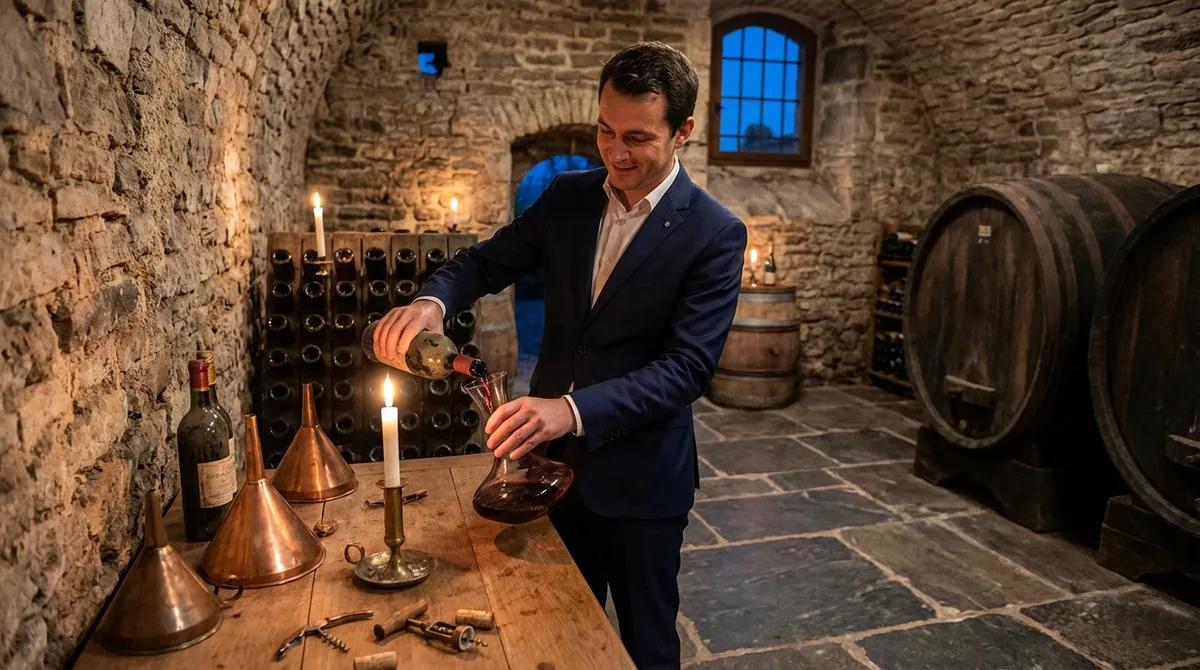
Moreover, the most sophisticated estates rarely rely on spectacle. You are unlikely to find loud music or mass events calibrated for social media virality. Instead, their “shareable moments” arise from understated luxury: a private library tasting at a farmhouse table polished by decades of use, a quiet barrel room lit just enough to read the chalk marks, or a terrace where the soundscape is limited to wind, birds, and subdued conversation. It is an economy of attention, not of noise.
For enthusiasts, recognizing and honoring this discreet rhythm is itself part of the privilege. The reward is access not only to rare bottles, but to a deeper understanding of how true premium wineries orchestrate excellence behind the scenes.
Conclusion
Premium wineries operate in a register that reveals itself slowly, by design. Their excellence is not confined to the glass; it is imprinted in their vineyards, their cellar decisions, their approach to hospitality, and their quiet choreography of scarcity and access. For the thoughtful traveler, tuning into these subtleties transforms a winery visit from a pleasant diversion into an experience of genuine refinement.
To step into this world is to accept an invitation: to look more closely, to listen more carefully, and to taste with a mind as engaged as the palate. In that attentiveness, the veiled grandeur of these estates becomes clear—and profoundly memorable.
Sources
- Napa Valley Vintners – Sustainable & Environmental Practices – Overview of how leading wineries approach sustainability, vineyard health, and ecosystem management.
- Wine Institute – California’s Sustainable Winegrowing Program – Details on certified sustainable practices and their impact on vineyard and winery operations.
- UC Davis Department of Viticulture & Enology – Research-based insights into viticulture, winemaking techniques, and the science behind wine quality.
- Decanter – The Role of Oak in Winemaking – In-depth explanation of barrel choices, oak influence, and cellar philosophy at premium estates.
- Institute of Masters of Wine – Terroir and Vineyard Management – Expert discussion of terroir expression, vineyard decisions, and their effect on fine wine character.
Key Takeaway
The most important thing to remember from this article is that this information can change how you think about Premium Wineries.